Odisha CM Office: War-Footing Drive Clears Cyclone Arnab Damage
Synopsis
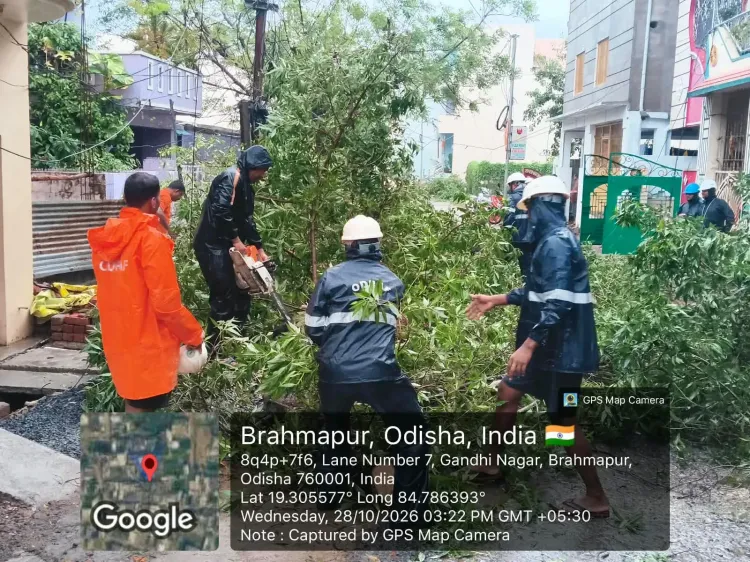
Response teams are clearing fallen trees and road obstructions across Ganjam and Gajapati districts on a war footing after Cyclone Arnab, the Chief Minister's Office of Odisha announced on 29 October 2026, with road connectivity, safe movement, and essential services as the three stated priorities.
Key Takeaways
Rescue teams are actively clearing fallen trees and road blockages in Ganjam and Gajapati districts after Cyclone Arnab .
The Chief Minister's Office of Odisha confirmed a 'war footing' response on 29 October 2026 .
Three priorities stated: restoring road connectivity, ensuring safe movement of people, and maintaining essential services.
Ganjam's coastal exposure and Gajapati's hilly tribal terrain create distinct clearance challenges for response teams.
Odisha's rapid-clearance protocols were strengthened after Cyclone Fani (2019) under the State Disaster Management Authority.
Full restoration timelines and the extent of damage beyond these two districts remain to be officially confirmed.
With fallen trees blocking roads and communities cut off in the wake of Cyclone Arnab, response teams in Ganjam and Gajapati districts are racing the clock — and the Chief Minister's Office of Odisha made clear on Thursday, 29 October 2026 that restoration is the state's single-point agenda right now.
The CMO's post stated: 'ରାସ୍ତା ଯୋଗାଯୋଗର ପୁନଃସ୍ଥାପନ, ଜନସାଧାରଣଙ୍କ ସୁରକ୍ଷିତ ଯାତାୟାତ ଏବଂ ଅତ୍ୟାବଶ୍ୟକ ସେବା ସୁନିଶ୍ଚିତ କରିବା ପାଇଁ ଯୁଦ୍ଧକାଳୀନ ଭିତ୍ତିରେ ଉଦ୍ୟମ ଜାରି ରହିଛି' — 'Efforts are underway on a war footing to restore road connectivity, ensure safe movement of people and maintain essential services.'
Two districts, one storm's full force
Ganjam is a coastal district on Odisha's southern flank — directly exposed to Bay of Bengal weather systems and home to dense agricultural and fishing communities who depend on road access to reach markets and services. Gajapati, inland and hilly, borders Andhra Pradesh and carries a large tribal population; its terrain makes debris clearance physically harder and connectivity breaks costlier. When a cyclone hits both simultaneously, the state faces a two-front restoration challenge with very different ground conditions.
Odisha's war-footing doctrine in action
The phrase 'war footing' is not rhetorical decoration — it is the operational shorthand Odisha has built into its post-cyclone playbook since at least the devastation of Cyclone Fani in 2019, which tore through Ganjam and forced a systematic rethink of rapid-clearance protocols under the State Disaster Management Authority. That experience institutionalised multi-department deployment: road-clearance crews, power-restoration teams, and essential-services logistics moving in parallel rather than sequence. What the CMO's update signals is that those protocols have been activated.
Fallen trees, blocked roads — and why speed matters
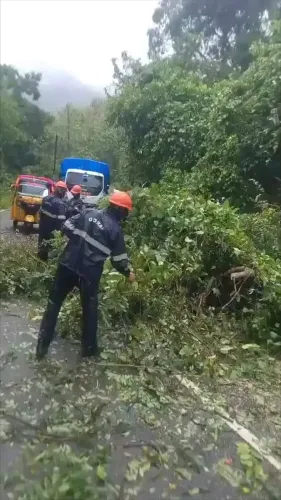
The immediate task is physical: rescue teams are actively clearing fallen trees and removing obstructions so that ambulances, supply trucks, and ordinary commuters can move again. In post-cyclone Odisha, the first 24–48 hours of road restoration are critical — they determine whether isolated villages can receive food, medicine, and emergency help, or whether communities remain stranded. The CMO's images accompanying the post show crews on the ground, chainsaw-clearing debris from trunk roads.
Full restoration timelines for all affected roads — and whether additional districts in the same weather system's path have seen damage — remain the next hard question for state authorities to answer.
Point of View
Publicly-communicated mobilisation in Ganjam and Gajapati reflects a governance model that prioritises visible accountability during disaster response — a posture the state has consciously cultivated since the catastrophic credibility gap exposed by earlier cyclone recoveries. The 'war footing' framing serves a dual purpose: it signals urgency to field teams and reassures a nervous public. The real test, as always in post-cyclone Odisha, will be whether road connectivity restoration in tribal hinterland Gajapati matches the pace in more accessible coastal Ganjam — historically, the two move at very different speeds. If the state closes that gap, it adds another layer to its reputation as India's most disaster-resilient state administration.
NationPress
29 Oct 2026
Frequently Asked Questions
Which districts in Odisha were affected by Cyclone Arnab?
Ganjam and Gajapati districts in southern Odisha have been reported as affected, with rescue teams deployed for road clearance and restoration of essential services.
What is the current response to Cyclone Arnab in Odisha?
The Chief Minister's Office of Odisha confirmed on 29 October 2026 that response teams are working on a war footing to clear fallen trees, remove road obstructions, and restore connectivity in Ganjam and Gajapati.
What does 'war footing' response mean in Odisha's disaster management?
It refers to accelerated, multi-department simultaneous deployment — road clearance, essential services, and logistics — without waiting for phased handoffs, a protocol Odisha institutionalised after Cyclone Fani in 2019.
Why is Gajapati district especially difficult for cyclone recovery?
Gajapati is a hilly district with a large tribal population bordering Andhra Pradesh; its terrain complicates debris clearance and makes communities more vulnerable to prolonged disconnection after a cyclone.
How has Odisha improved its cyclone response since Fani?
After Cyclone Fani devastated the state in 2019, Odisha strengthened rapid clearance and restoration protocols under the State Disaster Management Authority, enabling faster, coordinated multi-department deployment in subsequent storms.