Odisha CMO: 45,400 Govt Jobs in 2 Years, 1,326 Hired at Job Fair
Synopsis
The Chief Minister's Office of Odisha announced that 1,326 candidates across 9 departments received government appointments at a Niyukti Mela, with the state claiming over 45,400 public-sector hires in the past two years through a transparent, corruption-free recruitment process.
Key Takeaways
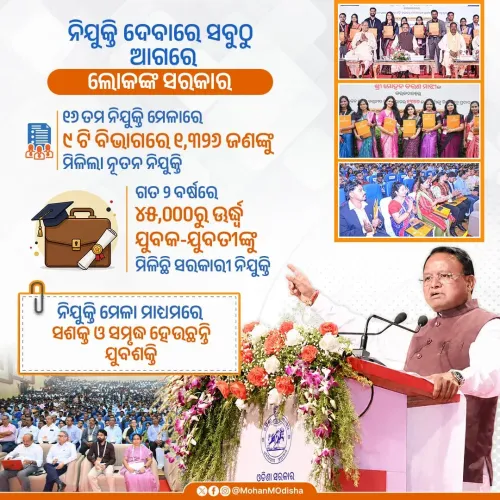
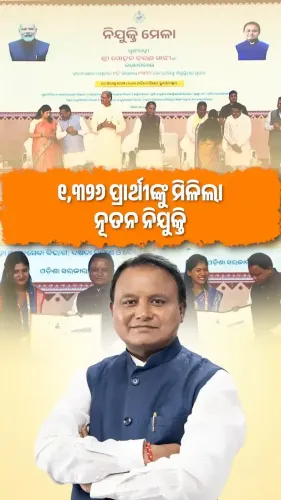
1,326 candidates received appointment orders across 9 departments at the latest Niyukti Mela (employment fair) in Odisha.
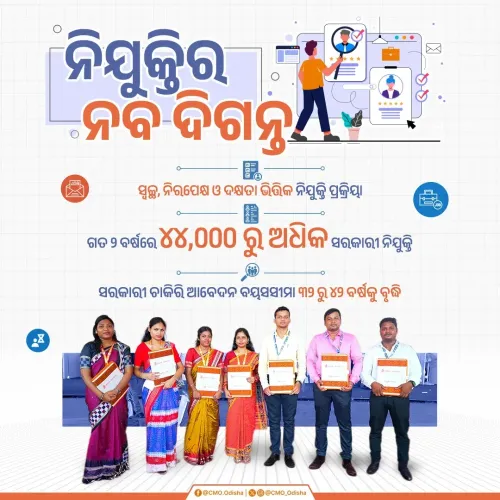
The Odisha government claims more than 45,400 young people have been given government jobs over the past two years .
The CMO emphasised a recruitment process described as transparent, impartial, and free from corruption.
Employment fairs are a recurring, event-driven format in Odisha designed to make hiring visible and public.
Youth unemployment and clean recruitment processes remain live political issues in Odisha, with vacancy backlogs a persistent legislative pressure point.
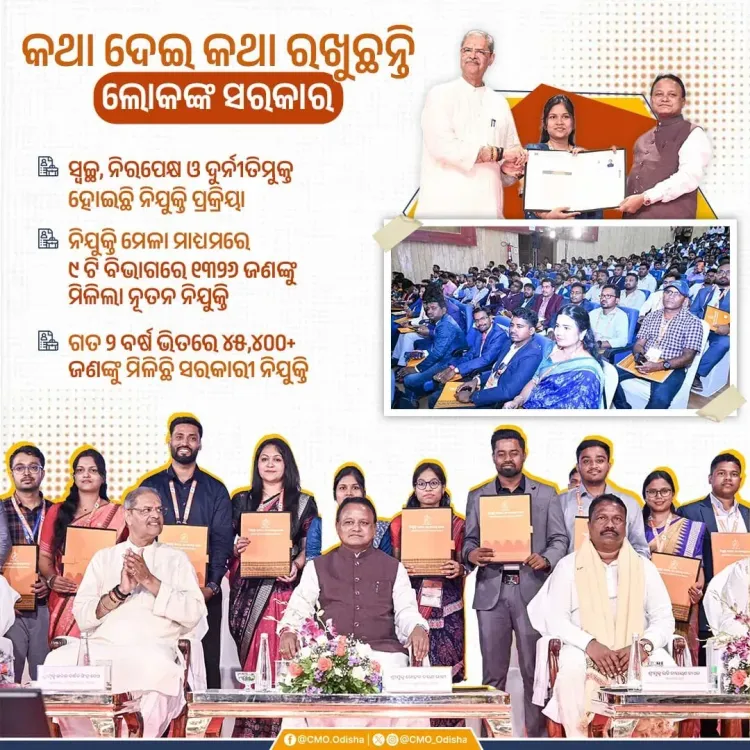
More than 45,400 young men and women in Odisha have received government jobs over the past two years — and the state's Chief Minister's Office is making sure voters know it. The Chief Minister's Office of Odisha posted on Monday, 10 August 2026, highlighting a fresh round of appointments at a recruitment fair, framing the drive as proof that the government keeps its promises.
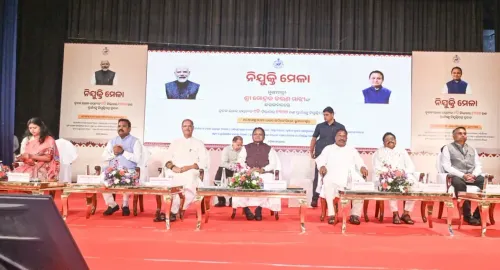
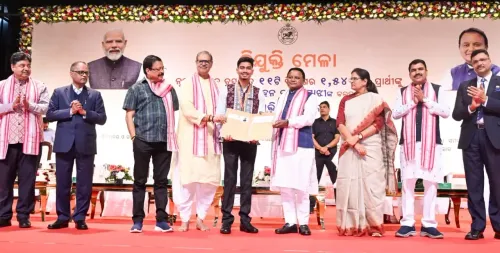
The post, written in Odia, declares: 'କଥା ଦେଇ କଥା ରଖୁଛନ୍ତି ଲୋକଙ୍କ ସରକାର' — 'The people's government delivers on its word.' At the latest Niyukti Mela (employment fair), 1,326 candidates across 9 departments were handed fresh appointment orders, adding to a cumulative tally the government says now exceeds 45,400 hires since it took office.
What the Niyukti Mela model looks like on the ground
Employment fairs of this kind are a recurring instrument in Odisha's recruitment calendar — a public, event-driven format that lets the government hand appointment letters to candidates in a single, visible ceremony rather than through quiet bureaucratic dispatch. The CMO's post underlines three pillars it says define the process: transparency, impartiality, and freedom from corruption — 'ସ୍ୱଚ୍ଛ, ନିରପେକ୍ଷ ଓ ଦୁର୍ନୀତିମୁକ୍ତ'.
The spread across 9 departments suggests a coordinated, multi-sector push rather than a single-cadre exercise. Odisha has historically struggled with vacancy backlogs across its public services, and successive governments have used periodic recruitment drives to chip away at the deficit — though legislative questions on remaining vacancies remain a live political pressure point.
The politics of a promise kept
The phrasing the CMO chose — 'ପ୍ରତିଶ୍ରୁତିରୁ ପ୍ରାପ୍ତି ପର୍ଯ୍ୟନ୍ତ', meaning 'from promise to delivery' — is not accidental. Youth unemployment and the integrity of government recruitment have been charged electoral issues in Odisha, as in much of India. Paper-leak scandals and allegations of nepotism in public hiring have roiled several states in recent years, making a clean-process narrative a genuine political asset. By leading with the process — not just the numbers — the government is signalling as much about method as about scale.
The 45,400 figure, if sustained through scrutiny, represents a meaningful volume of public-sector absorption in a state where a government job still carries outsized economic and social weight for families across rural and semi-urban Odisha.
With recruitment notifications from multiple departments still in the pipeline and assembly sessions likely to probe vacancy data, the pressure to keep the numbers moving — and the process clean — will only intensify.
Point of View
Impartial, corruption-free') rather than just numbers reflects a national pattern where recruitment scandals have damaged incumbents badly; Odisha is pre-empting that narrative. The 'promise to delivery' framing also signals a government keen to differentiate itself on execution credibility, not just intent. Whether the 45,400 figure holds up to independent verification will determine how durable that credibility claim proves.
NationPress
25 Sept 2026
Frequently Asked Questions
How many government jobs has Odisha given in the last 2 years?
The Chief Minister's Office of Odisha states that more than 45,400 young people have received government employment over the past two years.
What is a Niyukti Mela in Odisha?
A Niyukti Mela is a government-organised employment fair where appointment letters are handed to selected candidates in a public ceremony, covering multiple departments at once.
How many people were hired at the latest Odisha job fair?
At the most recent Niyukti Mela, 1,326 candidates across 9 departments were given fresh government appointments.
What departments were covered in the Odisha recruitment drive?
The CMO's post states that appointments were made across 9 departments , though it does not name the specific departments individually.
Why is transparent recruitment a political issue in Odisha?
Allegations of paper leaks and nepotism in public hiring have become major political flashpoints across India, making a clean-process narrative a key credibility asset for state governments including Odisha's.