Odisha CMO: Paddy Procurement Hits 77.48 LMT This Kharif
Synopsis
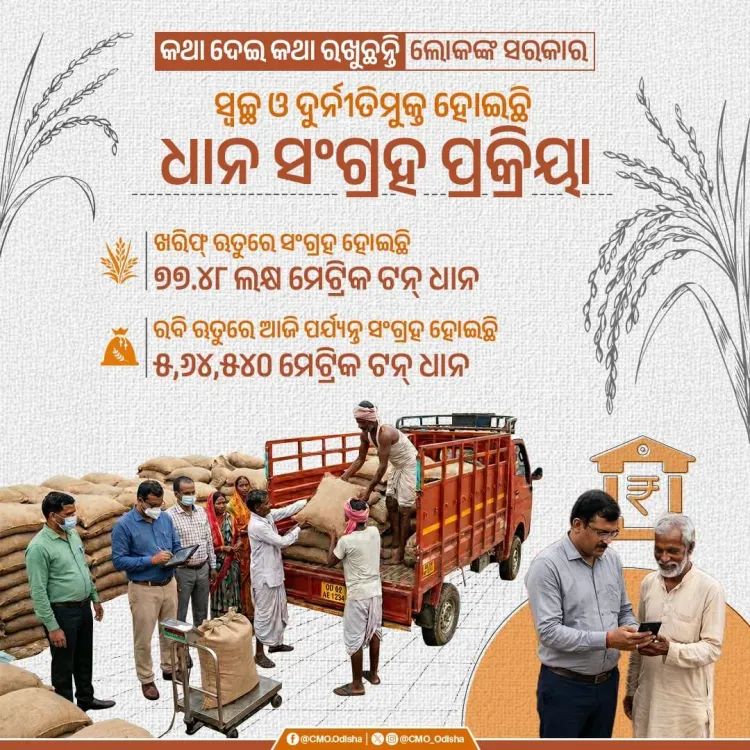
The Chief Minister's Office of Odisha announced on June 6, 2026 that paddy procurement has been made transparent and corruption-free, with 77.48 lakh metric tonnes collected in Kharif and 5,64,540 metric tonnes procured so far in the Rabi season, reaffirming the government's commitment to farmer welfare and economic empowerment.
Key Takeaways
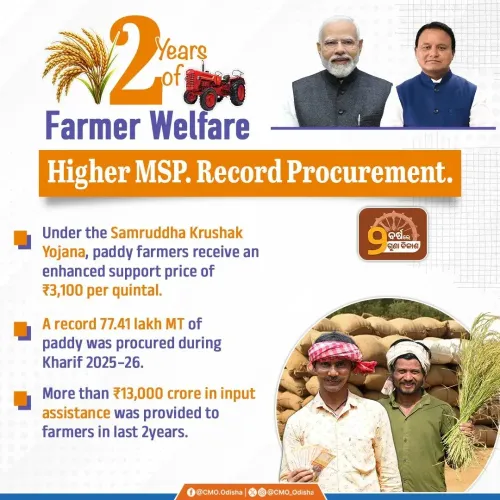
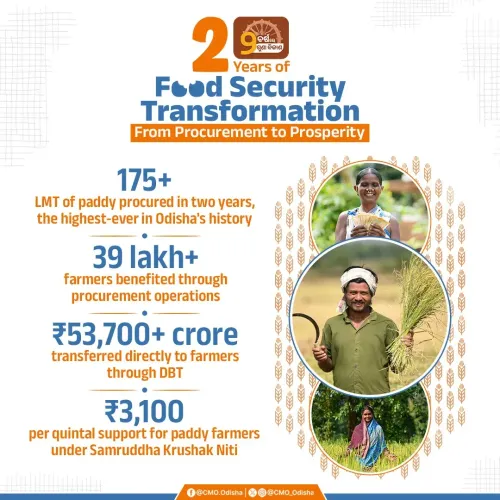
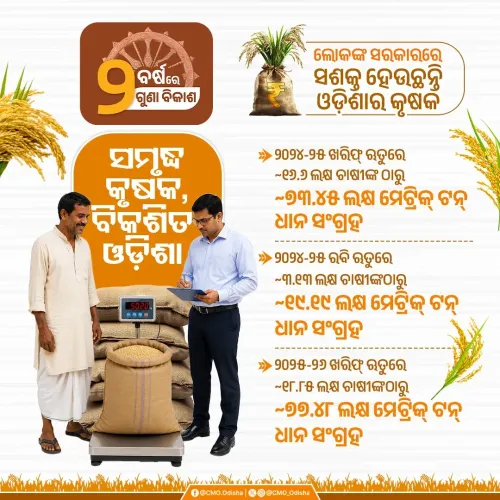
77.48 lakh metric tonnes of paddy procured by the Odisha government in the Kharif season .
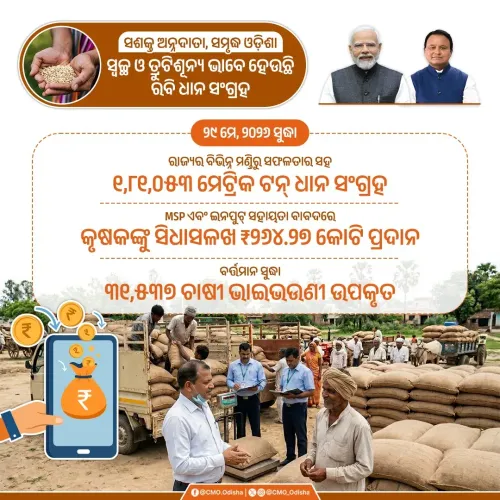
5,64,540 metric tonnes of paddy procured so far in the ongoing Rabi season as of June 6, 2026 .
The Chief Minister's Office of Odisha declared the procurement process 'clean and corruption-free', prioritising farmer interests.
Procurement is conducted at Minimum Support Price (MSP) under India's decentralised procurement scheme to protect farmers from distress sales.
The government reaffirmed its commitment to farmer economic empowerment and honouring cultivators' labour.
Grain procured feeds into Odisha's Public Distribution System (PDS) , underpinning state food security.
The Chief Minister's Office of Odisha on Saturday, June 6, 2026, announced that the state's paddy procurement process has been made transparent and corruption-free, with 77.48 lakh metric tonnes (LMT) collected in the Kharif season and 5,64,540 metric tonnes procured so far in the ongoing Rabi season.
What the Post Says
The CMO's post, written in Odia, states: 'ଅନ୍ନଦାତାଙ୍କ ସ୍ୱାର୍ଥକୁ ସର୍ବୋଚ୍ଚ ପ୍ରାଥମିକତା ଦେଇ ସ୍ୱଚ୍ଛ ଓ ଦୁର୍ନୀତିମୁକ୍ତ ହୋଇଛି ଧାନ ସଂଗ୍ରହ ପ୍ରକ୍ରିୟା' ['Giving highest priority to the interests of the food-giver (farmer), the paddy procurement process has become clean and corruption-free']. The government described itself as 'lok sarkar' — a people's government — and affirmed its commitment to honouring farmers' labour and advancing their economic empowerment.
Context
Odisha is one of India's leading rice-producing states, and paddy procurement is a cornerstone of its agricultural economy. The state government procures paddy directly from farmers at the Minimum Support Price (MSP), shielding cultivators from distress sales to private traders at below-market rates. The Kharif season, running roughly from June to October, accounts for the bulk of annual paddy output, while the Rabi season — from November to April — yields a secondary crop.
The explicit reference to a 'clean and corruption-free' process signals a deliberate administrative messaging effort, likely aimed at farmers who have historically faced delays in payment, mismatch in weighment records, or middlemen siphoning benefits.
Policy Backdrop
India's decentralised procurement scheme, introduced in the 1990s, empowers state governments to procure paddy on behalf of the Food Corporation of India (FCI) and channel grain into the Public Distribution System (PDS). Odisha has consistently been among the top procuring states, with annual targets negotiated with the central government each season. In recent years, states across India have invested in digital governance tools — online token systems, direct benefit transfers, and geo-tagged procurement centres — to reduce leakages and improve farmer experience.
The emphasis on transparency in the CMO's post aligns with this broader national trend of digitising agricultural marketing to ensure benefits reach farmers without intermediary distortion.
Stakeholders and Impact
The primary beneficiaries are paddy farmers across Odisha, particularly smallholders who depend on government procurement as their primary income source after harvest. Rice mill owners, who act as Custom Milling Rice (CMR) partners in the state's procurement chain, are also directly affected by the scale and pace of procurement operations. A combined procurement figure of over 83 lakh metric tonnes across both seasons — if sustained — would represent a substantial volume of grain entering the state's food security pipeline.
For rural households, timely and fair procurement translates directly into disposable income, influencing local demand and credit cycles in Odisha's agrarian districts.
What's Next
Attention will now turn to the pace of payment disbursements to farmers who have already delivered paddy, and to whether the government announces revised procurement targets for the next agricultural year. The ongoing Rabi procurement, at 5,64,540 metric tonnes as of the post date, leaves room for further additions before the season closes. Any announcement on MSP revision for the next Kharif cycle or expansion of procurement infrastructure in tribal and remote districts would be the logical next step in the government's stated commitment to farmer economic empowerment.
Point of View
The government moves beyond rhetoric into verifiable performance claims, raising the bar for accountability. This fits a broader pattern among state governments of using social media to pre-empt opposition narratives on farmer distress by leading with data.
NationPress
21 Oct 2026
Frequently Asked Questions
How much paddy has Odisha procured in Kharif 2026?
The Odisha government procured 77.48 lakh metric tonnes of paddy in the Kharif season, according to an announcement by the Chief Minister's Office on June 6, 2026.
What is the Rabi paddy procurement figure for Odisha in 2026?
As of June 6, 2026 , Odisha had procured 5,64,540 metric tonnes of paddy in the ongoing Rabi season.
At what price does Odisha government buy paddy from farmers?
The Odisha government procures paddy at the Minimum Support Price (MSP) set by the central government, under India's decentralised procurement scheme.
What is the Public Distribution System and how does paddy procurement relate to it?
The Public Distribution System (PDS) is India's food security network that supplies subsidised grain to eligible households. Paddy procured by state governments like Odisha is milled into rice and channelled into the PDS to feed beneficiaries.
Why does Odisha emphasise corruption-free paddy procurement?
Farmers in Odisha and across eastern India have historically faced issues such as weighment fraud, delayed payments, and middlemen diverting benefits. The government's emphasis on a 'clean and corruption-free' process signals administrative reforms, including digital tools and direct benefit transfers, aimed at ensuring MSP reaches farmers directly.