Odisha CMO Highlights AMRUT 2.0 Gains, Drink From Tap Push

Synopsis
The Chief Minister's Office of Odisha on 21 July 2026 highlighted the state's gains under AMRUT 2.0, citing universal piped water coverage across Urban Local Bodies and the expansion of the Drink From Tap programme as benchmarks in urban water management.
Key Takeaways
The Chief Minister's Office of Odisha reaffirmed safe drinking water as a key state priority on 21 July 2026 .
Odisha has received national recognition under the AMRUT 2.0 scheme for urban water supply performance.
Universal piped water coverage has been reported across Odisha's Urban Local Bodies .
The Drink From Tap programme, which certifies areas where tap water is directly potable, is being expanded further.
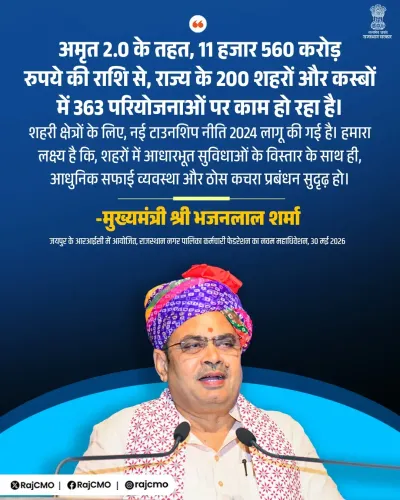
AMRUT 2.0 was approved in October 2021 with a central outlay of Rs 2.77 lakh crore , mandating 100% water coverage in all statutory towns.
Performance under national missions carries fiscal implications, as states with measurable progress receive additional central grants.
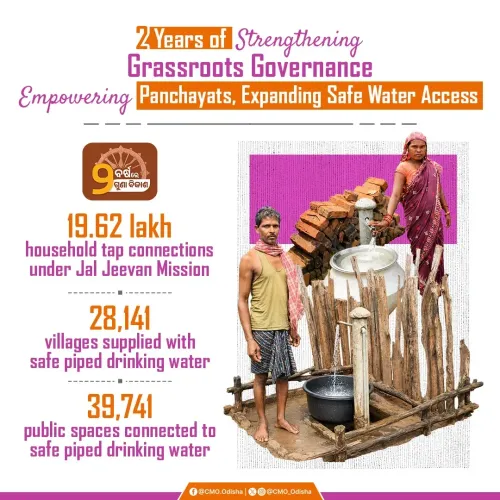
The Chief Minister's Office of Odisha on Tuesday, 21 July 2026 reaffirmed the state's commitment to safe and sustainable urban drinking water, citing national recognition under the AMRUT 2.0 scheme, universal piped water coverage across Urban Local Bodies (ULBs), and the ongoing expansion of the Drink From Tap programme.
The office stated that 'ensuring safe, reliable and sustainable drinking water remains a key priority,' adding that Odisha 'continues to set new benchmarks in urban water management' through these combined efforts.
Context
AMRUT 2.0 — the Atal Mission for Rejuvenation and Urban Transformation in its second phase — was approved by the Union Cabinet in October 2021 with a total outlay of Rs 2.77 lakh crore. The mission mandates 100 per cent piped water coverage in all statutory towns across India, creating a performance-linked funding framework that incentivises states to compete on national service-level dashboards. Odisha's ULBs have consistently featured among the better-performing entities under this framework. The original AMRUT mission, launched in June 2015, targeted improved water supply and sewerage infrastructure in 500 cities. Its successor broadened the mandate and raised the bar on coverage and sustainability metrics.Policy Backdrop
Odisha's Drink From Tap initiative certifies specific zones where tap water meets potable standards without any further filtration, a benchmark that few Indian states have replicated at scale. The programme is executed through municipal corporations and municipalities — the Urban Local Bodies — which are also the primary implementing agencies for AMRUT 2.0 projects, handling water distribution, pipeline infrastructure, and billing. India's broader urban water policy has leaned heavily on centrally sponsored missions such as AMRUT and Swachh Bharat Mission-Urban to raise service levels in cities. States that demonstrate measurable progress receive additional performance-linked grants, making national recognition under these schemes both a governance milestone and a fiscal incentive.Stakeholders and Impact
The primary beneficiaries of these interventions are urban households across Odisha's statutory towns, who gain access to treated, reliable piped water — reducing dependence on tankers, borewells, and untreated sources. Urban Local Bodies also benefit operationally: higher coverage translates into broader billing bases and improved cost recovery, which in turn supports the financial sustainability of water utilities. For the state government, demonstrated performance under AMRUT 2.0 reinforces its position on the national urban governance scorecard, with implications for central fund flows in subsequent mission cycles.What's Next
Attention will now turn to the next round of AMRUT 2.0 city rankings, which will test whether Odisha's coverage gains translate into sustained service quality. Equally significant will be any forthcoming state budget provisions or policy announcements aimed at extending Drink From Tap certification to additional Urban Local Bodies beyond the areas currently covered. As India's urban population grows, the pressure on municipalities to deliver reliable potable supply will only intensify — making Odisha's model a reference point for other states navigating the same challenge.Point of View
The Drink From Tap certification, and national recognition into a single communication, the state government is staking a reputational claim that directly influences central fund flows. This follows a well-established pattern in Indian federal politics where state governments use social media to amplify mission-linked achievements, nudging the Centre's performance assessment. For opposition-governed states watching Odisha's trajectory, the subtext is clear: urban water delivery is now a competitive governance metric, not merely a welfare obligation.
NationPress
21 Jul 2026
Frequently Asked Questions
What is the Drink From Tap programme in Odisha?
The Drink From Tap programme is an Odisha state initiative that certifies specific zones where tap water meets potable standards and can be consumed directly without further filtration. It is implemented through Urban Local Bodies across the state.
What is AMRUT 2.0 and how does Odisha benefit?
AMRUT 2.0 — the Atal Mission for Rejuvenation and Urban Transformation, second phase — was approved by the Union Cabinet in October 2021 with an outlay of Rs 2.77 lakh crore to ensure 100% piped water coverage in all statutory towns. Odisha has received national recognition under this scheme for its urban water supply performance.
Has Odisha achieved universal piped water supply in cities?
The Chief Minister's Office of Odisha stated on 21 July 2026 that universal piped water coverage has been achieved across Urban Local Bodies, citing this as a key milestone under the AMRUT 2.0 framework.
What was the original AMRUT mission?
The original AMRUT mission was launched in June 2015 to improve water supply and sewerage infrastructure in 500 cities across India. AMRUT 2.0, approved in October 2021, expanded the mandate to all statutory towns with a larger financial outlay.
Why does AMRUT 2.0 performance matter for state governments?
States that demonstrate measurable progress under AMRUT 2.0 receive performance-linked central grants, making national recognition both a governance milestone and a direct fiscal incentive for higher fund flows in subsequent mission cycles.