Odisha Congress Requests Disqualification of Two MLAs Under Anti-Defection Law

Synopsis
The Odisha Congress has filed a petition to disqualify two MLAs for allegedly violating party lines during the Rajya Sabha elections. This move could set a significant precedent in party discipline and the enforcement of the anti-defection law.
Key Takeaways
The Congress filed a petition for disqualification of two MLAs under the anti-defection law.
Allegations stem from their cross-voting in the Rajya Sabha elections.
Party discipline and loyalty are critical in political contexts.
Disqualification can be inferred from actions that conflict with party lines.
The case highlights the complexities of party politics in Odisha.
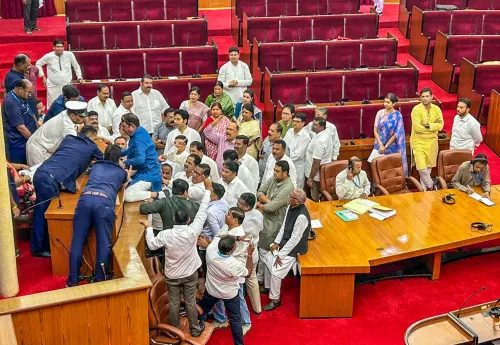
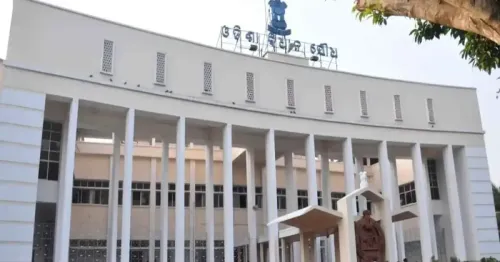
Bhubaneswar, March 19 (NationPress) On Wednesday, the Congress party filed an official petition with the Assembly Speaker, requesting the disqualification of two of its MLAs based on the provisions of the Tenth Schedule of the Constitution, commonly referred to as the anti-defection law. This action arises from allegations of cross-voting during the recent Rajya Sabha biennial elections.
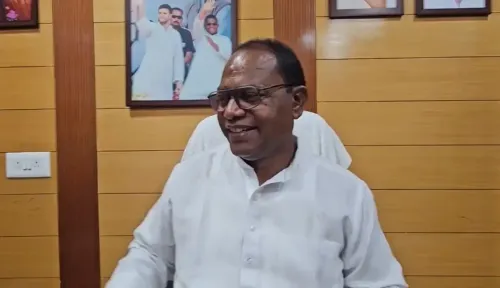
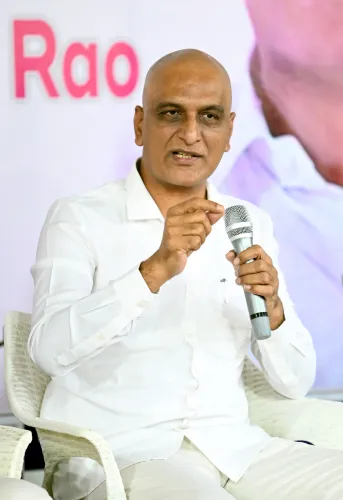
The party claims that MLAs Dasharathi Gamango and Sofia Firdous went against the party line by not supporting the Congress-backed candidate, Dr Datteshwar Hota. Instead, they allegedly voted for the BJP-supported candidate, Dilip Ray.
The submitted petitions indicate that both MLAs had received show-cause notices due to their public comments and actions. Despite responding to these notices, they reportedly continued to challenge and publicly criticize the decisions of the party leadership at both state and national levels.
The petitions argue that such actions could be seen as “voluntarily resigning from membership” as outlined in Paragraph 2(1)(a) of the Tenth Schedule.
The Congress party, referencing the disqualification case of veteran politician Sharad Yadav, pointed out that under the anti-defection law, formal resignation is not necessary for disqualification; it may be inferred from a member's actions and statements that contradict the party's official stance.
This incident has been labeled by the Congress as a significant breach of party discipline and a violation of constitutional mandates, leading to their request for the cancellation of the MLAs' Assembly membership.
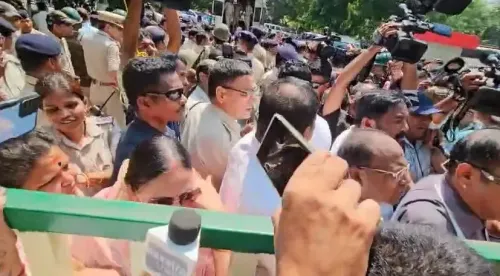
A delegation from Congress, headed by Odisha Pradesh Congress Committee (OPCC) President Bhakta Charan Das, met with Speaker Surama Padhy to present a memorandum urging appropriate constitutional measures.
The delegation also included prominent Congress figures such as Deputy Leader of the Congress Legislature Party Ashok Das, Chief Whip S. Rajan Ekka, and MLAs Sagar Das, Pabitra Saunta, and Mangu Khila.
The party has called for the Speaker to initiate necessary procedures to disqualify these two legislators as per legal stipulations.
Interestingly, the Congress has not requested the disqualification of Sanakhemundi MLA Ramesh Jena, who is reported to have voted against the party's directive.
Point of View
The Congress party's actions highlight the ongoing struggles within political parties to maintain discipline and loyalty among their members. This incident underscores the importance of adherence to party lines, especially in crucial electoral situations. The implications of this case could resonate across the political landscape.
NationPress
30 Sept 2026
Frequently Asked Questions
What is the anti-defection law?
The anti-defection law, outlined in the Tenth Schedule of the Constitution, aims to prevent elected representatives from switching parties and ensures party loyalty.
What prompted the Congress to seek disqualification of the MLAs?
The Congress party alleges that the two MLAs cross-voted against the party-supported candidate in the Rajya Sabha elections, violating party discipline.
What are the consequences of disqualification under the anti-defection law?
Disqualification under the anti-defection law results in the loss of Assembly membership and can have significant political repercussions for the affected member.
Who are the MLAs involved in this issue?
The MLAs involved are Dasharathi Gamango and Sofia Firdous, who are accused of voting contrary to the Congress party's directives.
Has any other MLA faced similar actions?
No, the Congress has not sought disqualification for Sanakhemundi MLA Ramesh Jena, despite reports of him voting against the party's whip.