Odisha signs Friendship Agreement with Japan's Tottori Prefecture

Synopsis
Odisha signed a Friendship Agreement with Japan's Tottori Prefecture in Bhubaneswar on November 11, 2026, institutionalising cooperation in trade, investment, skills, tourism and cultural exchange — with a focus on creating international employment for Odisha's youth.
Key Takeaways
Odisha and Tottori Prefecture, Japan signed a formal Friendship Agreement (MoU) in Bhubaneswar on November 11, 2026 .
The pact covers trade, investment, industrial development, skill development, tourism, and cultural exchange .
Human capital is a central pillar: the agreement targets language training, vocational skills via a World Skill Centre platform, and international employment opportunities for Odisha youth.
The move is framed as guided by PM Narendra Modi's foreign-policy vision and led on the ground by CM Mohan Charan Majhi .
The pact aligns with a broader pattern of Indian states pursuing sub-national diplomacy with Japanese prefectures to attract manufacturing investment and anchor skill programmes.
Implementation details — specific industries, investment targets, and timelines — are the critical next step to watch.
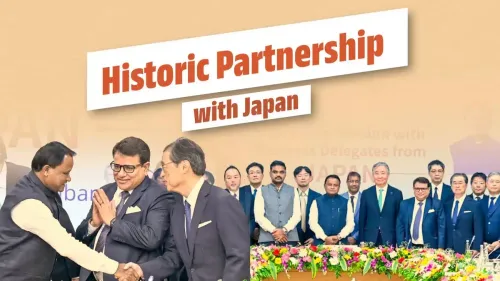
A new chapter in sub-national diplomacy opened in Bhubaneswar on Wednesday, November 11, 2026, as the Chief Minister's Office of Odisha announced the signing of a Friendship Agreement between Odisha and Tottori Prefecture, Japan — a formal MoU designed to institutionalise cooperation across trade, investment, industrial development, skill development, tourism, and cultural exchange.
What the Bhubaneswar–Tottori pact actually covers
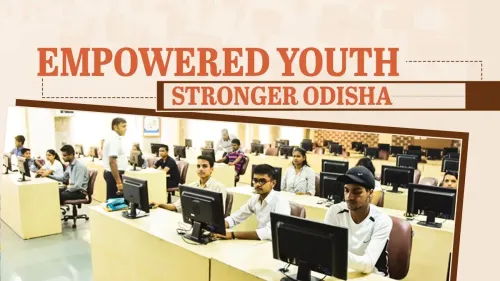
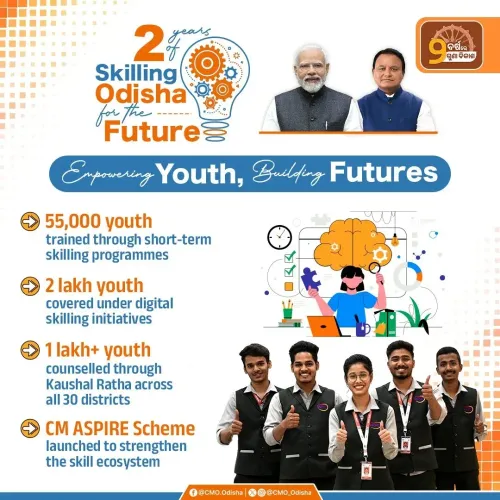
The agreement is explicitly framed as going beyond symbolic goodwill. According to the CMO's statement, cooperation will span industry, commerce, technology, startups, and tourism. Critically, the pact also targets human capital: skill development through a World Skill Centre platform, accelerated language training, and international employment pathways for Odisha's youth — a generation that the state government has repeatedly identified as central to its growth agenda.
The Odia-language portion of the post describes it as a 'ବନ୍ଧୁତ୍ୱ ଚୁକ୍ତି' (Friendship Agreement) and calls it a 'ଐତିହାସିକ ବୁଝାମଣା ପତ୍ର' — 'a historic memorandum of understanding' — that will 'open unlimited new doors of possibility for our state.' The ambition is explicit: a 'friendship for the future' that energises Odisha's economy toward a 'prosperous and self-reliant state.'
Odisha's growing play for Japanese investment
Japan ranks among India's most consistent partners in technology transfer, infrastructure financing, and vocational training. Indian states have increasingly pursued sub-national ties with Japanese prefectures to attract manufacturing investment and anchor human-capital programmes — and Odisha, historically dependent on mining and steel, is now actively diversifying that base. The CMO frames the agreement as guided by the vision of Prime Minister Narendra Modi and driven on the ground by Chief Minister Mohan Charan Majhi, placing the pact squarely within the central government's broader foreign policy framework of state-level economic diplomacy.
Tottori Prefecture — Japan's least-populous prefecture, located on the Sea of Japan coast — has historically invested in niche manufacturing and agri-tech, making it a distinctive partner for a state like Odisha with significant agricultural and coastal assets alongside industrial corridors.
Skills and jobs: the high-stakes subtext
Perhaps the most consequential clause for ordinary Odias is the employment angle. The agreement's emphasis on language training and international job placements signals a direct pipeline for workers — not just an investment brochure. If implementation follows, it would represent a rare state-level mechanism connecting Indian youth to Japanese labour markets, a space the central government has been trying to formalise for years under bilateral skill-mobility frameworks.
The CMO's office acknowledged it squarely: the goal is to translate this partnership into 'tangible opportunities, stronger economic ties and sustainable growth for the people of Odisha.' What those tangible opportunities look like in practice — specific industries, targeted numbers, timelines — will now be the question that matters most.
Point of View
Anchoring the pact to PM Modi's foreign-policy vision is a deliberate political framing that positions state-level diplomacy as an extension of national strategy rather than competition with it. The skills-and-employment angle is the most politically resonant clause: if the World Skill Centre pathway delivers measurable job placements in Japan, it becomes a governance proof-point ahead of future electoral cycles. The real test, however, is whether the MoU moves from ceremony to concrete investment commitments within a credible timeframe.
NationPress
11 Nov 2026
Frequently Asked Questions
What is the Odisha–Tottori Friendship Agreement?
It is a formal MoU signed between the Government of Odisha and Tottori Prefecture, Japan, in Bhubaneswar on November 11, 2026, institutionalising cooperation in trade, investment, industrial and skill development, tourism, and cultural exchange.
What benefits will the Odisha–Japan pact bring to Odisha youth?
The agreement includes provisions for skill development, accelerated language training, and international employment opportunities for Odisha's youth, potentially creating a direct pipeline to Japanese labour markets.
Who signed the Friendship Agreement between Odisha and Tottori?
The agreement was signed under the leadership of Chief Minister Mohan Charan Majhi and guided by the vision of Prime Minister Narendra Modi, with the signing taking place in Bhubaneswar.
Why is Tottori Prefecture important for Odisha?
Tottori, located on Japan's Sea of Japan coast, is a partner in niche manufacturing and technology, and the agreement gives Odisha a formal institutional link to Japanese investment, skills networks, and tourism exchange.
How does this agreement fit into India–Japan relations?
India and Japan have a strong bilateral relationship, and this pact is part of a growing trend of Indian states pursuing sub-national diplomacy with Japanese prefectures to attract investment in manufacturing and human capital development.