Odisha CMO launches 39 projects worth ₹430 cr in Mayurbhanj
Synopsis
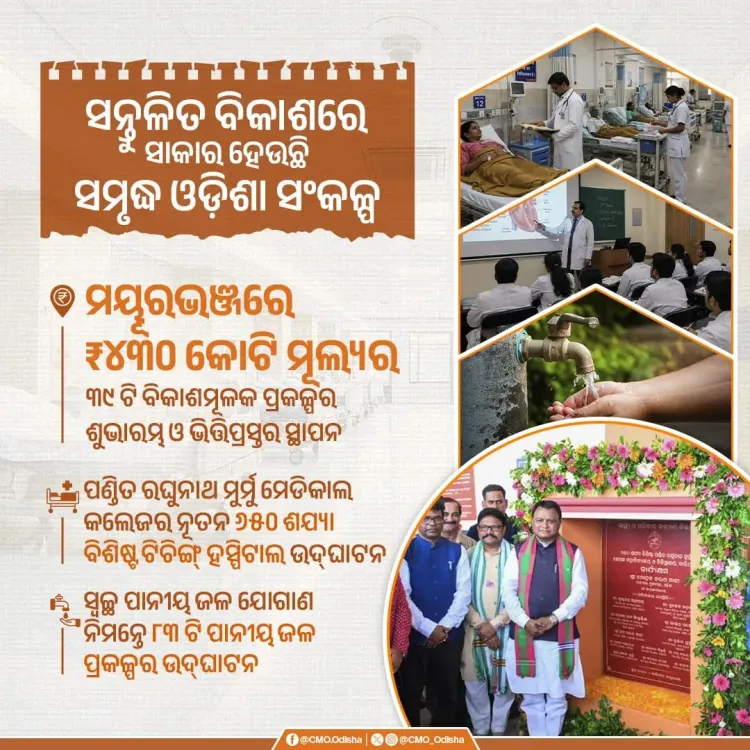
The Chief Minister's Office of Odisha has announced the inauguration and foundation-laying of 39 development projects worth ₹430 crore in Mayurbhanj, including a new 650-bed teaching hospital at Pandit Raghunath Murmu Medical College and 83 drinking-water schemes, in a push to reduce regional infrastructure disparities.
Key Takeaways
39 development projects worth ₹430 crore were inaugurated or foundation-laid in Mayurbhanj district on June 10, 2026 .
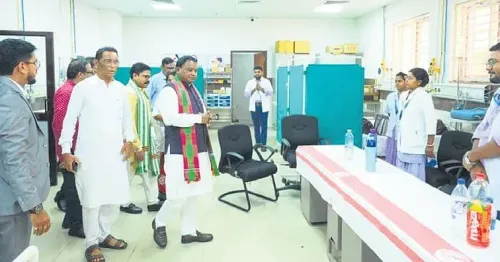
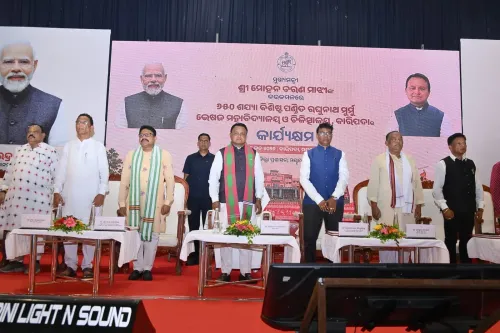
A new 650-bed teaching hospital at Pandit Raghunath Murmu Medical College, Baripada was formally inaugurated, boosting tertiary healthcare in a tribal-majority district.
83 drinking-water projects were launched to expand clean piped-water access to rural households across Mayurbhanj .
Mayurbhanj is Odisha's largest district by area and has a significant Scheduled Tribe population historically underserved on health and water metrics.
The investment continues Odisha's multi-phase strategy of equitable infrastructure rollout in northern and western districts that lag on development indices.
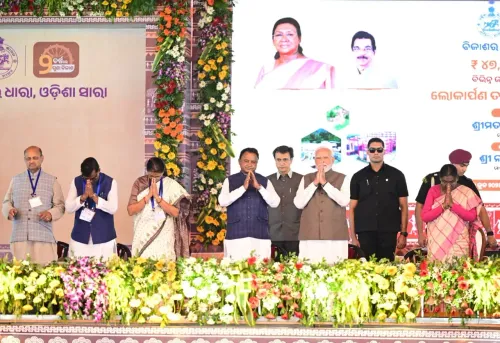
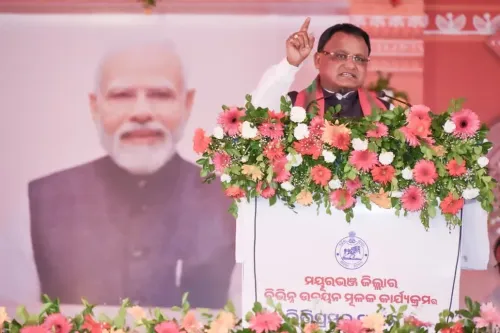
The Chief Minister's Office of Odisha on Wednesday, June 10, 2026, announced the inauguration and foundation-laying of 39 development projects worth ₹430 crore in Mayurbhanj district, marking a significant push to accelerate infrastructure growth in one of the state's most historically underserved regions.
Context
The CMO's post, written in Odia, states: 'ଓଡ଼ିଶାର ସବୁ ଅଞ୍ଚଳକୁ ସମାନ ଗୁରୁତ୍ୱ ଦେଇ କାର୍ଯ୍ୟ କରିବା ପାଇଁ ଲୋକଙ୍କ ସରକାର ନିରନ୍ତର ଉଦ୍ୟମ ଜାରି ରଖିଛନ୍ତି' ('The people's government continues its unrelenting effort to give equal importance to every region of Odisha'). Among the headline projects is the inauguration of a new 650-bed teaching hospital at Pandit Raghunath Murmu Medical College in Baripada, which is expected to substantially strengthen tertiary healthcare access for residents of the district and surrounding areas.
Policy Backdrop
Pandit Raghunath Murmu Medical College was established around 2018–19 as part of Odisha's deliberate strategy to expand medical education and hospital infrastructure in tribal-majority northern districts. The addition of a 650-bed teaching hospital represents a major capacity upgrade, enabling the college to serve as a full-fledged referral centre for a district where specialist healthcare has long been scarce. Alongside the hospital, 83 drinking-water projects were inaugurated, aimed at delivering clean piped water to rural and semi-urban households across Mayurbhanj. Odisha has implemented successive phases of rural piped-water schemes since the mid-2010s under both state-funded and centrally sponsored programmes, and this latest tranche continues that trajectory.
Stakeholders and Impact
Mayurbhanj is Odisha's largest district by area and carries a significant Scheduled Tribe population, communities that have historically recorded lower outcomes on health and water-access indices. The 650-bed hospital directly addresses the district's dependence on distant referral facilities in Bhubaneswar or Kolkata for advanced treatment. The 83 drinking-water schemes target rural households where groundwater quality and supply reliability remain persistent concerns, with clean water access linked directly to reductions in water-borne disease burden.
What's Next
The operationalisation timeline of the 650-bed teaching hospital — including staffing, equipment commissioning, and patient intake — will be closely watched over the next 12 to 18 months as a measure of the state's delivery capacity. Coverage data from the 83 water projects, including the number of households connected and water quality testing outcomes, will serve as the other key performance indicator for this investment round. The government's stated commitment to 'equal importance for every region' sets a benchmark against which similar rollouts in other lagging districts — particularly in Odisha's western belt — are likely to be measured.
Point of View
Sustained investment in tribal-majority northern districts serves a dual purpose: narrowing genuine development gaps while consolidating political ground in a region that has historically swung between parties. The ₹430 crore outlay, if delivered on schedule, would represent one of the larger single-district infrastructure pushes in recent Odisha history. The real test will be whether the 650-bed hospital achieves full operational capacity and whether the water schemes sustain supply quality beyond the inauguration phase.
NationPress
26 Oct 2026
Frequently Asked Questions
What projects were inaugurated in Mayurbhanj by the Odisha government in June 2026?
The Odisha government inaugurated and laid the foundation for 39 development projects worth ₹430 crore in Mayurbhanj on June 10, 2026, including a 650-bed teaching hospital at Pandit Raghunath Murmu Medical College and 83 drinking-water schemes.
What is Pandit Raghunath Murmu Medical College?
Pandit Raghunath Murmu Medical College is a government medical institution in Baripada, Mayurbhanj, established around 2018–19 to expand medical education and healthcare access in Odisha's tribal-majority northern districts.
How many drinking water projects were launched in Mayurbhanj?
83 drinking-water projects were inaugurated in Mayurbhanj as part of the June 2026 infrastructure push, aimed at providing clean piped water to rural and semi-urban households across the district.
Why is Mayurbhanj significant for Odisha's development agenda?
Mayurbhanj is Odisha's largest district by area with a significant Scheduled Tribe population that has historically recorded lower outcomes on health and water-access indices, making it a priority for the state's equitable development strategy.
What is the total value of the Mayurbhanj development projects announced in 2026?
The total value of the 39 development projects announced in Mayurbhanj is ₹430 crore, covering healthcare infrastructure and drinking-water supply among other sectors.