32 Pakistani military personnel linked to terror cases since 2003: Report
Synopsis
A documented review spanning two decades names 32 serving or former Pakistani military personnel — from lance naiks to a brigadier — linked to terror groups across 23 cases. The list includes officers tied to the 2008 Mumbai attacks, Al Qaeda, LeT, and TTP, with the most recent case involving a suspected Pakistan Army havildar killed in Jammu and Kashmir on 30 September 2026.
Key Takeaways
32 serving or former Pakistani military personnel have been convicted, prosecuted, investigated, or credibly linked to terrorism between December 2003 and October 2026 , across 23 cases , according to a Sunday Guardian review.
Ranks implicated range from lance naik to brigadier , spanning the Pakistan Army and Air Force .
The largest cluster of cases stems from the 2008 Mumbai terror attacks , with the NIA naming Major Iqbal , Major Sameer Ali , and retired Major Abdur Rehman Hashim Syed as conspirators.
Adnan Rashid , convicted over the December 2003 assassination attempt on Pervez Musharraf , later escaped prison and reportedly became a TTP commander.
Tahawwur Rana , a former Pakistani military personnel, was extradited from the US to India in 2025 to face trial over the Mumbai attacks.
The most recent disputed case involves Mohammad Asif alias Hashim Moosa , a suspected former Pakistan Army havildar killed in Jammu and Kashmir on 30 September 2026 .
As many as 32 serving or former Pakistani military personnel have been convicted, prosecuted, investigated, designated, or credibly linked to terrorist groups, terrorism-related conspiracies, or militant activity between December 2003 and October 2026, according to a review of documented cases cited in a report by The Sunday Guardian. The cases span 23 separate incidents and range from assassination attempts on a former Pakistani head of state to alleged involvement in the 2008 Mumbai terror attacks.
Scope of the Cases
The individuals implicated include personnel of varying ranks — from a lance naik and havildar to a colonel and brigadier. The report, authored by Abhinandan Mishra in The Sunday Guardian, cautions that not all 32 individuals should be treated as judicially proven terrorists, as the nature of cases varies significantly. 'Some personnel were convicted by Pakistani military courts, some were convicted or prosecuted abroad, others were named in terrorism investigations or designated by foreign governments, while a smaller number remain the subject of allegations or intelligence assessments,' Mishra wrote.
Musharraf Assassination Attempts and Military Convictions
Among the earliest documented cases, Pakistani military courts convicted multiple personnel over two attempts on then-President and Army Chief Pervez Musharraf's life in December 2003. Six Pakistan Air Force personnel — Karam Din, Adnan Rashid, Khalid Mehmood, Nawazish, Niaz Mohammad, and Nasrullah — were convicted over the 14 December attempt; five were sentenced to death and one received life imprisonment. Notably, Adnan Rashid later escaped from prison and reportedly rose to become a commander in the Tehreek-e-Taliban Pakistan (TTP).
The second December 2003 conspiracy involved Army personnel including Havaldar Mohammad Younis, SSG Naik Arshad Mahmood, and Lance Naik Zafar Iqbal Dogar. In 2005, a Pakistani military court tried six officers over alleged links with Al Qaeda, while a separate case the same year saw three Pakistan Air Force personnel convicted over ties to Jaish-e-Mohammed. In 2012, a Pakistan Army court-martial convicted Brigadier Ali Khan and four majors — Inayat Aziz, Iftikhar, Sohail Akbar, and Jawad Baseer — over connections with Hizb-ut-Tahrir. Ali Khan received a five-year sentence, Sohail Akbar three years, Jawad Baseer two years, and Inayat Aziz and Iftikhar 18 months each.
The 2008 Mumbai Attacks and Pakistani Officers
The largest cluster of cases involves the 2008 Mumbai terror attacks. India's National Investigation Agency (NIA) has identified Major Iqbal and Major Sameer Ali as Pakistani intelligence officers whose roles emerged during its investigation into the Mumbai conspiracy. The NIA also identified retired Pakistan Army Major Abdur Rehman Hashim Syed, alias Pasha, as a conspirator, issuing non-bailable warrants and seeking international legal assistance.
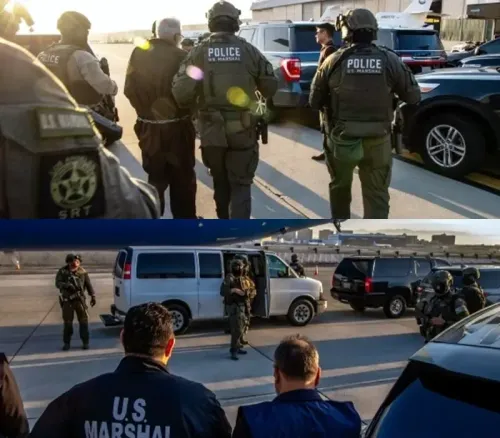
US federal proceedings separately implicated Major Iqbal in the Mumbai plot. According to the US indictment, Iqbal was in contact with David Headley through Tahawwur Rana, and subsequently met Headley and received surveillance intelligence gathered inside India. Rana was himself a former Pakistani military personnel embedded in the wider network; he was extradited from the United States to India in 2025 to face trial for his role in the 26 November 2008 attacks.
The Latest Disputed Case: Mohammad Asif alias Hashim Moosa
The most recent controversy centres on Mohammad Asif, also known as Hashim Moosa or Asif Fauji. On 30 September 2026, Indian security forces announced they had killed a senior Lashkar-e-Taiba (LeT) commander by that name in Jammu and Kashmir. According to India's Ministry of Home Affairs, Musa was the last surviving member of a four-member LeT commander group that had been operating in the region since 2022. Indian security sources subsequently identified him as a former Pakistan Army havildar — a claim that remains disputed, per the report.
This comes amid longstanding allegations, backed by court records across multiple jurisdictions, that former Army Major Haroon Ashiq and his brother Khurram Ashif left the Pakistani military and became associated with LeT and Al Qaeda-linked networks. The pattern, analysts argue, points to a structural problem that transcends individual actors.
What the Pattern Suggests
The 23-case dataset, spanning over two decades, covers convictions in Pakistani military courts, prosecutions in Western jurisdictions, NIA investigations, and foreign government designations. Critics argue that the breadth and consistency of the record — cutting across different governments in Islamabad and different administrations in Washington and New Delhi — makes it difficult to dismiss as isolated or fabricated. The findings are likely to intensify scrutiny of Pakistan's military establishment at a time when India-Pakistan tensions over cross-border terrorism remain unresolved.
Point of View
Two dozen incidents, multiple jurisdictions, and a rank ladder that stretches from lance naik to brigadier. That breadth makes the 'rogue element' defence increasingly implausible. What the data does not settle — and what mainstream coverage rarely presses on — is whether the Pakistani state's response to these cases (military court convictions, prison escapes, subsequent jihadist careers) reflects institutional failure or institutional ambiguity. The Tahawwur Rana extradition in 2025 has already forced that question back into courtrooms; the Hashim Moosa case may do so again on the diplomatic front.
NationPress
4 Oct 2026
Frequently Asked Questions
How many Pakistani military personnel have been linked to terrorism since 2003?
According to a Sunday Guardian review of documented cases, 32 serving or former Pakistani military personnel have been convicted, prosecuted, investigated, designated, or credibly associated with terrorist groups or militant activity between December 2003 and October 2026. The cases span 23 separate incidents and involve groups including Lashkar-e-Taiba, Al Qaeda, Jaish-e-Mohammed, and the TTP.
Who is Mohammad Asif alias Hashim Moosa, and why is his case disputed?
Mohammad Asif, also known as Hashim Moosa or Asif Fauji, was identified by Indian security forces as a senior Lashkar-e-Taiba commander killed in Jammu and Kashmir on 30 September 2026. India's Ministry of Home Affairs described him as the last surviving member of a four-member LeT commander group active since 2022, and Indian security sources identified him as a former Pakistan Army havildar — a claim that remains disputed according to the report.
What role did Pakistani military personnel play in the 2008 Mumbai attacks?
India's NIA identified Major Iqbal and Major Sameer Ali as Pakistani intelligence officers linked to the Mumbai conspiracy, and issued non-bailable warrants against retired Major Abdur Rehman Hashim Syed alias Pasha. US federal proceedings also implicated Major Iqbal, alleging he communicated with David Headley through Tahawwur Rana and received surveillance intelligence gathered inside India.
Who is Tahawwur Rana and what happened to him?
Tahawwur Rana is a former Pakistani military personnel who was part of the wider network behind the 26 November 2008 Mumbai terror attacks. He was extradited from the United States to India in 2025 to face trial for his role in the attacks.
What happened to Adnan Rashid after his conviction in a Pakistani military court?
Adnan Rashid, a Pakistan Air Force personnel convicted over the December 2003 assassination attempt on President Pervez Musharraf, later escaped from prison. He subsequently became a commander in the Tehreek-e-Taliban Pakistan (TTP), according to the Sunday Guardian report.