Owaisi targets Akhilesh, INDIA bloc over selective outrage
Synopsis
AIMIM president Asaduddin Owaisi on October 19 publicly accused Akhilesh Yadav and the INDIA bloc of mobilising for Saifai's Yadavs while ignoring Muslim grievances, sharpening fault lines ahead of the 2027 Uttar Pradesh assembly elections.
Key Takeaways
Asaduddin Owaisi publicly targeted Akhilesh Yadav and the INDIA alliance on October 19, 2026 , accusing them of selective outrage.
He invoked Saifai — the Yadav family's ancestral base in Etawah, Uttar Pradesh — as shorthand for the alliance's Yadav-first political priorities.
Owaisi charged that the opposition bloc acts swiftly when a Yadav faces legal trouble but remains indifferent to Muslim community grievances.
The INDIA alliance was formed in July 2023 to contest the NDA; AIMIM has consistently pushed for explicit minority representation within opposition politics.
The statement sharpens existing fault lines ahead of the 2027 Uttar Pradesh assembly elections , when seat-sharing negotiations will be critical.
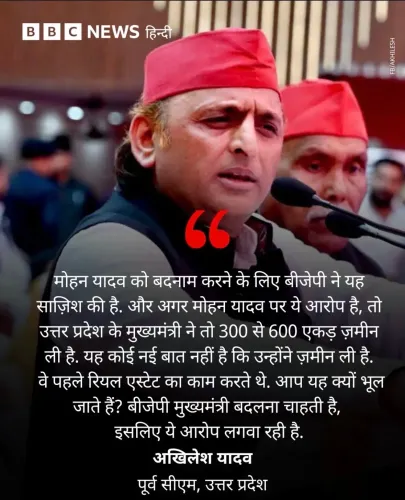
A sharp rebuke arrived on Monday, October 19, 2026 from an unlikely but familiar corner of India's opposition landscape: AIMIM president Asaduddin Owaisi publicly called out Samajwadi Party chief Akhilesh Yadav and the INDIA alliance, accusing them of mobilising quickly when someone from Saifai — the Yadav family's ancestral village in Etawah, Uttar Pradesh — faces trouble with the law, while staying conspicuously silent about the grievances of Muslim communities.
Owaisi's pointed dig, circulated widely on social media, paraphrased the contrast starkly: if a Yadav from Saifai lands in jail, the entire machinery of the INDIA bloc swings into action — but his community's pain, he made clear, draws no such urgency. 'Mujhe aapki takleef...' (I understand your suffering) was the sardonic frame he chose, underscoring what he sees as a hierarchy of concern inside the opposition fold.
The Saifai jab and what it signals
Saifai is not just a village — it is the political heartland of the Mulayam Singh Yadav dynasty and a powerful symbol of the Yadav community's grip on Samajwadi Party identity. Invoking it by name is a deliberate rhetorical move. Owaisi is not merely criticising one leader; he is challenging the structural logic of Yadav-first politics that has long defined the SP's electoral calculus in Uttar Pradesh.
The critique lands at a sensitive moment. The INDIA alliance, assembled in July 2023 to mount a unified front against the BJP-led NDA, has struggled to paper over internal fault lines between parties with very different caste and community bases. For smaller constituents like AIMIM — which primarily draws from Muslim voters — the alliance's silence on minority-specific grievances has always been a pressure point. Owaisi is now saying that pressure point aloud, in public, with a name attached.
Friction inside the bloc ahead of 2027
This is not the first time such friction has surfaced. Regional parties in the INDIA grouping have historically juggled their core Yadav base with a more cautious approach to explicit Muslim outreach — a balancing act that often leaves smaller outfits feeling instrumentalised rather than represented. Owaisi has repeatedly argued that treating Muslim voters as a guaranteed bloc, without reciprocal attention to their concerns, is a form of political bad faith.
With Uttar Pradesh assembly elections scheduled for 2027, the timing of this broadside is anything but accidental. Seat-sharing talks, campaign messaging, and community mobilisation are already quietly underway. A public calling-out of Akhilesh Yadav now forces the SP and the broader alliance to respond — or absorb the cost of continued silence.
Whether this is the opening move in a negotiation or a genuine break, the signal is clear: AIMIM will not be a quiet junior partner in any arrangement that does not explicitly account for Muslim political concerns.
Point of View
He is contesting the unspoken hierarchy inside the INDIA bloc — where Yadav-centric SP priorities often crowd out explicit Muslim political demands. Ahead of the 2027 UP polls, this kind of pressure is a classic pre-negotiation signal: raise the cost of being ignored publicly so that seat-sharing and messaging concessions follow privately. The real test is whether the SP responds, stays silent, or quietly adjusts its outreach calculus.
NationPress
19 Oct 2026
Frequently Asked Questions
Why did Owaisi criticise Akhilesh Yadav and the INDIA bloc?
Owaisi accused the INDIA alliance and Samajwadi Party of quickly rallying around Yadav community members from Saifai when they face legal trouble, while remaining indifferent to Muslim community grievances — pointing to what he sees as a hierarchy of concern inside the opposition coalition.
What is Saifai and why did Owaisi mention it?
Saifai is the ancestral village of the Mulayam Singh Yadav political family in Etawah district, Uttar Pradesh. Owaisi used it as a pointed symbol of the Yadav-first politics he says dominates the Samajwadi Party and, by extension, the INDIA alliance.
Is AIMIM part of the INDIA alliance?
AIMIM is not a core member of the INDIA alliance. Owaisi has maintained an independent political line and has repeatedly criticised larger opposition parties for treating Muslim voters as a captive bloc without offering reciprocal political attention.
How does this affect the 2027 Uttar Pradesh elections?
The statement sharpens existing fault lines inside the opposition before seat-sharing talks for the 2027 UP assembly elections begin in earnest. It pressures the SP and INDIA bloc to either address Muslim political concerns explicitly or risk public criticism that could complicate voter consolidation.
What is the INDIA alliance and when was it formed?
The INDIA (Indian National Developmental Inclusive Alliance) is a multi-party opposition coalition formed in July 2023 to contest elections against the BJP-led NDA. It includes the Congress, Samajwadi Party, and several other regional parties, though its internal coordination has faced persistent challenges.