Jal Shakti Minister Paatil Meets Guwahati Citizens
Synopsis
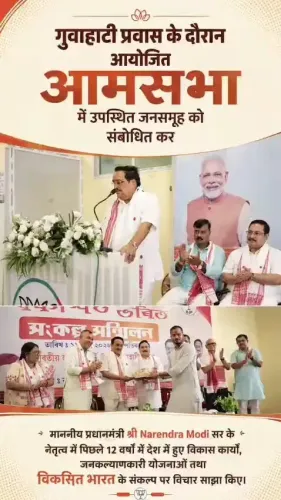
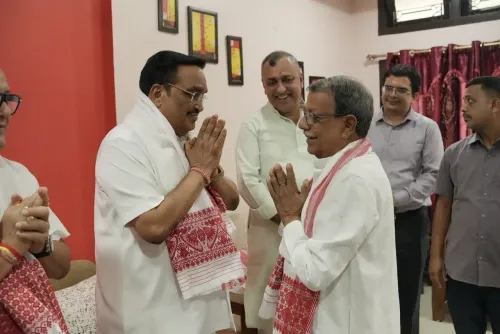
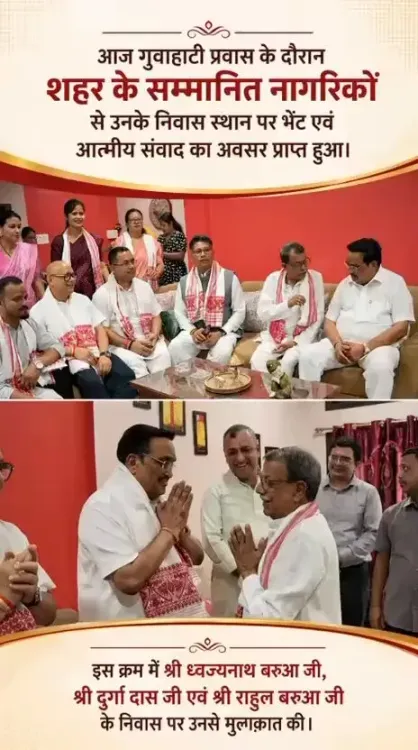
Union Jal Shakti Minister C. R. Paatil visited Guwahati on 11 June 2026 and met respected residents of the city at their homes, sharing a video of the warm interaction on social media and describing it as an opportunity for heartfelt dialogue.
Key Takeaways
Union Jal Shakti Minister C.
Paatil visited Guwahati on 11 June 2026 during a day-long tour of Assam.
He met respected citizens of the city at their residences, describing the interaction as 'aatmiya samvaad' (heartfelt dialogue).
A video of the visit was shared on social media by the minister himself.
The Jal Shakti Ministry , which Paatil heads, oversees the Jal Jeevan Mission — a flagship programme with significant operations in Assam .
The BJP has held power in Assam since 2016 , and central ministerial outreach to the state carries both policy and political significance.
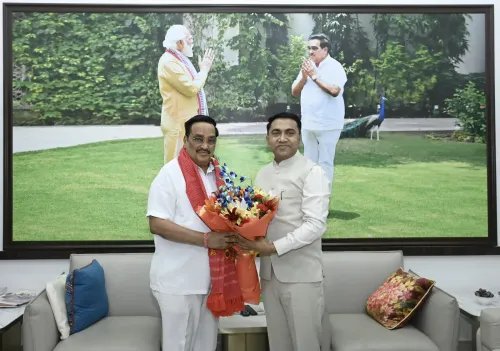
Union Jal Shakti Minister C. R. Paatil visited Guwahati on Thursday, 11 June 2026, meeting respected residents of the city at their homes during a day-long tour of Assam's capital. The minister shared a glimpse of the warm interaction on social media, describing it as an opportunity for heartfelt dialogue with the city's citizens.
Posting in Hindi, Paatil wrote: 'aaj Guwahati pravas ke dauran sheher ke sammanit nagarikon se unke nivas sthan par bhent evam aatmiya samvaad ka avsar prapt hua' — ('During today's visit to Guwahati, I had the opportunity to meet respected citizens of the city at their residences and engage in warm, heartfelt conversation') — accompanied by a video capturing moments from the visit.
Context
Guwahati, the largest city in Assam and the primary urban hub of Northeast India, sits on the banks of the Brahmaputra river. As a central minister, Paatil's outreach to citizens at their homes — rather than formal institutional settings — reflects a direct-engagement approach that senior BJP leaders have increasingly adopted during state visits. The meeting with 'sammanit nagarikon' (respected citizens) suggests interactions with civic leaders, community figures, or local influencers, though no specific names were disclosed in the post.
Policy Backdrop
The Jal Shakti Ministry, formed in 2019, oversees water resources, drinking water supply, and sanitation across India. Its flagship programme, the Jal Jeevan Mission, aims to provide functional household tap connections in every rural home in the country. Assam, with large rural populations spread across difficult terrain, has been a key focus state for the mission's implementation in the Northeast region. Central ministers' visits to states often serve as checkpoints for reviewing on-ground progress of such programmes.
Paatil, who previously served as BJP Gujarat state president before being elevated to the Union Cabinet, has been actively engaging with states on water infrastructure delivery. Northeast India has historically faced challenges in water supply coverage, making ministerial visits to the region particularly significant from a policy standpoint.
Stakeholders and Impact
Urban residents and civic communities of Guwahati are the immediate stakeholders in this interaction. Direct citizen engagement by a Union minister can surface local concerns about water supply, sanitation, and urban infrastructure that may not always surface through formal bureaucratic channels. For the BJP, sustained outreach in Assam — a state where the party has held power since 2016 — also carries political significance ahead of future electoral cycles. Successive central governments have treated the Northeast as a priority region, and ministerial visits reinforce that posture at the grassroots level.
What's Next
Further details on the outcomes of Paatil's Guwahati visit — including any announcements related to Jal Jeevan Mission targets or urban water infrastructure projects in Assam — are expected to emerge through official ministry communications. Parliamentary questions and state-level implementation reports on Jal Shakti schemes in the Northeast will be a key indicator of the follow-through from such visits. The ministry's progress data for Assam in the coming months will offer a clearer picture of on-ground impact.
Point of View
A region the party has cultivated as a political stronghold since 2016. For a minister heading the Jal Shakti portfolio, such visits also serve a functional purpose — gathering citizen-level feedback on water supply and sanitation delivery that formal reviews may miss. The choice to share a video of the interaction on social media underscores the dual role these visits play: governance touchpoint and public-relations exercise. Whether the visit translates into concrete policy action for Assam's water infrastructure will be the real measure of its significance.
NationPress
26 Oct 2026
Frequently Asked Questions
Why did Jal Shakti Minister C. R. Paatil visit Guwahati?
C. R. Paatil visited Guwahati on 11 June 2026 to meet respected citizens of the city at their residences and hold direct conversations, as part of his broader outreach during the tour of Assam .
What is the Jal Jeevan Mission and how does it relate to Assam?
The Jal Jeevan Mission , launched in 2019 under the Jal Shakti Ministry , aims to provide functional household tap connections across rural India. Assam , with large rural populations and challenging terrain, is a key implementation state for the mission in Northeast India.
What did C. R. Paatil post on X about his Guwahati visit?
Paatil posted in Hindi that during his Guwahati visit he had the opportunity to meet respected citizens at their homes and engage in warm, heartfelt dialogue, sharing a video from the interaction.
What is C. R. Paatil's current role in the Indian government?
C. R. Paatil is the Union Minister of Jal Shakti , heading the ministry responsible for water resources, drinking water supply, and sanitation across India. He is also a senior BJP leader and former Gujarat state president of the party.
Which party governs Assam and since when?
The BJP has governed Assam since 2016 , making it one of the party's key states in Northeast India. Central ministerial visits to the state carry both governance and political significance.