Jal Shakti Minister Paatil invokes people's blessings as political armour
Synopsis
Union Jal Shakti Minister C. R. Paatil on 21 July 2026 posted a combative Hindi message on X, declaring that the blessings of crores of Indians and the protective shield of mothers and sisters make political leadership impervious to opposition sloganeering.
Key Takeaways
Paatil , Union Minister of Jal Shakti and senior BJP leader, posted a combative Hindi statement on X on 21 July 2026 .
He declared that no amount of opposition sloganeering can 'dig the grave' of leadership shielded by the blessings of crores of citizens .
The post invoked the 'raksha kavach' (protective armour) of mothers and sisters as a symbol of mass popular support.
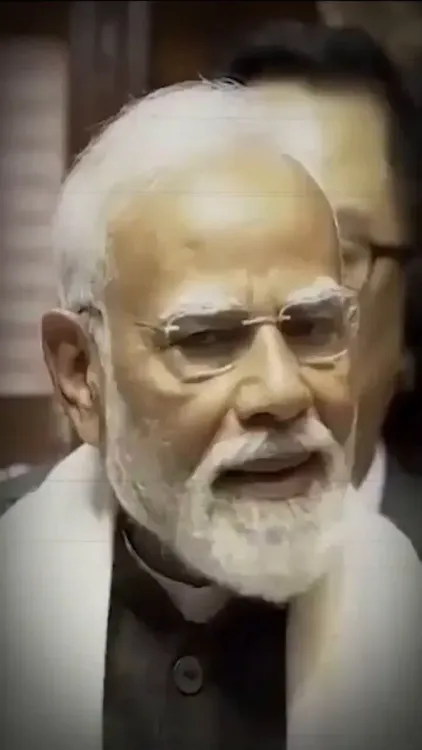
The post was accompanied by a video , suggesting it originates from a public address or rally.
The statement follows a recurring BJP communication pattern of anchoring political legitimacy in grassroots public support.
Opposition responses in Parliament or on social media remain a key watch-point.
Union Jal Shakti Minister C. R. Paatil posted a sharp rhetorical statement on X on 21 July 2026, invoking the blessings of crores of Indians and the protective shield of mothers and sisters as an unbreakable defence against political opponents.
Context
Paatil's post, written in Hindi, declares: 'नारे कितने ही लगा लो, कब्र तुम नहीं खोद पाओगे!' — 'No matter how many slogans you raise, you will never be able to dig the grave!' The message is addressed implicitly at political opponents, asserting that the blessings of 'koti-koti' (crores upon crores) of ordinary citizens and the protective shield of mothers and sisters make national leadership invulnerable to political attack.
The post accompanied a video, suggesting it may be a clip from a public address or rally, though the precise occasion has not been independently confirmed. Paatil is a senior BJP leader who previously served as Gujarat BJP state president before being elevated to the Union Cabinet as Minister of Jal Shakti.
Policy Backdrop
Rhetorical messaging of this kind — anchoring political legitimacy in mass public support rather than institutional arguments — is a recurring feature of BJP communication strategy, particularly during periods of heightened opposition pressure. Ministers and senior party leaders periodically issue such statements to reinforce the narrative that the ruling dispensation draws its strength from the grassroots, not from elite or parliamentary corridors alone.
Paatil's reference to 'raksha kavach' (protective armour) drawn from the blessings of mothers and sisters echoes a broader cultural idiom frequently used in Indian political discourse to frame popular support as a near-sacred shield. The framing is designed to signal confidence and deflect criticism simultaneously.
Stakeholders and Impact
BJP supporters are the primary audience for messaging of this nature, serving to energise the base and project an image of unassailable popular backing. At the same time, the combative tone — directly challenging opponents to 'raise all the slogans they want' — signals that the party is prepared for sustained political contestation.
Opposition parties are the implied target. Such statements typically precede or follow exchanges in Parliament, during state election cycles, or in the wake of specific political controversies. The statement does not name any individual opponent or reference a specific incident, keeping it broadly applicable as a political rallying message.
What's Next
The immediate watch-point is whether opposition parties respond to Paatil's statement in Parliament or on social media, and whether the video attached to the post surfaces in a wider political context — such as a party rally or campaign event. With state election cycles periodically on the horizon, assertive messaging from Union ministers often signals that the party machinery is moving into a campaign-ready posture.
Paatil's post underscores a broader pattern: in India's current political climate, social media has become a primary arena for ministers to project strength, rally supporters, and pre-empt opposition narratives — often independently of any specific legislative or policy trigger.
Point of View
Making any opposition attack appear futile against the weight of mass public sentiment. The invocation of mothers and sisters as the source of a 'raksha kavach' is a culturally resonant move that frames political survival not as a matter of policy defence but of moral and emotional mandate. Such messaging tends to appear when the party senses either an imminent opposition offensive or a need to shore up base morale ahead of an electoral cycle. The combative but non-specific tone gives the statement wide applicability — it can be deployed retrospectively against almost any political challenge.
NationPress
20 Oct 2026
Frequently Asked Questions
What did C. R. Paatil post on X on 21 July 2026?
Paatil posted a Hindi message stating that no matter how many slogans opponents raise, they will never be able to 'dig the grave' of a leader shielded by the blessings of crores of citizens and the protective armour of mothers and sisters.
Who is C. R. Paatil?
C. R. Paatil is the Union Minister of Jal Shakti, a senior BJP leader, and a former president of the BJP's Gujarat state unit.
What does 'raksha kavach' mean in Paatil's post?
'Raksha kavach' translates to 'protective armour' or 'shield of protection.' Paatil used it to describe the blessings of crores of mothers and sisters as an unbreakable political defence.
Was Paatil's post directed at a specific opponent?
No. The post does not name any individual or reference a specific incident; it is broadly worded to counter unnamed political opponents who are 'raising slogans.'
Why do BJP ministers post such rhetorical statements?
Senior BJP leaders periodically issue such statements to reinforce narratives of popular legitimacy, energise their support base, and signal confidence ahead of parliamentary sessions or election cycles.