How Are Panels in 23 High Courts Connecting Litigants to Volunteer Lawyers for Free Legal Aid?
Click to start listening
Synopsis
The establishment of panels in 23 High Courts under the 'Nyaya Bandhu' program marks a significant step in making legal aid accessible to those in need. With thousands of volunteer lawyers registered, this initiative aims to bridge the gap between legal professionals and those who cannot afford legal services.
Key Takeaways
- The Nyaya Bandhu program aims to link eligible individuals with pro bono lawyers.
- Panels have been established in 23 High Courts for this purpose.
- As of November 30, 9,776 Pro Bono Advocates are registered.
- The initiative fosters a culture of volunteerism among law students.
- It operates under the Legal Services Authorities (LSA) Act, 1987.
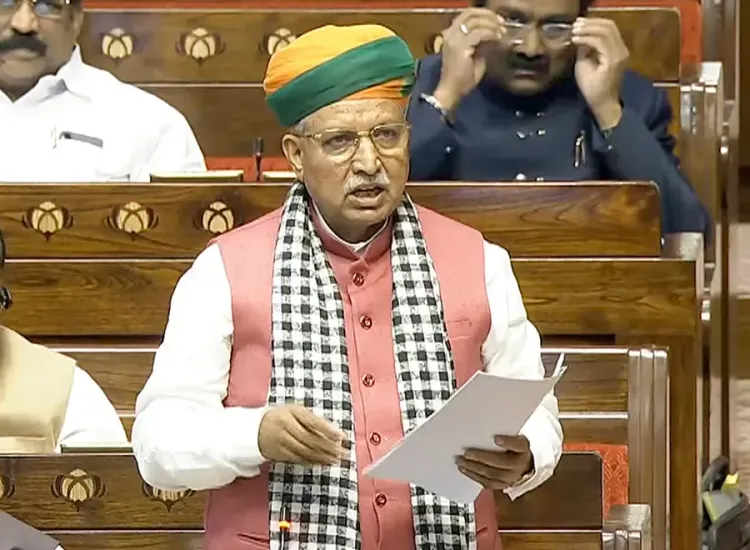
New Delhi, Dec 4 (NationPress) As a pivotal aspect of the 'Nyaya Bandhu' (Pro Bono Legal Services) initiative, 23 High Courts have established panels designed to connect individuals eligible for free legal aid with volunteer attorneys, as disclosed in the Rajya Sabha on Thursday.
Arjun Ram Meghwal, the Minister of State (Independent Charge) for the Ministry of Law and Justice, responded to inquiries by stating, "By November 30, a total of 9,776 Pro Bono Advocates have registered on the Nyaya Bandhu Portal."
He further noted, "To enhance the culture of Pro Bono service among emerging legal professionals, a Pro Bono Club sub-scheme has been launched across 109 law schools nationwide."
The Nyaya Bandhu program was initiated by the Government in 2017 to foster a spirit of voluntary service among legal practitioners and establish a framework for providing pro bono legal assistance throughout the country, according to Meghwal.
This program connects individuals who qualify for free legal aid under Section 12 of the Legal Services Authorities (LSA) Act, 1987, with pro bono lawyers. It has been incorporated into a citizen-focused scheme known as Designing Innovative Solutions for Holistic Access to Justice in India (DISHA), which is set to run from 2021 to 2026.
A major goal of the Nyaya Bandhu initiative is to register advocates who willingly contribute their time and expertise for case management and court assistance, Meghwal explained.
Moreover, the National Legal Services Authority (NALSA) was established under the LSA Act of 1987 to deliver free and effective legal services to underprivileged communities, including those categorized under Section 12 of the LSA Act, the Minister stated.
He mentioned that to this end, Legal Services Institutions have been established from the Taluk Court level all the way to the Supreme Court. However, NALSA and other Legal Services Institutions do not intervene in cases where pro bono services are voluntarily provided by advocates.
Point of View
The establishment of these panels reflects a strong commitment to social justice and legal accessibility. By fostering a culture of pro bono work among law students and professionals, India is taking crucial steps toward ensuring that legal aid is within reach for all, especially the underprivileged.
NationPress
04/12/2025
Frequently Asked Questions
What is the Nyaya Bandhu program?
The Nyaya Bandhu program is an initiative launched by the Government of India to provide pro bono legal services to individuals who cannot afford legal representation.
How many High Courts have established panels under this program?
Panels have been established in 23 High Courts across the country.
What is the purpose of the Pro Bono Club sub-scheme?
The Pro Bono Club sub-scheme aims to encourage law students to engage in pro bono work and develop a culture of voluntary legal service.
How many advocates are registered on the Nyaya Bandhu Portal?
As of November 30, a total of 9,776 Pro Bono Advocates have registered on the Nyaya Bandhu Portal.
Who can avail of the legal aid services?
Individuals eligible for free legal aid under Section 12 of the Legal Services Authorities (LSA) Act, 1987 can avail of these services.