Bihar's Chief Minister Samrat Choudhary Launches Fun Run for Nari Shakti Vandan Act
Synopsis
On April 17, Bihar's Chief Minister, Samrat Choudhary, initiated a fun run in Patna to promote the Nari Shakti Vandan Act. This event reflects a growing public endorsement for women's empowerment and highlights legislative efforts aimed at increasing women's representation in governance.
Key Takeaways
Fun Run Initiated: Patna hosts a fun run led by CM Samrat Choudhary.
Nari Shakti Vandan Act: Advocates for 33% women's reservation in governance.
Public Support: Event highlights growing community support for women's empowerment.
Legislative Impact: Women's Reservation Bill passed but awaits Census completion.
Future Proposals: Consideration of using 2011 Census data for faster implementation.
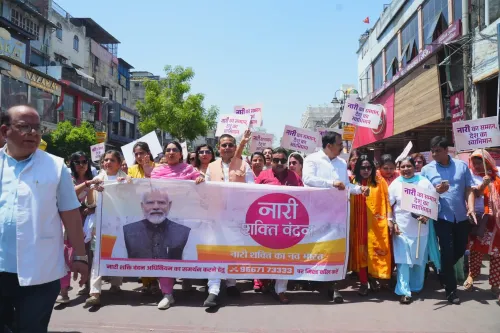
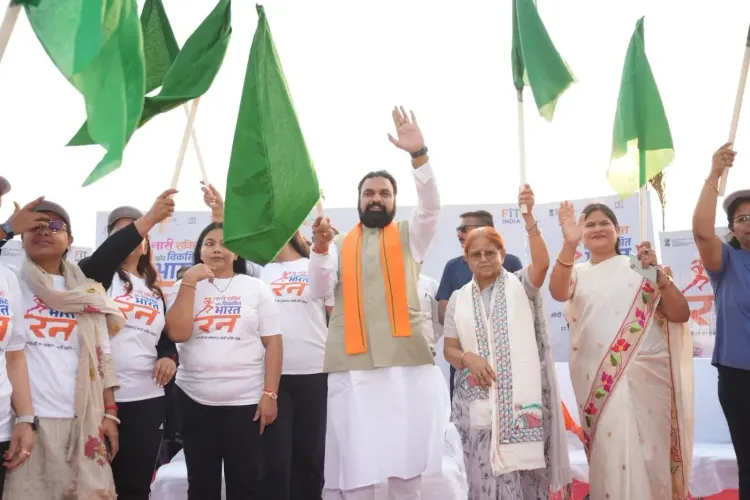
Patna, April 17 (NationPress) The Chief Minister of Bihar, Samrat Choudhary, officially launched a "fun run" event in Patna on Friday to advocate for the Nari Shakti Vandan Act, amidst ongoing discussions regarding the legislation in the Lok Sabha.
This event was organized to showcase community backing for women's empowerment, with participants running from the Digha roundabout to JP Setu.
The Chief Minister kicked off the run by waving a green flag and addressing the crowd, underscoring the significance of women's dignity, safety, and their active role in governance.
During his speech, Samrat Choudhary pointed out that the legislation aims to ensure a 33% reservation for women in both the Lok Sabha and State Assemblies, a significant initiative promoted by Prime Minister Narendra Modi.
He also acknowledged the contributions of former Chief Minister Nitish Kumar for his earlier efforts to enhance the rights and representation of women in Bihar.
The Chief Minister remarked that the vibrant participation of women at the event illustrated a rising support for the law and the overarching mission to empower Nari Shakti (women’s power) in public spheres.
Despite the Women’s Reservation Bill having passed in both Houses of Parliament in 2023 and receiving approval from President Droupadi Murmu, its enforcement is contingent upon the completion of the upcoming Census and subsequent delimitation.
This stipulation is necessary to redraw parliamentary constituencies and allocate reserved seats for women based on updated population data.
Current discussions within the government aim to expedite this implementation.
One proposal under review includes utilizing data from the 2011 Census instead of waiting for a new census, thereby accelerating the process ahead of forthcoming elections.
Moreover, reports indicate a comprehensive plan to increase the total strength of the Lok Sabha from 543 to approximately 816 seats, enabling around 33% reservation for women without significantly altering current representation.
An independent legislative framework for establishing a Delimitation Commission is also being considered in this scenario.
Point of View
This event showcases a pivotal movement towards enhancing women's representation in governance, reflecting a broader societal commitment to gender equality. The participation of the public, especially women, underscores the growing momentum for legislative change.
NationPress
19 Sept 2026
Frequently Asked Questions
What is the Nari Shakti Vandan Act?
The Nari Shakti Vandan Act aims to provide a 33% reservation for women in the Lok Sabha and State Assemblies, thereby promoting gender equality in political representation.
Who initiated the fun run in Patna?
The fun run was initiated by Bihar's Chief Minister, Samrat Choudhary, to support the Nari Shakti Vandan Act.
What is the significance of the Women's Reservation Bill?
The Women's Reservation Bill, which was passed in 2023, is crucial for ensuring women's representation in parliament and state assemblies, aimed at enhancing their role in governance.
Why is the implementation of the act contingent on the Census?
The implementation is contingent on the completion of the next Census and delimitation exercise, necessary for redrawing constituencies and reserving seats for women based on population data.
What future plans are being discussed regarding the Lok Sabha?
There are discussions to increase the Lok Sabha's strength from 543 to about 816 seats, enabling 33% reservation for women while maintaining current representation levels.