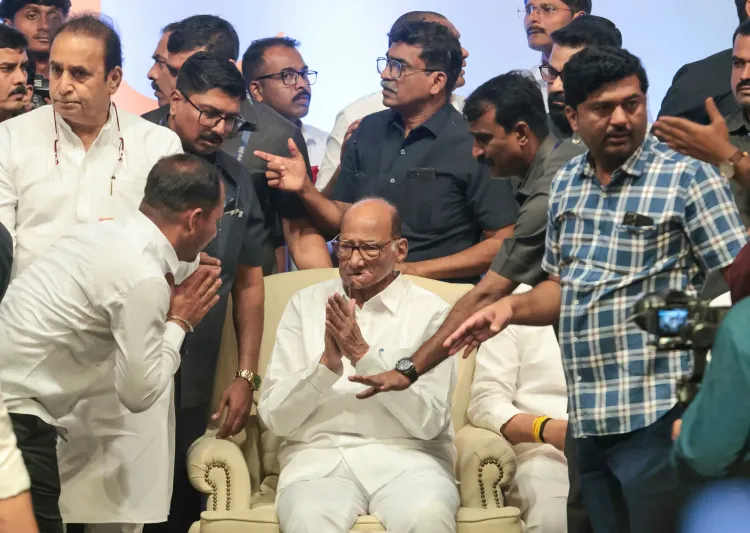
Is the Future of Pawar Politics in the Hands of the Maratha Strongman?
Synopsis
As Maharashtra's political landscape shifts, Sharad Pawar's enduring influence remains pivotal. The recent factional split within the NCP raises questions about the future of Pawar politics as family dynamics and political alliances evolve.
Key Takeaways
Sharad Pawar is a key player in Maharashtra politics, known for his influence.
The NCP was established in 1999 after a split from Congress.
Recent events have led to a split within the NCP, raising questions about its future.
The political landscape in Maharashtra is evolving, with potential reconciliations on the horizon.
Sharad Pawar's strategic role will remain crucial in future political developments.
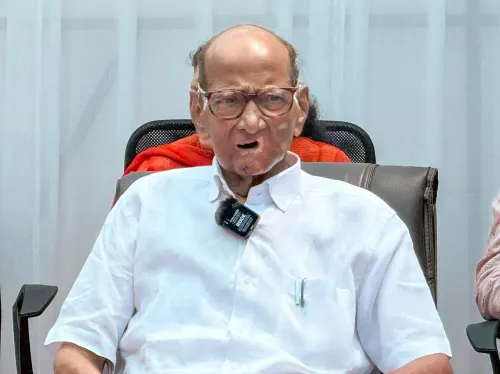
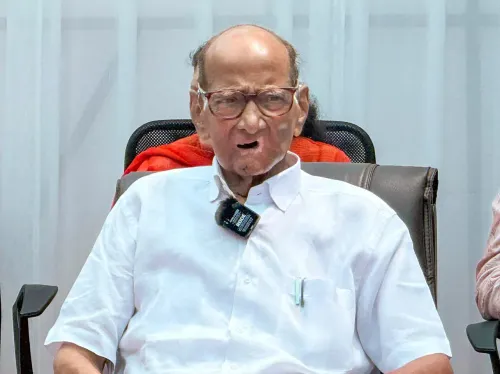
New Delhi, Jan 30 (NationPress) Politics involving the Pawar family has remained a cornerstone in Maharashtra, with the family patriarch Sharad Chandra Govindrao enjoying significant influence and respect, even within the elite circles of the national capital. Sharad Pawar, as he is widely recognized, was instrumental in establishing the Nationalist Congress Party (NCP) alongside colleagues who separated from the Congress party.
The inception of the NCP can be traced back to a leadership conflict within Congress that involved Sonia Gandhi. In May 1999, senior Congress leaders Sharad Pawar, P. A. Sangma, and Tariq Anwar openly contested Sonia Gandhi's leadership rights and her potential role as Prime Minister.
This public dissent led to their expulsion from the Congress and the official formation of the NCP in 1999 in New Delhi.
While his two colleagues diverged on various issues and eventually parted ways, Sharad Pawar has remained the anchor for the party's ascent in the political arena.
The octogenarian Pawar is recognized for his astute and often preemptive strategies that may at times seem at odds with established conventions.
Sangma initiated a split within the NCP when Pawar was perceived as supporting Sonia Gandhi.
Anwar stepped down due to Pawar’s endorsement of Prime Minister Narendra Modi during the Rafale deal controversy.
Sangma, a prominent figure in Indian politics who later founded the National People's Party (NPP), passed away in 2016, while Tariq Anwar currently serves as the Congress representative in the Lok Sabha from Bihar’s Katihar constituency.
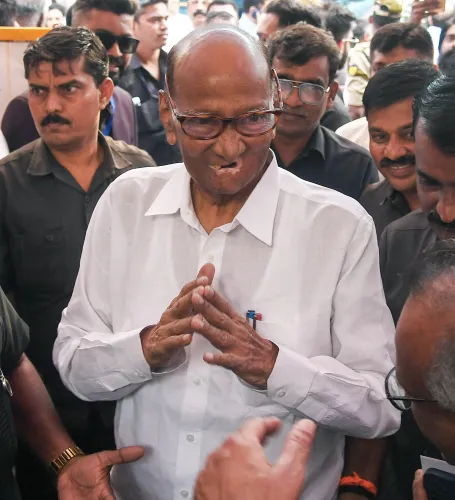
At the age of 85, despite being in the twilight of his life, Sharad Pawar continues to be a pivotal leader, even amidst a split in the NCP in 2023, where his faction lost its status as the original party.
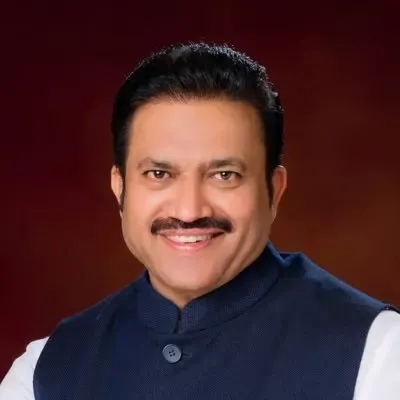
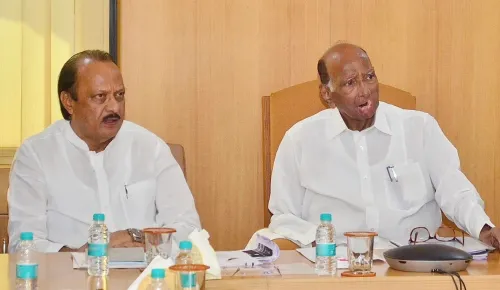
The rebel faction led by his nephew Ajit Pawar, previously viewed as Pawar’s successor, has been awarded the official party name and symbol.
The other faction has been required to register with Pawar’s name attached to the NCP.
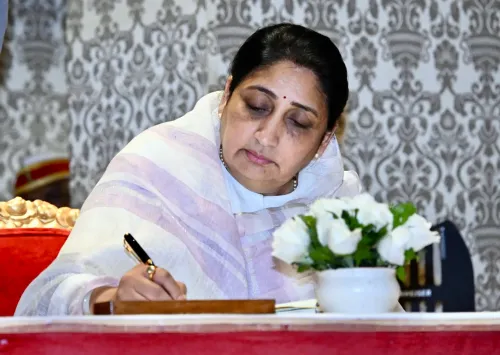
It is rumored that Ajit felt insecure about the rising prominence of his cousin, Supriya Sule, in Maratha politics, although she remains a Member of Parliament.
Reports indicate discussions of reconciliation following the Assembly election results and the recent local body elections in Maharashtra, where both factions underperformed despite an agreement on seat allocations in certain areas.
Insider reports suggest that talks of unification could occur after the 2024 Assembly election, where the Ajit faction secured 41 seats out of a total of 288 in Maharashtra, in contrast to the Bharatiya Janata Party (BJP) winning 132 seats and Eknath Shinde-led Shiv Sena claiming 57.
The NCP(SP) experienced a significant setback, winning only 10 out of the 87 seats it contested. This was compounded by the disappointing results in the recent civic polls, where the unified party had previously scored 54 seats in 2019.
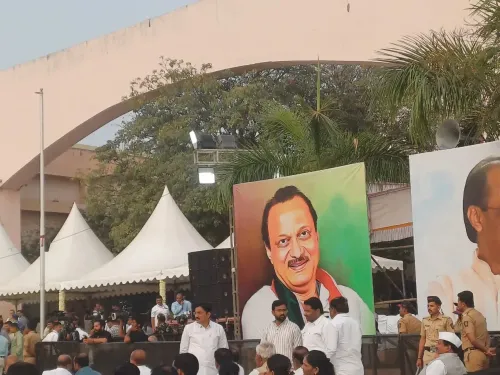
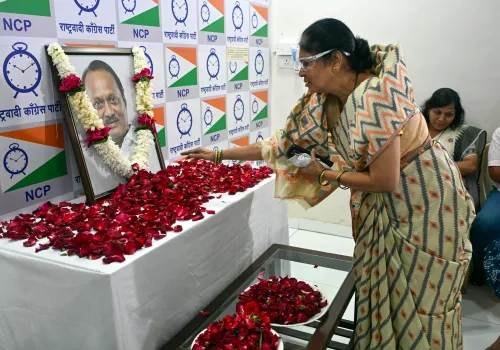
Now, the unfortunate demise of Ajit Pawar in a plane crash raises substantial questions regarding the future of the NCP.
Sources close to senior Pawar indicate that he is not planning an immediate response, choosing instead to wait for outreach before acting, particularly after the family concludes its religious observances following the tragedy.
Whether the factions will unite or face another division remains to be seen. However, the family's political patriarch will continue to hold significant influence—now and in the future—regardless of whether he aligns with the Opposition India bloc or the ruling coalition.
The role of Pawar will undoubtedly remain central to Maharashtra's political landscape, according to insiders from the NCP.
Point of View
The Pawar family remains a formidable entity in Maharashtra politics. Their influence, particularly that of Sharad Pawar, is marked by a blend of strategic maneuvering and long-standing relationships within the political framework. The recent splits and challenges faced by the NCP only underscore the ongoing evolution of political alliances in the region. As the political landscape continues to shift, the role of seasoned leaders like Sharad Pawar will be critical in navigating these complexities.
NationPress
7 Oct 2026
Frequently Asked Questions
What is the significance of Sharad Pawar in Indian politics?
Sharad Pawar has been a dominant figure in Maharashtra politics, known for his strategic acumen and ability to navigate complex political landscapes.
What led to the formation of the NCP?
The NCP was formed in 1999 following a leadership challenge within the Congress party, primarily involving Sharad Pawar and his colleagues.
What impact does Ajit Pawar's recent actions have on the NCP?
Ajit Pawar's actions and the subsequent split within the NCP have raised questions about the party's future and its cohesion going forward.
How has the Pawar family influenced Maharashtra's political landscape?
The Pawar family's influence is characterized by their leadership roles and strategic decisions that have shaped the political dynamics in Maharashtra over decades.
What are the future prospects for the NCP?
The future of the NCP will depend on potential reconciliations within the party and how it navigates the upcoming elections and political challenges.