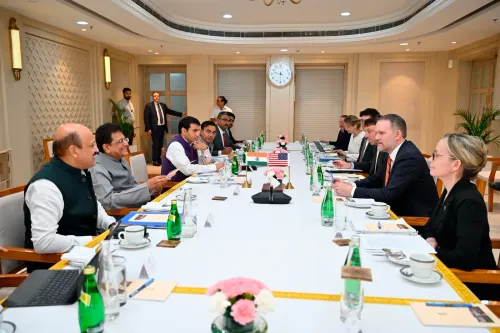
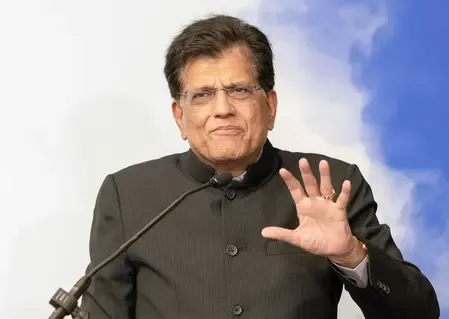
Piyush Goyal meets Indonesia Trade Minister at BRICS Jaipur meet
Synopsis
Union Commerce Minister Piyush Goyal met Indonesian Trade Minister Budi Santoso on the sidelines of the BRICS India 2026 ministerial meeting in Jaipur, reviewing AITIGA negotiations and pledging deeper bilateral economic engagement and supply-chain resilience.
Key Takeaways
Piyush Goyal met Indonesian Trade Minister Budi Santoso in Jaipur on August 7, 2026 at the BRICS India 2026 Trade and Industry Ministers' Meeting.
Both sides reviewed progress on the ASEAN-India Trade in Goods Agreement (AITIGA) , which has been under review since 2015 .
AITIGA was originally signed in October 2009 and entered into force in January 2010 .
Earlier bilateral joint statements had set an India-Indonesia trade target of $50 billion .
The two ministers reaffirmed commitment to resilient supply chains and trade-led growth — a priority India has emphasised since 2020 .
BRICS ministerial sidelines are increasingly being used as a platform for focused bilateral trade diplomacy.
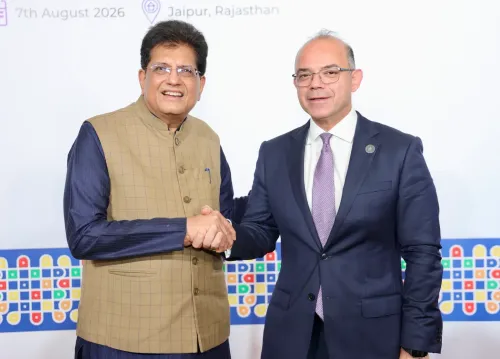
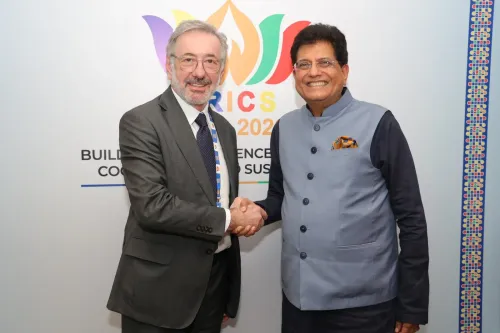
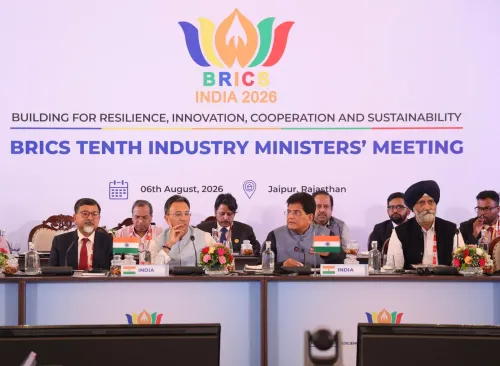
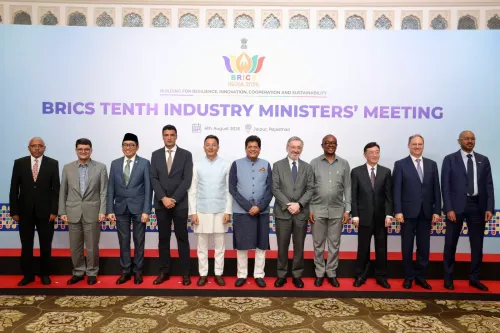
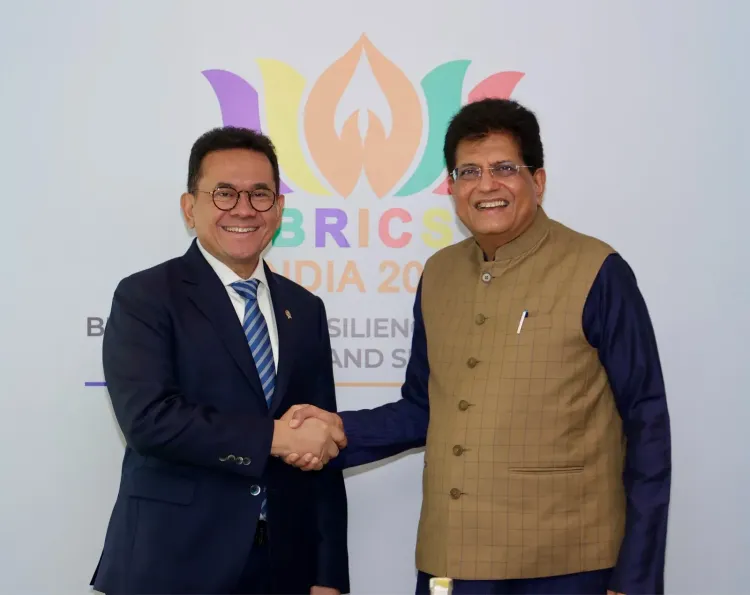
On the sidelines of the BRICS India 2026 Trade and Industry Ministers' Meeting in Jaipur, Union Commerce and Industry Minister Piyush Goyal sat down with Indonesian Trade Minister Budi Santoso on Friday, August 7, 2026 — turning a multilateral gathering into a focused bilateral push on one of India's most consequential ASEAN trade relationships.
Goyal said the two ministers 'reviewed the progress of the AITIGA negotiations and discussed ways to further deepen our bilateral economic engagement and strengthen resilient supply chains,' reaffirming a 'shared commitment to advancing trade-led growth and closer India-Indonesia economic cooperation.'
What AITIGA is — and why the review matters
The ASEAN-India Trade in Goods Agreement (AITIGA), signed in October 2009 and in force from January 2010, has been the backbone of India's goods trade with the ten-nation bloc for over fifteen years. Review discussions have been underway since 2015, driven by a shared recognition that the original framework — negotiated in a very different global trade environment — needs modernising. Indonesia, as one of ASEAN's largest economies, is a pivotal voice in those talks. Progress in the India-Indonesia channel can move the needle for the broader ASEAN-India review.Jaipur as a bilateral deal-making floor
BRICS ministerial gatherings have quietly evolved into something more than their stated agenda. With trade ministers from major emerging and developing economies in one city, the margins of the plenary become a sprint of bilateral meetings — each one a chance to advance conversations that would otherwise require separate diplomatic scheduling. Goyal's meeting with Santoso fits this pattern precisely: the multilateral setting provided the occasion; the bilateral agenda did the substantive work. The focus on resilient supply chains is not incidental — it maps directly onto India's post-2020 policy drive to reduce concentration risks in global trade and position itself as an alternative manufacturing and sourcing hub.The $50-billion trade target and what comes next
Earlier joint statements had set an India-Indonesia bilateral trade target of $50 billion. The Jaipur meeting signals that both sides remain engaged on the mechanics of getting there — through AITIGA modernisation, supply-chain linkages, and the kind of ministerial-level momentum that keeps negotiating teams focused. The next concrete markers to watch: progress reports from the ongoing AITIGA review and any fresh bilateral targets that emerge from follow-up ASEAN-India or BRICS summits. For India's trade diplomacy, the message from Jaipur is clear — every multilateral room is also a bilateral opportunity, and the work of rewiring Asia's supply chains happens one minister's meeting at a time.Point of View
And the ongoing review is partly an attempt to rebalance those terms. By engaging Indonesia — ASEAN's largest economy by population — at the ministerial level on the BRICS sidelines, Goyal signals that India is using every multilateral forum to accelerate bilateral progress rather than waiting on bloc-wide timelines. The supply-chain framing also reflects India's strategic calculation: as global firms diversify away from single-country sourcing, a modernised AITIGA could help India and Indonesia jointly capture more of that redirected investment.
NationPress
7 Aug 2026
Frequently Asked Questions
What is AITIGA and why is it being reviewed?
AITIGA, the ASEAN-India Trade in Goods Agreement, was signed in 2009 and has governed goods trade between India and the ten ASEAN nations since 2010. Review discussions began in 2015 because the original agreement was seen as outdated and, from India's side, as contributing to a trade deficit with ASEAN. The review aims to modernise tariff schedules, rules of origin, and other trade facilitation provisions.
What did Piyush Goyal and Budi Santoso discuss in Jaipur?
The two ministers reviewed the progress of AITIGA negotiations, discussed ways to deepen bilateral economic engagement between India and Indonesia, and focused on strengthening resilient supply chains. They reaffirmed a shared commitment to trade-led growth.
What is the BRICS India 2026 Trade and Industry Ministers' Meeting?
It is a ministerial-level gathering under India's BRICS chairmanship in 2026, bringing together trade and industry ministers from BRICS member and partner economies. The meeting in Jaipur has served as a venue for both plenary discussions and bilateral sideline meetings.
What is the India-Indonesia bilateral trade target?
Earlier joint statements between India and Indonesia set a bilateral trade target of $50 billion. The Jaipur meeting was part of ongoing efforts to advance the economic relationship toward that goal.
Why is Indonesia important for India's ASEAN trade strategy?
Indonesia is ASEAN's largest economy by population and a significant bilateral trade partner for India. Progress in India-Indonesia trade negotiations can influence the pace and direction of the broader ASEAN-India trade review, making ministerial-level engagement with Jakarta particularly consequential.