Piyush Goyal Pays Tribute To 26/11 Mumbai Attack Martyrs

Synopsis
Piyush Goyal offered a solemn 26/11 tribute, saying heroes never die. The 2008 Mumbai siege killed 166 and led to the NIA Act.
Key Takeaways
Union Commerce and Industry Minister Piyush Goyal issued a 26 November tribute to those killed in the 26/11 Mumbai attacks.
He wrote that heroes never die and remain alive in the nation's consciousness, honouring jawans, police personnel and civilians.
The 26–29 November 2008 assault by Lashkar-e-Taiba militants killed 166 people across Mumbai.
The attacks prompted Parliament to pass the National Investigation Agency Act, 2008.
Annual commemorations continue at sites including the Taj Mahal Palace Hotel and Chhatrapati Shivaji Terminus.
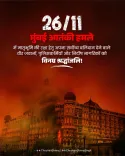
On the anniversary of Mumbai's longest night, Union Commerce and Industry Minister Piyush Goyal paid homage on 26 November to the soldiers, police personnel and civilians killed in the 26/11 terrorist attacks, saying heroes never die and remain alive in the nation's consciousness.
Writing in Hindi on X, the Union Minister of Commerce and Industry and Leader of the House in the Rajya Sabha offered a bhavpurna shraddhanjali (heartfelt tribute) to those who made the supreme sacrifice while defending the motherland. His opening line — Veer kabhi nahin marte, ve rashtra ki chetna mein sadaiv jeevit rahte hain — reads in English as ‘Heroes never die; they remain forever alive in the consciousness of the nation.’
The four-day siege that claimed 166 lives
The assault began on the night of 26 November 2008 and ran through 29 November. Militants of Lashkar-e-Taiba struck in a coordinated wave across Mumbai, hitting landmarks that still define the city's public memory: the Taj Mahal Palace Hotel, Chhatrapati Shivaji Terminus, the Oberoi Trident, Nariman House and Cafe Leopold.
By the time the guns fell silent, 166 people were dead — among them security personnel and civilians — and hundreds more were wounded. For sixty hours the country's financial capital was held in a siege that unfolded, minute by minute, before a watching nation.
How those 60 hours recast India's terror laws
The shock of 26/11 did not stay in Mumbai. Within weeks, Parliament passed the National Investigation Agency Act, 2008, creating a federal body with the writ to investigate terror cases that crossed state lines. The NIA remains the most durable institutional answer to that week.
Every 26 November, ministers, serving officers and families of the dead return to the same sites — the Taj waterfront, the terminus concourse — to mark the date. The ritual is now part of the political calendar: a public accounting of debt, and a reminder that the original failure was both tactical and structural.
A tribute without a new brief
Goyal's message carried no legislative signal and no fresh operational claim. It sat inside the annual pattern Indian leaders follow on this date: name the fallen, honour the uniform and the civilian dead, and keep the memory in public view.
The names from those four days still set the standard against which every later security promise is measured.
Point of View
But they also keep the original policy shock in view. The NIA was born of those 60 hours, and every later argument over federal counter-terror powers still traces back to CST, the Taj and Nariman House. Goyal's post adds no new legislative brief. It restates the official memory: sacrifice, resilience, and a vigilance that the state has never been allowed to treat as finished.
NationPress
26 Nov 2026
Frequently Asked Questions
What did Piyush Goyal say on the 26/11 anniversary?
He said heroes never die and remain forever alive in the nation's consciousness, offering a heartfelt tribute to soldiers, police personnel and civilians killed in the 26/11 Mumbai attacks.
When did the 26/11 Mumbai attacks take place?
The coordinated attacks began on the night of 26 November 2008 and continued until 29 November 2008.
How many people were killed in the 26/11 Mumbai attacks?
The attacks killed 166 people, including security personnel and civilians, and wounded hundreds more.
Who carried out the 26/11 Mumbai terrorist attacks?
The assault was carried out by militants of Lashkar-e-Taiba, who struck multiple sites across Mumbai in a coordinated operation.
Why was the National Investigation Agency created after 26/11?
Parliament passed the NIA Act, 2008 after the Mumbai attacks to give the Union government a specialised federal agency to investigate terror cases that cut across state boundaries.