Elephant attack kills plantation worker in Kerala's Idukki; Munnar also hit
Synopsis
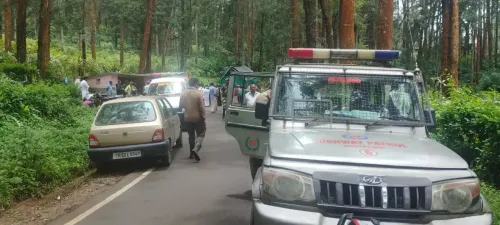
A 62-year-old Tamil Nadu native working on a Kerala plantation was killed by a wild elephant at Thalakkulam Estate in Idukki's Pooppara — the latest fatality in a deepening human-wildlife crisis along the Munnar-Pooppara belt, where elephant herds repeatedly breach forest boundaries despite active Rapid Response Team interventions.
Key Takeaways
Ocha Thevar , 62 , a plantation worker from Bodinayakanur, Tamil Nadu , was killed in a wild elephant attack at Thalakkulam Estate, Pooppara, Idukki on 27 August .
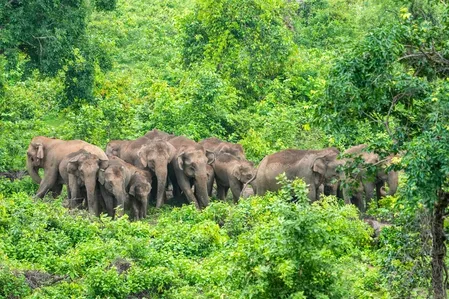
A herd of wild elephants had been present in the estate since morning before the fatal attack occurred.
His body was shifted to Idukki Medical College Hospital mortuary; the DFO and forest officials reached the spot.
A day earlier, a young man escaped unhurt after a wild elephant entered Munnar town near Mount Carmel Church ; CCTV footage emerged.
The Kerala government provides compensation to victims' families under a standard protocol, but elephant incursions into the Munnar-Pooppara belt continue despite RRT deployments.
A 62-year-old plantation worker was killed in a wild elephant attack at Pooppara in Kerala's Idukki district on Thursday, 27 August, underscoring the worsening human-wildlife conflict that has long plagued the high-range region. The deceased, Ocha Thevar, a native of Bodinayakanur in Tamil Nadu, was fatally mauled at the 12-acre section of Thalakkulam Estate in Pooppara.
How the Attack Unfolded
A herd of wild elephants had been moving through the estate since morning when Thevar was attacked. He was rushed to hospital but succumbed to his injuries, according to the Devikulam range officer. His body has been shifted to the mortuary of Idukki Medical College Hospital. Senior forest officials, including the District Forest Officer (DFO), proceeded to the site following the incident.
A Pattern of Recurring Incursions
The fatality is not an isolated event. The Forest Department's Rapid Response Team (RRT) regularly drives elephants back into the forest when they stray into inhabited areas, but the animals frequently return — leaving plantation workers and local residents exposed to attacks and crop damage. The Munnar-Pooppara belt, situated along the forest fringe, has recorded multiple such incidents in recent months.
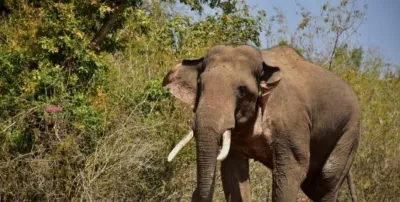
Just a day earlier, on Wednesday, a young man had a narrow escape after coming face-to-face with a wild elephant near Mount Carmel Church in Munnar town. The elephant had entered the area and placed itself directly in the youth's path; he managed to flee unharmed. CCTV footage of the encounter has since surfaced. The animal also caused extensive crop damage in the vicinity.
State Response and Compensation Protocol
Following a series of such incidents across Kerala's high-range areas, the Kerala government has adopted a standard protocol of providing compensation to the families of victims killed in wildlife attacks. However, critics argue that reactive compensation measures do little to prevent recurring incursions or protect workers who enter forested plantation zones daily.
The Broader Human-Wildlife Crisis
The back-to-back incidents in the Munnar-Pooppara belt have renewed alarm among residents and labour unions representing plantation workers. The region's geography — estates abutting dense forest corridors — makes complete separation of human activity and elephant movement structurally difficult. This is the latest in a series of fatal elephant attacks reported across Idukki and neighbouring districts, reflecting a conflict that has intensified as elephant populations and human settlements continue to overlap along Kerala's Western Ghats fringe.
Point of View
And no amount of RRT deployment changes that geography. The frequency of incursions suggests the forest-fringe boundary is functionally meaningless to the herds. Until land-use policy, corridor restoration, and early-warning systems are integrated — rather than treated as separate departmental mandates — the death toll will keep climbing and the compensation register will keep growing.
NationPress
27 Aug 2026
Frequently Asked Questions
Who was killed in the Idukki elephant attack on 27 August?
The victim was Ocha Thevar , a 62-year-old plantation worker and native of Bodinayakanur in Tamil Nadu. He was attacked by a wild elephant at the Thalakkulam Estate in Pooppara, Idukki, and succumbed to his injuries after being rushed to hospital.
Where exactly did the elephant attack take place?
The attack occurred at the 12-acre section of Thalakkulam Estate in Pooppara , located in Idukki district , Kerala. A herd of wild elephants had been present in the area since morning on the day of the attack.
What happened in Munnar around the same time?
A day before the Pooppara fatality, a young man had a narrow escape after a wild elephant entered Munnar town and placed itself in his path near Mount Carmel Church . He managed to flee unharmed; CCTV footage of the encounter subsequently emerged, and the elephant also caused crop damage in the area.
What is the Kerala government doing about recurring elephant attacks?
The Kerala government has a standard protocol to provide compensation to families of victims killed in wildlife attacks. The Forest Department's Rapid Response Team (RRT) regularly drives elephants back into the forest, but the animals frequently return, making the high-range plantation belt persistently vulnerable.
Why is human-wildlife conflict so severe in the Munnar-Pooppara belt?
The region's plantation estates border dense forest corridors in the Western Ghats , creating inevitable overlap between elephant movement and human activity. Repeated incursions despite RRT interventions indicate that the conflict is structural, not incidental, and has intensified as both elephant populations and human settlements expand along the forest fringe.