PM Modi Reaffirms India-Mongolia Strategic Partnership
Synopsis
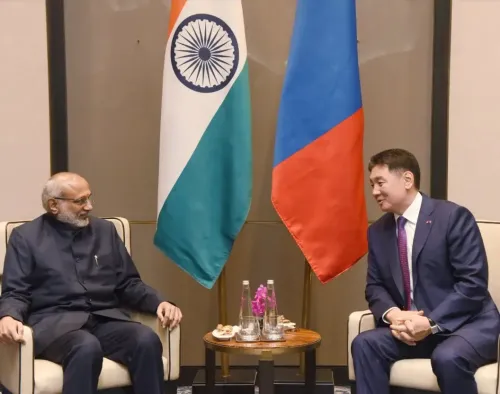
Prime Minister Narendra Modi on June 10, 2026 publicly reaffirmed India's Strategic Partnership with Mongolia in a reply to President Ukhnaagiin Khürelsükh on X, highlighting deep bilateral ties rooted in democratic values, Buddhist heritage, and defence cooperation under India's Act East Policy.
Key Takeaways
PM Modi replied to Mongolian President Ukhnaagiin Khürelsükh on June 10, 2026 , reaffirming the India-Mongolia Strategic Partnership .
Mongolia follows a 'third neighbour' foreign policy to diversify ties beyond Russia and China , with India as a key partner.
In May 2015 , PM Modi became the first Indian Prime Minister to visit Mongolia , signing MoUs on defence training and cultural exchanges.
The partnership is anchored in shared democratic values, Buddhist cultural heritage , and defence capacity-building programmes.
Future focus areas include critical minerals cooperation , connectivity projects , and joint defence exercises.
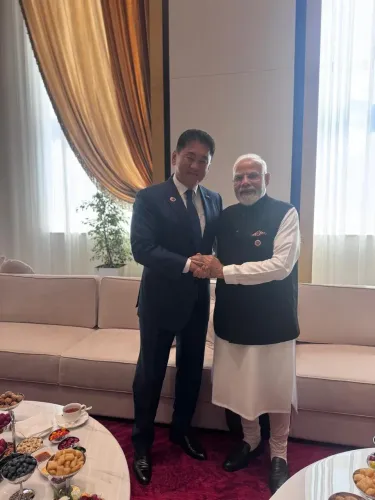
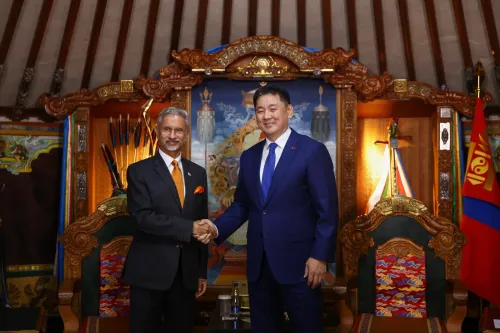
Prime Minister Narendra Modi on Wednesday, June 10, 2026, responded to Mongolian President Ukhnaagiin Khürelsükh on X, affirming the depth of bilateral ties and expressing his commitment to strengthening the India-Mongolia Strategic Partnership.
In his post, Modi wrote: 'India and Mongolia share deep and special ties and I look forward to working closely with you to further strengthen our Strategic Partnership and the enduring bonds between our peoples.' The message was a direct reply to President Khürelsükh, acknowledging the latter's 'warm words.'
Context
The exchange underscores the personal diplomatic channel that has developed between New Delhi and Ulaanbaatar at the highest level. Mongolia, a landlocked nation bordered by Russia and China, has long pursued a 'third neighbour' foreign policy aimed at diversifying its external partnerships beyond its two immediate neighbours. India has been a significant partner in that framework, built on shared democratic values and deep historical Buddhist connections.
Policy Backdrop
The India-Mongolia Strategic Partnership was formalised over successive years of high-level engagement. A landmark moment came in May 2015, when Prime Minister Modi became the first Indian Prime Minister to visit Mongolia, describing the bilateral relationship as a 'spiritual partnership' and overseeing the signing of multiple memoranda of understanding covering defence training and cultural exchanges. Since then, cooperation has expanded into capacity-building programmes and people-to-people ties. India's engagement with Mongolia sits within the broader Act East Policy, which seeks to deepen connectivity and strategic relationships across Central and East Asia.
Stakeholders and Impact
The partnership touches several communities on both sides. Buddhist communities in India and Mongolia share centuries-old spiritual links, and cultural diplomacy has been a consistent pillar of the relationship. Defence establishments in both countries have benefited from joint training programmes and capacity-building initiatives. Analysts also note that cooperation on critical minerals and connectivity infrastructure holds growing strategic relevance, given Mongolia's resource wealth and India's industrial requirements.
What's Next
The public exchange between the two leaders signals continued momentum in the bilateral relationship and may precede a formal high-level meeting or the announcement of new cooperation agreements. Observers will watch for the next round of India-Mongolia defence exercises, as well as any follow-up discussions on critical minerals or connectivity projects. India's consistent engagement with nations pursuing balanced external relations mirrors its wider diplomatic posture across the region, reinforcing New Delhi's role as a partner of choice for smaller democracies navigating complex geopolitical pressures.
Point of View
Consistent with India's deliberate cultivation of smaller democracies under its Act East Policy. For Mongolia, visible engagement with New Delhi serves its strategic interest in balancing dependence on Beijing and Moscow. For India, the relationship offers a template for soft-power diplomacy — combining Buddhist heritage, defence training, and resource partnerships — that it replicates across Central and East Asia. The timing and tone suggest both sides are keeping the channel warm ahead of potential high-level engagement.
NationPress
26 Oct 2026
Frequently Asked Questions
What is the India-Mongolia Strategic Partnership?
The India-Mongolia Strategic Partnership is a bilateral framework covering defence training, cultural exchanges, capacity-building and connectivity, formalised through high-level visits and MoUs, with a landmark moment being PM Modi's first-ever visit by an Indian Prime Minister to Mongolia in May 2015.
Why does Mongolia pursue a 'third neighbour' policy?
Mongolia is landlocked between Russia and China and uses a 'third neighbour' foreign policy to diversify its external relationships, reduce strategic dependence on its two immediate neighbours, and build ties with democracies like India, the United States and Japan.
When did PM Modi first visit Mongolia?
PM Modi visited Mongolia in May 2015, becoming the first Indian Prime Minister to do so. During the visit, he described the relationship as a 'spiritual partnership' and multiple MoUs on defence and cultural cooperation were signed.
What are the key areas of India-Mongolia cooperation?
Key areas include defence training and capacity-building, Buddhist and cultural people-to-people ties, and emerging discussions on critical minerals and connectivity infrastructure under India's Act East Policy framework.
What could follow from the Modi-Khürelsükh exchange on X?
The public exchange may signal an upcoming high-level meeting or new bilateral agreements. Observers are watching for the next round of joint defence exercises and any announcements on critical minerals or connectivity projects between the two countries.