PM Modi breaks ground on PM MITRA Textile Park in MP's Dhar
Synopsis
Prime Minister Modi laid the foundation stone of PM MITRA Textile Park in Dhar, Madhya Pradesh on his birthday. CM Mohan Yadav called it a landmark for the state's cotton and garment manufacturing ambitions, backed by the Centre's cluster-based textile infrastructure push under the 2021-22 Union Budget scheme.
Key Takeaways
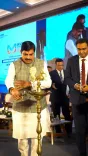
PM Narendra Modi performed the bhumi pujan for a PM MITRA Textile Park in Dhar, Madhya Pradesh on his birthday, 12 August 2026 .
The PM MITRA (Mega Integrated Textile Region and Apparel) scheme was announced in the Union Budget 2021-22 to build seven integrated textile parks across India.
CM Mohan Yadav cited the state's investment and industry-oriented policies as drivers of accelerating inflows across sectors.
Madhya Pradesh is a significant cotton-producing state; Dhar's location in the Malwa-Nimar cotton corridor gives the park a direct upstream supply advantage.
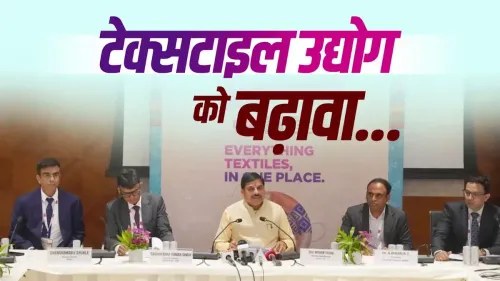
The park aims to co-locate spinning, weaving, processing, and garmenting to boost competitiveness against integrated textile rivals globally.
Progress on anchor tenant agreements and phased commissioning will be key milestones to watch for the Dhar park.
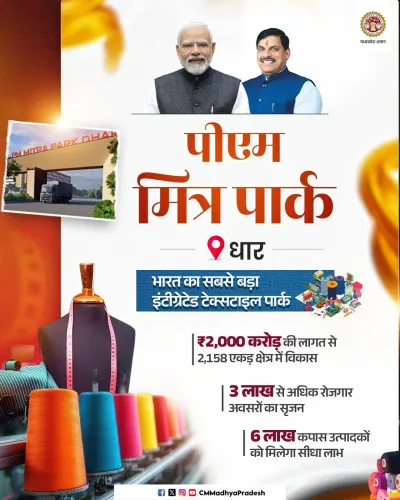
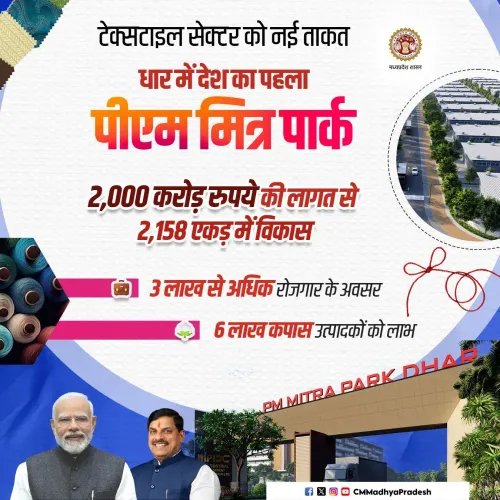
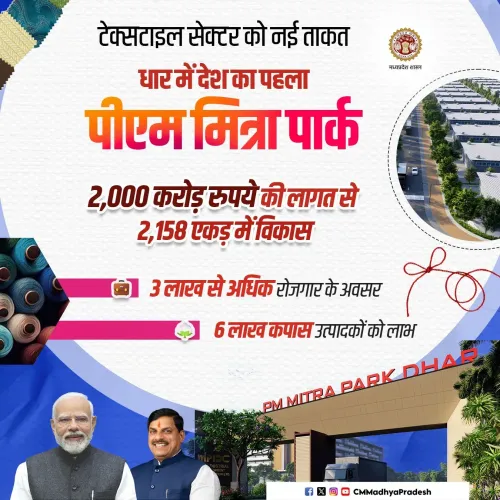
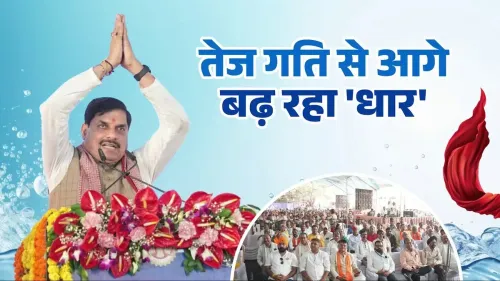
On his birthday, Prime Minister Narendra Modi laid the foundation stone for what the Chief Minister's Office of Madhya Pradesh is calling the country's largest PM MITRA Textile Park in Dhar, a district in western Madhya Pradesh — a moment Chief Minister Mohan Yadav framed as a turning point for the state's cotton and garment manufacturing ambitions.
What PM MITRA means for Dhar and MP's cotton belt
The PM MITRA (Mega Integrated Textile Region and Apparel) scheme was announced in the Union Budget 2021-22 with a mandate to set up seven integrated textile parks across India. The idea: cluster spinning, weaving, processing, dyeing, and garment manufacturing under one roof, cutting logistics costs and drawing anchor investors at scale. Madhya Pradesh — a significant cotton-producing state — has been positioning itself as a natural fit for exactly this kind of value-addition play.
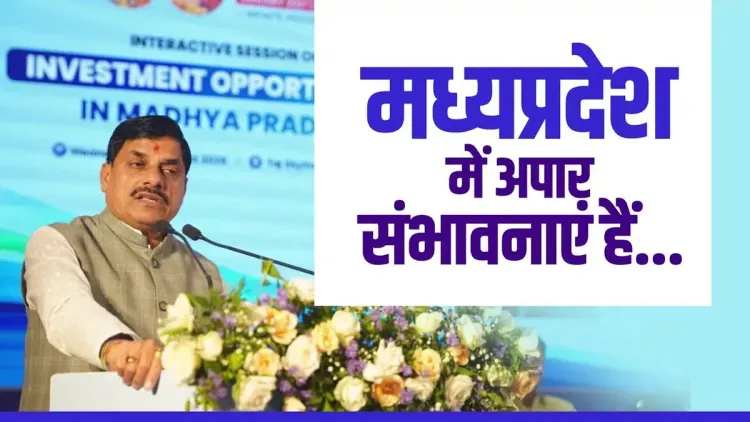
Dhar sits in the Malwa-Nimar cotton-growing corridor, which gives the park a direct upstream supply advantage. CM Yadav, posting on Wednesday, 12 August 2026, quoted the occasion directly: 'मध्यप्रदेश में कपास एवं वस्त्र निर्माण सहित टेक्सटाइल सेक्टर में अपार संभावनाएं हैं' — 'Madhya Pradesh has immense potential in the textile sector, including cotton and garment manufacturing.' He credited the state's investment and industry-oriented policies for accelerating inflows across sectors.
The national push behind cluster-based textile infrastructure
PM MITRA parks are the central government's answer to a long-standing structural problem: India's textile industry is fragmented, with spinning, weaving, and garmenting often happening in different cities or states, eroding competitiveness against integrated rivals like Bangladesh, Vietnam, and China. By co-locating the entire value chain, the parks are designed to attract foreign and domestic investors who need scale and supply-chain certainty. The scheme runs alongside the PLI (Production Linked Incentive) programme for man-made fibres and apparel, together forming the backbone of India's push to grow its share of global textile trade.
The Dhar groundbreaking also carries political symbolism: it was timed to PM Modi's birthday, a detail the Chief Minister's Office highlighted prominently — linking a major infrastructure milestone to a personal occasion in a way that amplifies both the event and the state-Centre partnership narrative.
What investors and cotton farmers are watching now
The bhumi pujan is the beginning, not the end. The real test for the Dhar PM MITRA Park will come in three phases: land acquisition and clearances, the signing of anchor tenant agreements, and phased commissioning of manufacturing units. Across the seven PM MITRA sites nationwide, timelines and investor commitments have varied — Dhar will be watched as a bellwether for whether MP's pro-investment policy pitch translates into factory floors and employment for the region's cotton farmers and textile workers.
For a state that has long exported raw cotton rather than finished fabric, a functioning integrated park at Dhar would mark a structural shift — turning a commodity into a value chain, and a groundbreaking into jobs.
Point of View
Particularly ahead of electoral cycles in key states. For Madhya Pradesh, it is a chance to reposition itself from a raw-cotton exporter to a value-added manufacturing hub — a narrative CM Yadav has been building with his investor-outreach blitz. The timing on PM Modi's birthday is deliberate branding, tying a governance milestone to a personal occasion to maximise media amplification. The harder question — whether anchor tenants commit at scale and the park commissions on schedule — will determine whether this becomes a genuine economic inflection point or another foundation stone that ages slowly.
NationPress
12 Aug 2026
Frequently Asked Questions
What is PM MITRA Park and where is it located in Madhya Pradesh?
PM MITRA stands for Mega Integrated Textile Region and Apparel. The park being developed in Dhar district of Madhya Pradesh is designed to cluster the entire textile value chain — from spinning and weaving to dyeing and garmenting — under one location to attract large-scale investment.
When was the PM MITRA scheme announced?
The PM MITRA scheme was announced in the Union Budget 2021-22 with a plan to establish seven integrated textile parks across India to boost the country's share in global textile trade.
Why was Dhar chosen for the PM MITRA Textile Park in MP?
Dhar is situated in the Malwa-Nimar cotton-growing corridor of western Madhya Pradesh, giving the park a direct upstream raw material advantage from local cotton farmers and positioning the region for value-added textile manufacturing.
What did CM Mohan Yadav say about the PM MITRA park in Dhar?
CM Mohan Yadav stated that Madhya Pradesh has 'immense potential' in cotton and garment manufacturing, and credited the state's investment and industry-oriented policies for accelerating inflows, calling the foundation stone a milestone for the sector.
What are the next steps after the PM MITRA Park bhumi pujan in Dhar?
Following the foundation stone ceremony, the key milestones will be land acquisition and regulatory clearances, signing of anchor tenant investment agreements, and the phased commissioning of manufacturing units at the Dhar PM MITRA Park .