Dr. Jitendra Singh: PM Modi Distributes 51,000 Appointment Letters
Synopsis
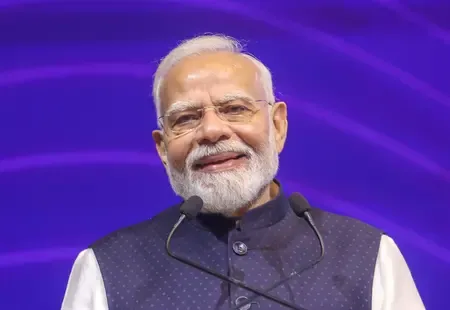
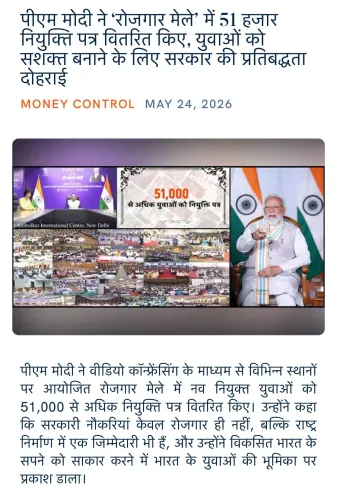
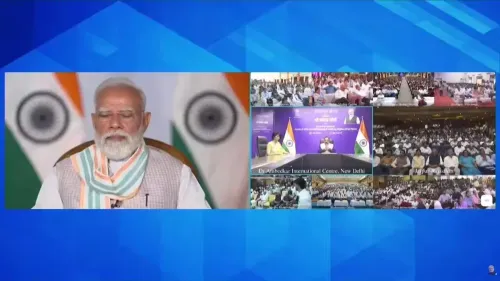
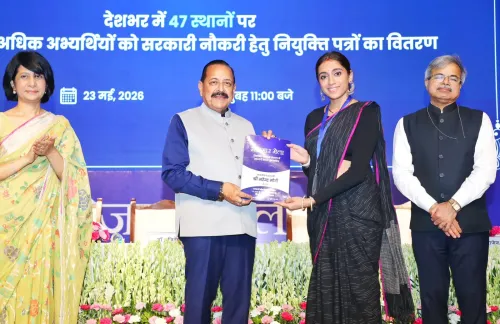
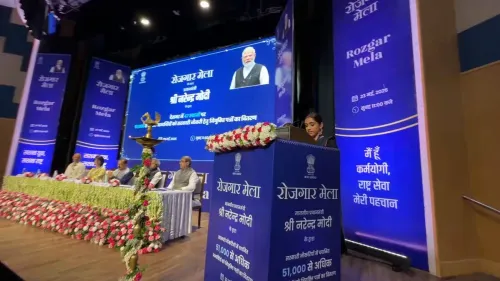
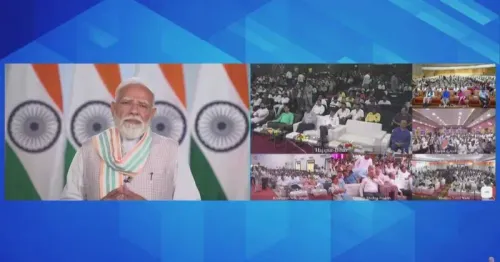
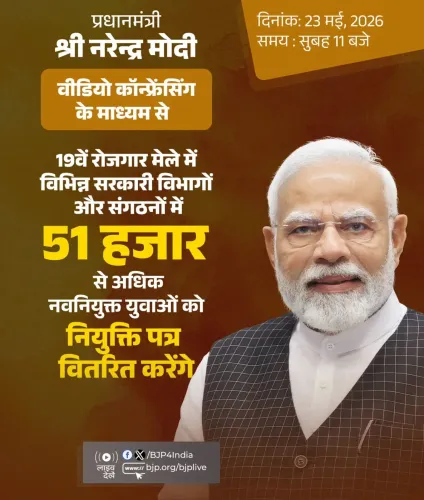
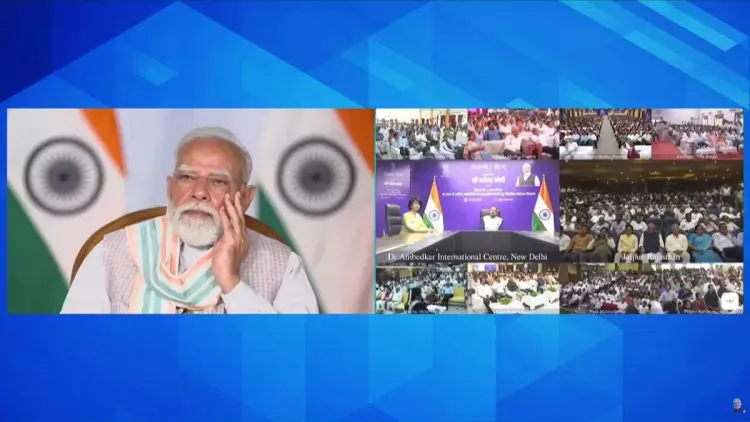
Prime Minister Narendra Modi distributed over 51,000 appointment letters to newly recruited youth across central government departments at a Rozgar Mela event on May 23, 2026. Minister Dr. Jitendra Singh, who oversees DoPT, announced the development, marking one of the larger single-day tallies under the programme launched in October 2022.
Key Takeaways
Prime Minister Narendra Modi distributed more than 51,000 appointment letters at a Rozgar Mela on May 23, 2026 .
The announcement was made by Dr.
Jitendra Singh , Union Minister holding independent charge of DoPT (Department of Personnel and Training).
The Rozgar Mela initiative was formally launched in October 2022 to accelerate filling of central government vacancies.
The broader government target is to fill over ten lakh central government vacancies in mission mode.
Recruits span multiple departments including railways, defence, health, and education, covering Group B and Group C posts.
The programme runs alongside Mission Karmayogi , the government's civil-service capacity-building reform.
Union Science and Technology Minister and Minister of State for Personnel Dr. Jitendra Singh on Saturday, May 23, 2026, announced that Prime Minister Narendra Modi distributed more than 51,000 appointment letters to newly recruited youth across various central government departments and organisations at a Rozgar Mela event.
Context
The Rozgar Mela is a periodic government recruitment initiative under which the Prime Minister personally hands over appointment letters to fresh recruits, underlining the administration's focus on direct, visible job creation in the public sector. Saturday's edition saw over 51,000 letters distributed in a single event — one of the larger single-day tallies under the programme. Dr. Jitendra Singh, who holds charge of the Department of Personnel and Training (DoPT), shared the update on X, tagging both #DoPT and #RozgarMela.
Policy Backdrop
The Rozgar Mela was formally launched in October 2022 with the first nationwide event presided over by Prime Minister Modi. It was conceived as a mechanism to fast-track the filling of vacancies across central ministries that had accumulated over years of slow recruitment cycles. The broader policy goal, articulated since 2019, has been to fill over ten lakh central government vacancies in 'mission mode', running parallel to civil-service reform initiatives such as Mission Karmayogi, which focuses on competency-based capacity building in the bureaucracy.
DoPT serves as the nodal agency coordinating the mela's logistics — identifying vacant posts, accelerating departmental clearances, and ensuring offer letters reach recruits at a single, high-visibility event. The ministry has used successive melas to signal administrative momentum on employment, particularly for Group B and Group C posts across departments ranging from railways and defence to health and education.
Stakeholders and Impact
The immediate beneficiaries are the 51,000-plus young recruits who receive confirmed government appointments — bringing job security, structured pay scales, and social insurance benefits. Central government departments gain from filling long-pending vacancies that have strained operational capacity. For the political establishment, the mela format provides a direct, televised moment of accountability on job creation — a metric that opposition parties have persistently cited as a pressure point.
Youth job-seekers, particularly those who cleared competitive examinations conducted by the Staff Selection Commission (SSC), UPSC, and various departmental boards, are the primary stakeholders. Many appointees travel from smaller towns and rural districts, making each mela a cross-regional employment event with a visible federating character.
What's Next
DoPT is expected to release updated cumulative figures on total appointments issued under the Rozgar Mela series since its October 2022 launch. Subsequent editions are typically scheduled at intervals of a few months, with the scale of each event tied to the pace of departmental vacancy clearances. Observers will watch whether the cumulative appointment count crosses a significant milestone — widely discussed as a benchmark for the programme's overall reach — ahead of the next political cycle.
Point of View
000 letters in a single event sustains the narrative of 'mission mode' governance on employment, a metric the government has prioritised since 2019 amid persistent criticism over private-sector job quality. Dr. Jitendra Singh's amplification of the event through his DoPT portfolio underscores the ministry's role as the institutional face of this recruitment push. The cumulative trajectory of Rozgar Mela appointments will be a closely watched indicator as the political calendar advances.
NationPress
19 Sept 2026
Frequently Asked Questions
What is Rozgar Mela and when did it start?
Rozgar Mela is a periodic central government recruitment event at which Prime Minister Modi personally distributes appointment letters to new recruits across various departments. It was formally launched in October 2022.
How many appointment letters were distributed at the May 2026 Rozgar Mela?
More than 51,000 appointment letters were distributed by Prime Minister Modi at the May 23, 2026 Rozgar Mela event.
Which ministry organises the Rozgar Mela?
The Department of Personnel and Training (DoPT), under the Ministry of Personnel, Public Grievances and Pensions — currently headed by Dr. Jitendra Singh — coordinates the Rozgar Mela events.
Who are eligible for Rozgar Mela appointment letters?
Candidates who have cleared competitive examinations conducted by bodies such as SSC, UPSC, and various departmental recruitment boards for Group B and Group C central government posts are eligible.
What is the government's overall target for filling central government vacancies?
The government has set a goal of filling over ten lakh central government vacancies in mission mode, a target articulated since 2019 and pursued through successive Rozgar Mela cycles.