PM Modi Holds Joint Press Meet with Poland's PM Tusk
Synopsis
Prime Minister Narendra Modi addressed a joint press conference with Polish PM Donald Tusk on 22 October 2026, marking a significant upgrade in India-Poland ties that date to 1950, and advancing India's broader strategic engagement with EU and NATO member states in Central Europe.
Key Takeaways
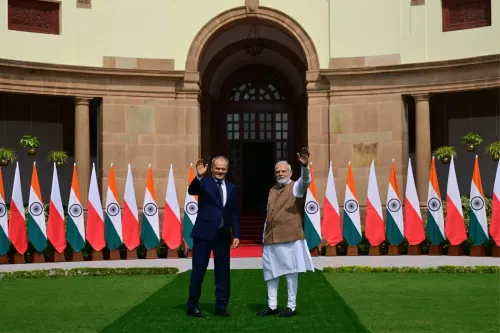
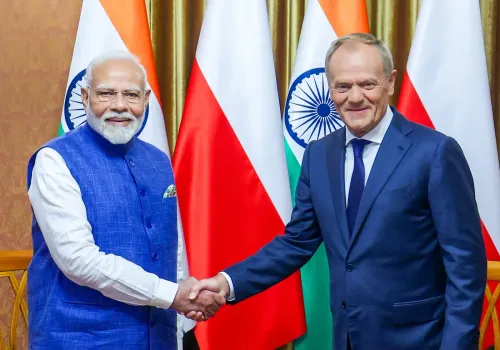
Prime Minister Narendra Modi held a joint press conference with Polish PM Donald Tusk on 22 October 2026 .
India and Poland have maintained diplomatic relations since 1950 , with high-level engagement historically limited.
Donald Tusk returned to Poland's premiership in December 2023 after a previous term from 2007 to 2014 and a stint as President of the European Council.
The meeting reflects India's strategy of deepening ties with EU and NATO members beyond traditional European partners like Germany and France.
Potential areas of cooperation include trade, defence technology, and people-to-people ties , with follow-up summits expected in 2026-2027.
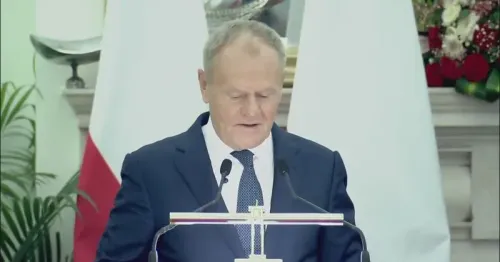
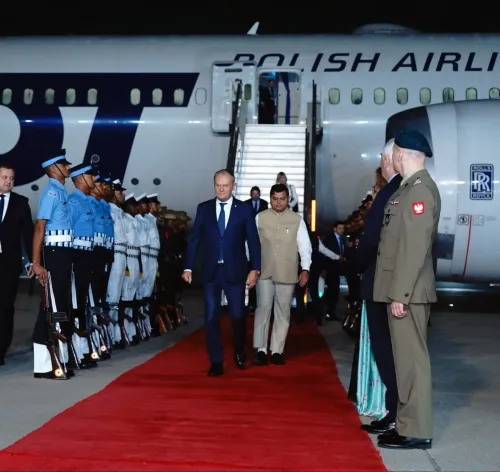
On a diplomatic stage that stretches India's European footprint deeper into Central Europe, Prime Minister Narendra Modi addressed a joint press conference alongside Polish Prime Minister Donald Tusk on Thursday, 22 October 2026 — a meeting that signals New Delhi's deliberate push to build bridges with EU and NATO members beyond its traditional European partners.
India and Poland: A 76-Year-Old Partnership Getting New Energy
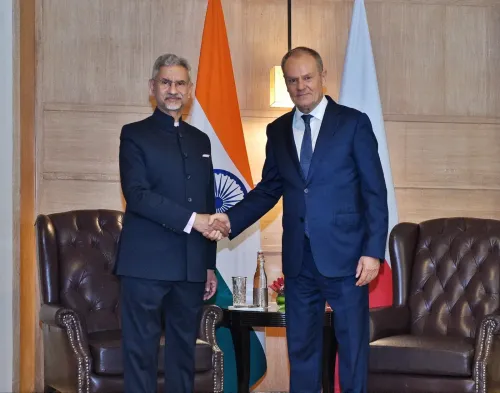
India and Poland have maintained diplomatic ties since 1950, but the relationship has historically punched below its weight. High-level political engagement has been infrequent — the last significant exchange at ministerial level came in 2019, when India's External Affairs Minister visited Warsaw. A joint press conference between the two Prime Ministers now marks a decisive step up in that rhythm.
Donald Tusk — who previously served as Poland's Prime Minister from 2007 to 2014 before returning to the role in December 2023 — brings with him deep ties to European institutional power, having also served as President of the European Council. His return to Warsaw's leadership coincides with a period of heightened European security consciousness, making Poland a strategically weighted interlocutor for New Delhi.
Why Poland Fits India's Expanding European Calculus
India's outreach to EU member states in recent years has moved well beyond the familiar axes of Berlin, Paris, and Rome. Warsaw represents a country with a rapidly growing economy, a significant defence industrial base sharpened by proximity to the Ukraine conflict, and a population of over 38 million — making it one of the EU's largest markets. For India, engagement here is consistent with a broader strategy of diversifying trade, defence technology access, and people-to-people linkages across the European continent.
Poland's standing as both an EU and NATO member also carries weight in the context of India's evolving relationships with Western defence architectures — even as New Delhi maintains its strategic autonomy. Any joint statements or memoranda of understanding emerging from this meeting on economic cooperation, defence technology, or mobility agreements will be closely watched by diplomatic observers tracking India's European pivot.
What the Tusk Meeting Means for the EU-India Equation
Tusk's influence within the European Union adds a dimension that goes beyond the bilateral frame. A Poland that is actively engaged with India strengthens the case for momentum in the long-stalled EU-India Free Trade Agreement negotiations, which both sides have periodically sought to revive. With the EU's internal dynamics always in flux, bilateral goodwill with member-state leaders matters — and Modi is demonstrably building it.
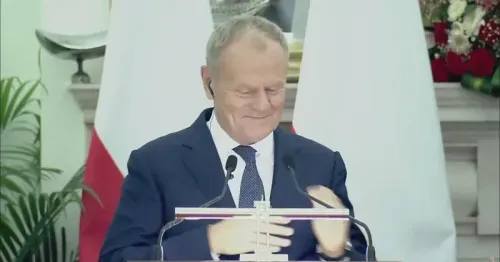
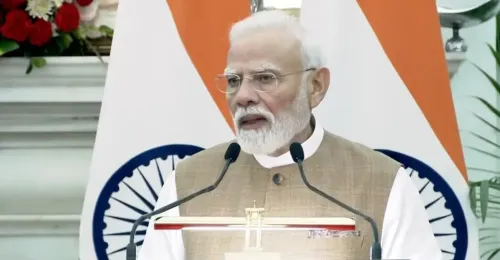
The joint press conference format itself signals a relationship ready for public accountability: both leaders standing together, articulating shared positions before cameras, is the diplomatic equivalent of putting something on the record.
Whether this meeting produces binding deliverables or lays the groundwork for deeper engagement through 2026 and 2027, it adds another capital to the map of India's expanding European partnerships — and Warsaw is not a small addition.
Point of View
Treaty-era relationships into active strategic partnerships. If substantive agreements follow, Poland could become a template for India's engagement with other Central and Eastern European EU members.
NationPress
22 Oct 2026
Frequently Asked Questions
Why did PM Modi meet Polish PM Donald Tusk?
PM Modi met Polish PM Donald Tusk to strengthen bilateral ties between India and Poland, address areas of mutual interest such as trade and defence, and advance India's broader diplomatic engagement with EU and NATO member states in Europe.
What is the history of India-Poland diplomatic relations?
India and Poland established formal diplomatic relations in 1950 . While ties have been stable, high-level political engagement has been infrequent, with the most recent significant contact at ministerial level occurring in 2019 .
Who is Donald Tusk and why is he significant?
Donald Tusk is the Prime Minister of Poland who returned to office in December 2023 after serving as PM from 2007 to 2014 and as President of the European Council. His deep EU ties make him a particularly influential European interlocutor for India.
What could come out of the India-Poland summit in 2026?
Diplomatic observers are watching for joint statements or memoranda of understanding on economic cooperation, defence technology access, and people-to-people mobility agreements, with potential follow-up visits expected through 2027.
How does the Poland visit fit into India's Europe policy?
India has been expanding engagement with EU member states beyond traditional partners like Germany and France. Poland, as a major Central European economy and NATO member, fits this strategy of diversifying trade, security, and diplomatic partnerships across the continent.