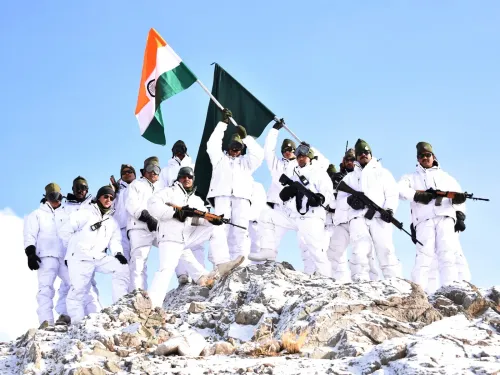
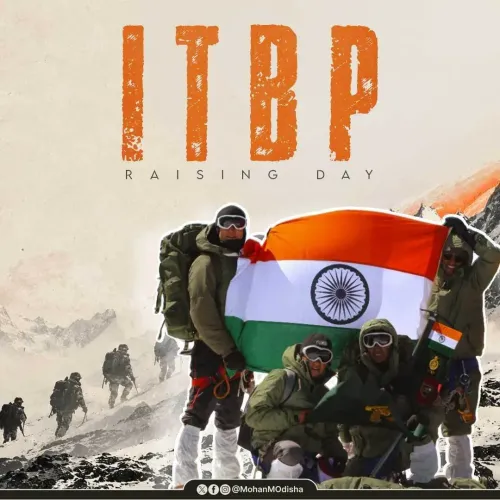
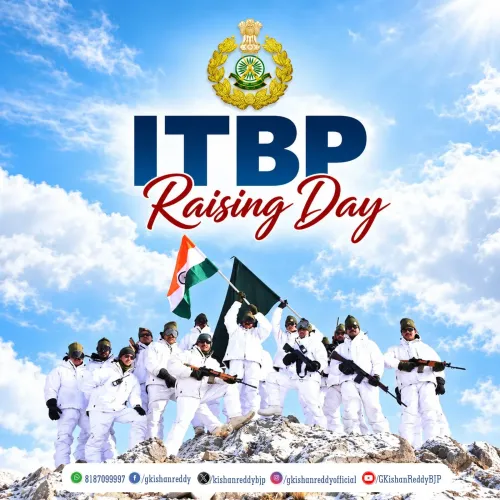
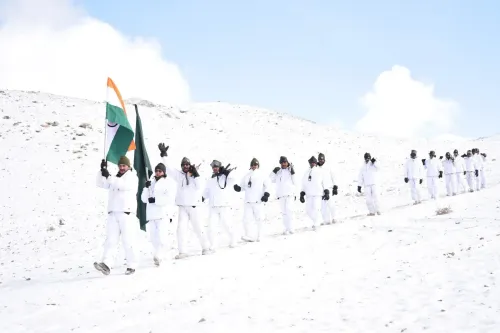
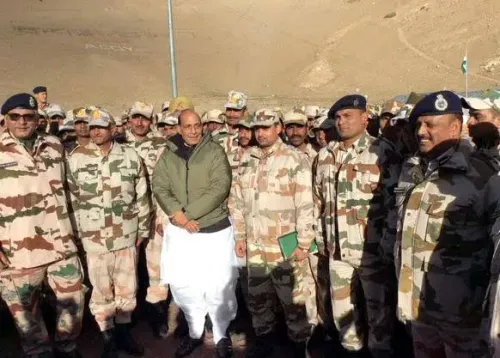
PM Modi salutes ITBP Himveers on 64th Raising Day
Synopsis
Prime Minister Narendra Modi marked the ITBP's 64th Raising Day on 24 October 2026, saluting the Himveers for their exceptional valour and sacrifices guarding India's high-altitude border with China — a force born directly from the crisis of the 1962 Sino-Indian War.
Key Takeaways
The Indo-Tibetan Border Police (ITBP) observed its 64th Raising Day on 24 October 2026 .
Prime Minister Narendra Modi publicly greeted all ITBP personnel, calling their service a 'source of pride' for the nation.
The ITBP was established on 24 October 1962 in direct response to the Sino-Indian War to guard India's border with China.
Personnel are nicknamed Himveers , reflecting their service in extreme high-altitude Himalayan terrain.
Modi regularly marks paramilitary raising days, a pattern that underscores the government's sustained focus on border security and force visibility.
Born from the trauma of the 1962 Sino-Indian War, the Indo-Tibetan Border Police turned 64 years old on 24 October 2026 — and Prime Minister Narendra Modi marked the occasion with a public tribute to the force's personnel, honouring their 'exceptional valour' and 'selfless service and sacrifices' at some of the world's most unforgiving altitudes.
Raised from the rubble of 1962
The ITBP was constituted on 24 October 1962, days after China launched its offensive across India's northern frontier, exposing a critical gap in border surveillance. The force was designed from its founding to operate where most armies cannot — glaciers, passes, and ridgelines above 18,000 feet along the entire length of India's border with China. That origin story gives every Raising Day a weight that goes beyond ceremony.
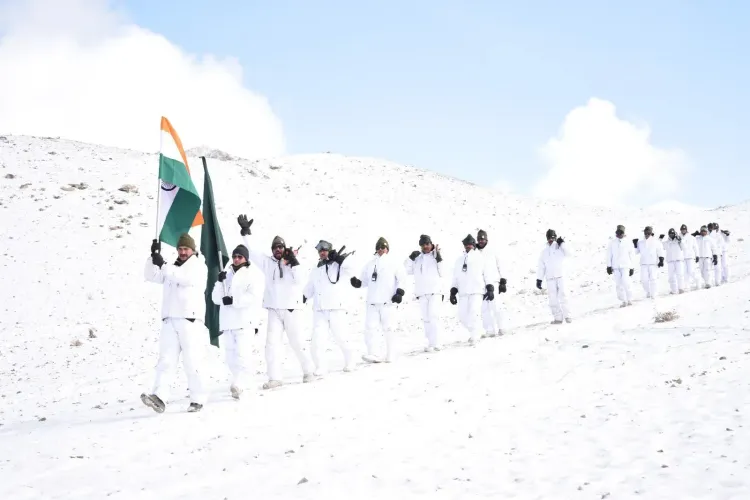
The nickname Himveers — literally 'heroes of the Himalayas' — captures both the terrain and the temperament demanded of ITBP personnel. Postings in Ladakh, Sikkim, Uttarakhand, and Arunachal Pradesh mean operating in conditions of extreme cold, thin air, and near-total isolation, often far from the nearest town or hospital.
Modi's consistent salute to border guardians
Prime Minister Modi has made a practice of publicly marking the raising days of India's Central Armed Police Forces, a pattern that reflects a deliberate signalling choice: that the men and women holding the northern line deserve national-level visibility, not just institutional acknowledgement. Today's message follows the same template — warm, specific in its praise of character ('remarkable determination'), and pointed in its reference to sacrifice.
The tribute lands against a broader backdrop of sustained attention to the India-China border. Force modernisation drives, infrastructure push along the Line of Actual Control, and periodic diplomatic engagements over contested zones have all kept the ITBP at the centre of India's security calculus for the better part of a decade.
Sixty-four years on the roof of the world
Six decades is a long time to hold a line. The ITBP has expanded from a rapid-reaction unit assembled in crisis into a full-spectrum border-guarding force with specialised mountaineering, disaster-response, and surveillance capabilities. Its personnel have featured in high-altitude rescues, avalanche relief operations, and the quiet, unheralded patrol cycles that keep India's northernmost boundaries manned through every season.
On their 64th Raising Day, the Prime Minister's message is simple and deliberate: the nation is watching, and it is grateful.
Point of View
The government reinforces a 'strong borders' national-security narrative that resonates domestically while also sending calibrated signals toward Beijing. The ITBP occupies a uniquely symbolic position — the only paramilitary created specifically in response to a Chinese military action — so tributes to it carry an inherent geopolitical subtext. As India continues infrastructure investment along the Line of Actual Control and manages a fragile post-Galwan diplomatic reset, keeping the Himveers in the public consciousness serves both morale and messaging.
NationPress
24 Oct 2026
Frequently Asked Questions
When was the ITBP founded and why?
The Indo-Tibetan Border Police was raised on 24 October 1962 , in direct response to the Sino-Indian War of that year, to guard India's border with China along the Himalayas.
What does 'Himveers' mean?
'Himveers' is the popular nickname for ITBP personnel — it translates roughly to 'heroes of the Himalayas,' reflecting their service at extreme altitudes in glacial terrain.
What did PM Modi say on ITBP Raising Day 2026?
Prime Minister Modi greeted all ITBP personnel on their Raising Day, praising their 'exceptional valour,' 'remarkable determination,' and describing their selfless service and sacrifices as a source of national pride.
How long is the India-China border that the ITBP guards?
The ITBP is responsible for guarding India's entire 3,488-kilometre border with China, spanning Ladakh, Himachal Pradesh, Uttarakhand, Sikkim, and Arunachal Pradesh.
Is ITBP a military or paramilitary force?
The ITBP is a Central Armed Police Force — a paramilitary organisation under the Ministry of Home Affairs — not part of the Indian Army, though it operates in similar high-altitude frontier zones.