PM Modi Launches Nasha Mukt Yuva Sankalp Abhiyan

Synopsis
Prime Minister Narendra Modi addressed the launch of the 'Nasha Mukt Yuva for Viksit Bharat Sankalp Abhiyan' on 2 August 2026, a national anti-drug pledge drive backed by the MY Bharat body and amplified by Maharashtra's Chief Minister Devendra Fadnavis, linking youth substance-abuse prevention to India's Viksit Bharat 2047 vision.
Key Takeaways
PM Narendra Modi addressed the launch of the Nasha Mukt Yuva for Viksit Bharat Sankalp Abhiyan on 2 August 2026 .
The campaign is rooted in the Nasha Mukt Bharat Abhiyan , originally launched in 2020 by the Ministry of Social Justice and Empowerment.
Mera Yuva Bharat (MY Bharat) , the government's autonomous youth-mobilisation body, is the institutional backbone of the drive.
Chief Minister Devendra Fadnavis and the Maharashtra CMO broadcast the launch live, coordinating state-level participation.
The campaign explicitly links a drug-free youth to the Viksit Bharat 2047 national development vision.
State-level enrolment targets and implementation guidelines for Maharashtra are expected to follow the formal launch.
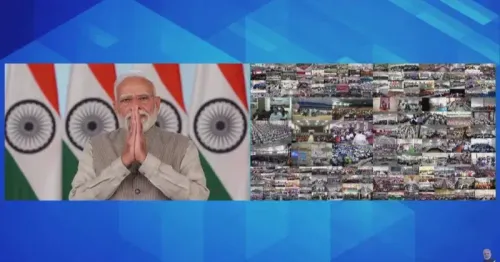
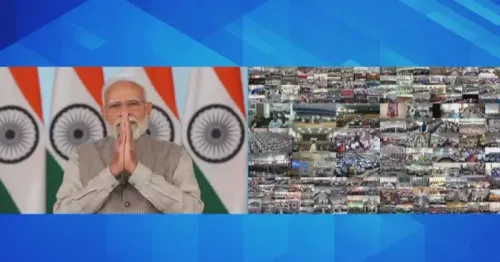
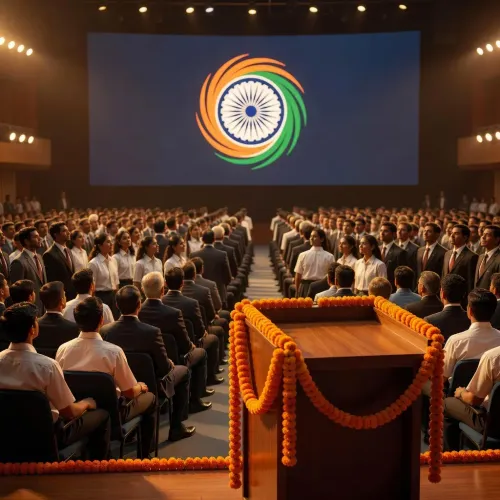
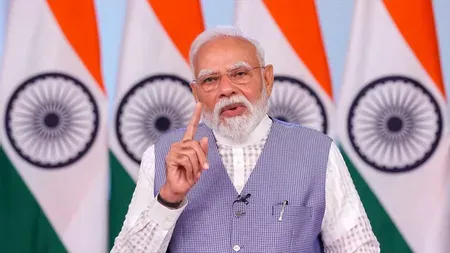
India's war on substance abuse moved to the front page on Sunday, 2 August 2026, as Prime Minister Narendra Modi addressed the launch ceremony of the 'Nasha Mukt Yuva for Viksit Bharat Sankalp Abhiyan' — a national pledge drive aimed at steering India's youth away from drugs and toward the country's 2047 development vision. The Chief Minister's Office of Maharashtra broadcast the address live, with Chief Minister Devendra Fadnavis coordinating Maharashtra's participation from the state end.
A pledge drive anchored in Viksit Bharat 2047
The campaign's full name — Nasha Mukt Yuva for Viksit Bharat Sankalp Abhiyan — is deliberate architecture. It fuses two of the government's most prominent messaging pillars: the Nasha Mukt Bharat Abhiyan, first launched in 2020 by the Ministry of Social Justice and Empowerment to combat substance abuse across the country, and the Viksit Bharat 2047 vision, which frames a drug-free youth as a prerequisite for a developed India by the centenary of independence. The message is direct — you cannot build a nation on a generation lost to addiction.
The Mera Yuva Bharat (MY Bharat) autonomous body, established to channel youth energy into flagship national programmes, is the institutional backbone of the campaign. Its involvement signals that this is not a one-off rally but an organised enrolment and outreach drive, with youth expected to take formal pledges and potentially become local ambassadors for the cause.
Maharashtra's role in the national launch
Chief Minister Devendra Fadnavis has positioned Maharashtra as an active amplifier of the central campaign rather than a passive recipient. The CMO's live broadcast of the Prime Minister's address to a Maharashtra audience reflects the state's standard playbook: central scheme, state-level mobilisation, maximum reach. Maharashtra, with its vast urban youth population across Mumbai, Pune, and Nagpur, is a critical theatre for any national anti-drug initiative.
State-level implementation guidelines and enrolment targets under the Sankalp Abhiyan are expected to be rolled out in the weeks following the launch — the metrics that will determine whether Sunday's ceremony translates into ground-level action.
The pattern behind the push
India has consistently linked anti-drug messaging to its broader development narrative, and this campaign is the sharpest iteration yet of that formula. The stakes are real: substance abuse among young Indians has been a documented concern for state health departments across the country. Tying a pledge campaign to the Viksit Bharat framework gives it political momentum and bureaucratic priority simultaneously. Whether the Sankalp Abhiyan converts that momentum into measurable outcomes is the question every state implementation team now has to answer.
Point of View
The Centre ensures visible state-level accountability without diluting the Prime Minister's brand as the campaign's face. For Maharashtra, Fadnavis's active amplification ahead of ongoing governance consolidation signals that welfare optics remain a core priority. The real test is whether the pledge infrastructure converts into durable, measurable reductions in youth substance abuse — a metric that will outlast the launch-day headlines.
NationPress
2 Aug 2026
Frequently Asked Questions
What is the Nasha Mukt Yuva for Viksit Bharat Sankalp Abhiyan?
It is a national anti-drug pledge campaign launched on 2 August 2026, addressed by PM Modi, that aims to mobilise Indian youth against substance abuse as part of the broader Viksit Bharat 2047 development vision.
What is the Nasha Mukt Bharat Abhiyan?
The Nasha Mukt Bharat Abhiyan is a nationwide anti-substance-abuse programme launched in 2020 by India's Ministry of Social Justice and Empowerment; the 2026 Sankalp Abhiyan builds on its foundation.
What is Mera Yuva Bharat (MY Bharat)?
MY Bharat is an autonomous body set up by the Indian government to channel youth participation in national development programmes, and it serves as the institutional backbone of the Sankalp Abhiyan.
What is Devendra Fadnavis's role in this campaign?
As Chief Minister of Maharashtra, Devendra Fadnavis is coordinating state-level execution of the campaign; his office broadcast PM Modi's address live and is expected to roll out Maharashtra-specific enrolment targets.
What happens after the Nasha Mukt Yuva Sankalp Abhiyan launch in Maharashtra?
State-level implementation guidelines and youth enrolment targets are expected to be announced in the weeks following the launch, determining how the campaign translates into ground-level action across Maharashtra.