Mandaviya: Modi to launch Nasha Mukt Yuva drive for 1 crore youth

Synopsis
PM Modi is set to virtually address over 1 crore youth at 20,000-plus locations for the launch of the Nasha Mukt Yuva For Viksit Bharat Sankalp Abhiyan, a national anti-drug drive framed as foundational to India's Viksit Bharat 2047 development vision, as announced by Union Minister Mansukh Mandaviya.
Key Takeaways
PM Narendra Modi will launch the Nasha Mukt Yuva For Viksit Bharat Sankalp Abhiyan via virtual address on 2 August 2026 .
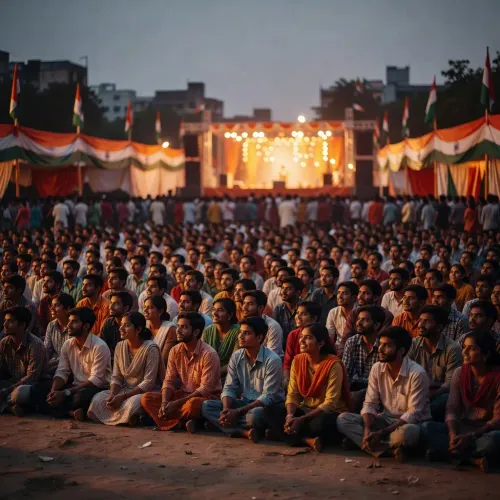
The campaign will connect simultaneously with more than 1 crore youth at over 20,000 locations across India.
The drive extends the Nasha Mukt Bharat Abhiyan launched in 2020 under the Ministry of Social Justice and Empowerment.
The campaign explicitly links youth de-addiction to the Viksit Bharat 2047 national development framework.
Union Minister Mansukh Mandaviya , heading Youth Affairs and Sports, is the political lead on the rollout.
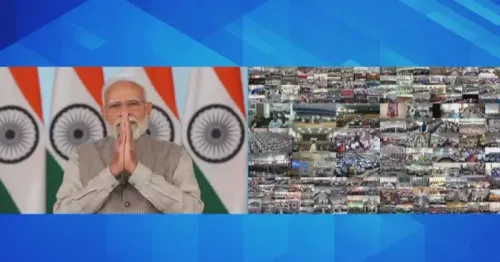
A campaign built on the promise of a drug-free generation is set to go national. Union Minister of Labour, Employment, Youth Affairs and Sports Mansukh Mandaviya announced on Saturday, 1 August 2026 that Prime Minister Narendra Modi will launch the 'Nasha Mukt Yuva For Viksit Bharat Sankalp Abhiyan' — a mass anti-drug pledge drive targeting India's youth — the following day, connecting virtually with more than 1 crore young people across 20,000-plus locations nationwide.
What the campaign promises
Mandaviya described the upcoming launch as 'ek aitihasik kshan' — a historic moment — for India's youth power. The Prime Minister will address participants simultaneously across the country via virtual medium, offering guidance to the assembled crore-strong audience in what the minister framed as a 'maha-abhiyan', or grand campaign. The scale — 20,000 venues in a single day — signals a coordinated, ground-level mobilisation rather than a symbolic ceremony.
Roots in Nasha Mukt Bharat and the Viksit Bharat arc
The new drive builds on the Nasha Mukt Bharat Abhiyan, launched in 2020 by the Ministry of Social Justice and Empowerment to reduce substance abuse across the country. What distinguishes the current iteration is its explicit linkage to the Viksit Bharat 2047 vision — the government's framework for making India a developed nation by its centenary of independence. By branding youth de-addiction as a prerequisite for national development, the campaign repositions anti-drug messaging from a welfare concern into a demographic-dividend argument: a drug-free generation, the logic runs, is the productive workforce that powers a developed India.
Successive governments have run anti-narcotics awareness programmes under the National Action Plan for Drug Demand Reduction, but the current emphasis on direct prime ministerial engagement — and the sheer reach of 1 crore participants — marks an escalation in both political visibility and logistical ambition.
Mandaviya's role and what follows
As the minister responsible for Youth Affairs, Mandaviya is the political face of the rollout. His post signals that the Ministry of Youth Affairs and Sports, not just Social Justice, is now a central driver of anti-drug policy — a bureaucratic shift worth watching. The real test will come in the weeks after the launch: whether state governments convert the pledge drive into sustained awareness infrastructure, and whether follow-up enforcement measures accompany the messaging.
One crore pledges made in a single day is a headline. What India's youth do with the commitment after the cameras move on is the story that matters.
Point of View
The BJP government converts a social-welfare message into a nation-building narrative ahead of a landmark electoral cycle. The scale of direct prime ministerial engagement — 1 crore youth, 20,000 venues in one day — signals that youth mobilisation is now a strategic priority, not just a policy goal. For Minister Mandaviya, steering this campaign through the Youth Affairs ministry rather than Social Justice marks a turf consolidation that could shape future anti-narcotics budgets and enforcement mandates. The durability of the initiative will depend on whether state-level infrastructure is built to sustain the momentum beyond launch day.
NationPress
16 Sept 2026
Frequently Asked Questions
What is the Nasha Mukt Yuva For Viksit Bharat Sankalp Abhiyan?
It is a national anti-drug campaign being launched by PM Narendra Modi aimed at mobilising over 1 crore Indian youth across 20,000-plus locations to pledge commitment to a drug-free life, framed as part of the Viksit Bharat 2047 development vision.
When is the Nasha Mukt Yuva Abhiyan being launched?
Union Minister Mansukh Mandaviya announced the launch for 2 August 2026, the day after his post on 1 August 2026.
How many people will participate in the Nasha Mukt Yuva campaign launch?
Over 1 crore youth at more than 20,000 locations across India are expected to participate, with PM Modi addressing them simultaneously via virtual medium.
What is the difference between Nasha Mukt Bharat Abhiyan and Nasha Mukt Yuva For Viksit Bharat?
The Nasha Mukt Bharat Abhiyan was launched in 2020 by the Ministry of Social Justice and Empowerment as a broad anti-drug awareness drive. The new campaign specifically targets youth and links de-addiction to the Viksit Bharat 2047 national development goal.
What is Mansukh Mandaviya's role in the Nasha Mukt Yuva campaign?
As Union Minister for Youth Affairs and Sports, Mansukh Mandaviya is the political lead coordinating the campaign rollout and made the public announcement of the launch on 1 August 2026.