PM Modi at Chinmaya Sammelan: Unity against divisive forces, Viksit Bharat by 2047
Synopsis
At the Chinmaya Amrit Mahotsav Global Sammelan, PM Modi wove together a warning against social divisiveness, a tribute to Swami Chinmayananda, and a restatement of the Viksit Bharat 2047 goal — framing cultural heritage and self-reliance not as soft themes but as the political and policy spine of his third term.
Key Takeaways
PM Modi addressed the Chinmaya Amrit Mahotsav Global Sammelan in New Delhi on 23 October 2026 .
He called for unity against 'divisive forces' and said every citizen shares responsibility for resolving new social distortions.
A Chinmaya Mission youth team travelled 40,000 km over 300 days , meeting more than one lakh young people across India.
Modi invoked the Upanishadic expression 'Vayam Amritasya Putrah' and the etymology of 'Bharat' to highlight India's intellectual traditions.
He praised Swami Chinmayananda and recalled the release of a commemorative coin in his honour in 2015 .
The National Education Policy was cited as the government's vehicle for aligning modern education with India's knowledge heritage.
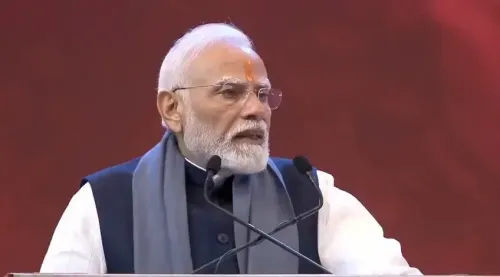
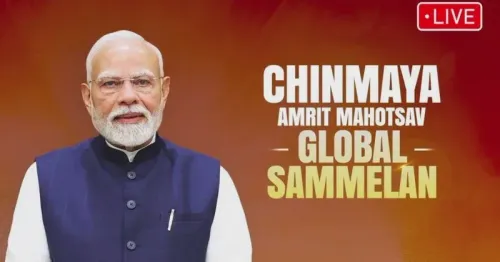
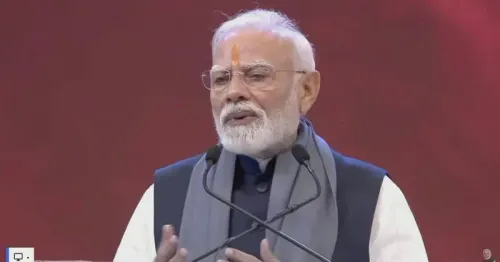
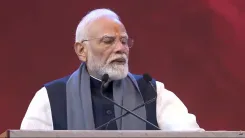
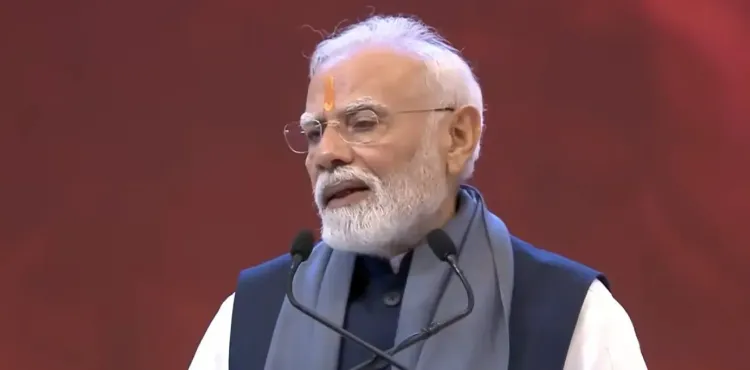
Prime Minister Narendra Modi on Friday, 23 October 2026, called for national unity against divisive forces, warning that new challenges and social distortions had emerged over recent decades and that every citizen shared the responsibility to address them. Speaking at the Chinmaya Amrit Mahotsav Global Sammelan in New Delhi, Modi linked the message to India's civilisational values and the goal of a developed nation by 2047.
The Core Call to Action
"Times have changed in the past decades. New challenges have arisen for the country. New distortions have emerged in society. Today, the responsibility to resolve them rests with all of us," the Prime Minister said. He went further: "Today, we have to unite society against the divisive forces. We must awaken our citizens to the need for self-reliance. We must connect every citizen with the resolve for a developed India in 2047."
The address comes at a time of heightened political polarisation domestically, lending the remarks a sharp contemporary edge even within a spiritual gathering. This is not the first time Modi has invoked civilisational consciousness as a counter to social fragmentation — similar themes have featured in his Independence Day addresses — but the Chinmaya platform gives the framing an explicitly cultural-spiritual dimension.
Youth at the Centre of the Vision
Modi praised the contributions of young participants at the Amrit Mahotsav celebrations, saying he had consistently placed youth at the heart of government policy. He highlighted a specific initiative in which a group of young members of the Chinmaya Mission travelled for 300 days, covered 40,000 kilometres, and interacted with more than one lakh young people across the country. "I want to thank the entire team for this," he said.
The emphasis on youth is consistent with the government's broader demographic dividend narrative — India's median age is among the lowest of major economies, and harnessing that cohort has been a recurring policy anchor since 2014.
Cultural and Civilisational Roots
Invoking the Upanishadic expression 'Vayam Amritasya Putrah' — meaning 'We are the children of immortality' — Modi clarified that it referred not to physical immortality but to the eternal nature of consciousness. He also offered an etymology of the word 'Bharat', saying it signified "someone who is engaged in knowledge and research," underscoring India's longstanding intellectual and spiritual traditions.
Recalling the country's 75th year of Independence, Modi said the milestone was intended not merely as a celebratory occasion but as a platform to "bring to life the spirit of India, which knows how to live by immortal ideas and, drawing on its experience spanning thousands of years, can express concern for humanity across generations."
Tribute to Swami Chinmayananda and Education Reform
The Prime Minister paid an extended tribute to Swami Chinmayananda, describing his life as a remarkable confluence of knowledge, action and devotion. "Those of us who think about the country's interests should work to make the nation aware and developed. Swami Chinmayananda devoted his entire life to this mantra," Modi said. He recalled the release of a commemorative coin in the spiritual leader's honour in 2015, during the birth centenary observance.
Turning to policy, Modi pointed to the National Education Policy (NEP) as the government's instrument for equipping a new India, noting that the policy prioritises India's knowledge traditions, mother-tongue education, modern science, and emerging technologies. The NEP, introduced in 2020, has been one of the more consequential — and contested — domestic reforms of his administration.
What This Signals
The Chinmaya Amrit Mahotsav address reinforces a governing philosophy that increasingly weaves together cultural nationalism, spiritual heritage, and developmental ambition into a single narrative frame. As the 2047 target year for Viksit Bharat approaches — now just over two decades away — such addresses serve both as mobilisation rhetoric and as soft-power outreach to the Indian diaspora through globally attended forums like this sammelan. The next tangible test of the vision will come with the Union Budget cycle and the mid-term review of the NEP implementation roadmap.
Point of View
Spiritually credentialled audience for messaging that blends cultural nationalism with developmental ambition. The call to 'unite against divisive forces' is deliberately pitched in civilisational rather than partisan terms, making it harder to contest on ideological grounds. What is notably absent is a specific policy mechanism: the speech is strong on aspiration but light on accountability markers for the 2047 goal. The NEP reference is the closest thing to a concrete lever, but that reform's on-ground implementation remains uneven across states — a gap the Centre has yet to close publicly.
NationPress
23 Oct 2026
Frequently Asked Questions
What did PM Modi say at the Chinmaya Amrit Mahotsav Global Sammelan?
PM Modi called for national unity against divisive forces, emphasised self-reliance, and urged every citizen to align with the vision of a developed India by 2047. He also paid tribute to Swami Chinmayananda and highlighted the National Education Policy as a tool for a new India.
What is the Viksit Bharat 2047 goal that Modi referenced?
Viksit Bharat 2047 is the government's long-term development vision targeting the centenary of India's independence, aiming to make India a fully developed nation by that year. Modi has consistently invoked this milestone across policy announcements and public addresses since his third term began.
What was the Chinmaya Mission youth initiative Modi praised?
A group of young Chinmaya Mission members travelled for 300 days across 40,000 kilometres, interacting with more than one lakh young people across India. Modi specifically thanked the team during his address at the sammelan.
Why did Modi invoke the Upanishadic phrase 'Vayam Amritasya Putrah'?
'Vayam Amritasya Putrah' means 'We are the children of immortality' and, as Modi explained, refers not to physical immortality but to the eternal nature of consciousness. He used it to connect India's spiritual heritage with its contemporary civilisational identity and development aspirations.
How does the National Education Policy fit into Modi's address?
Modi cited the National Education Policy as the government's effort to align modern education with India's knowledge traditions, mother-tongue instruction, and emerging technologies. He framed it as part of the broader mission to prepare Indian youth for a developed nation by 2047.