PM Modi, Swiss President Parmelin chart India-Switzerland ties
Synopsis
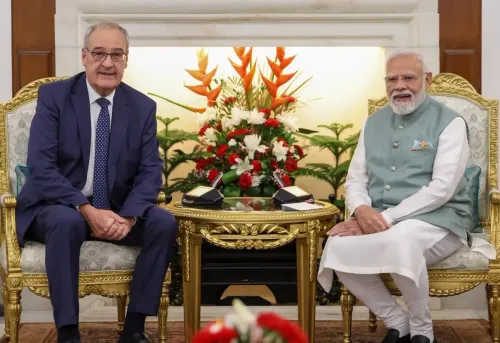
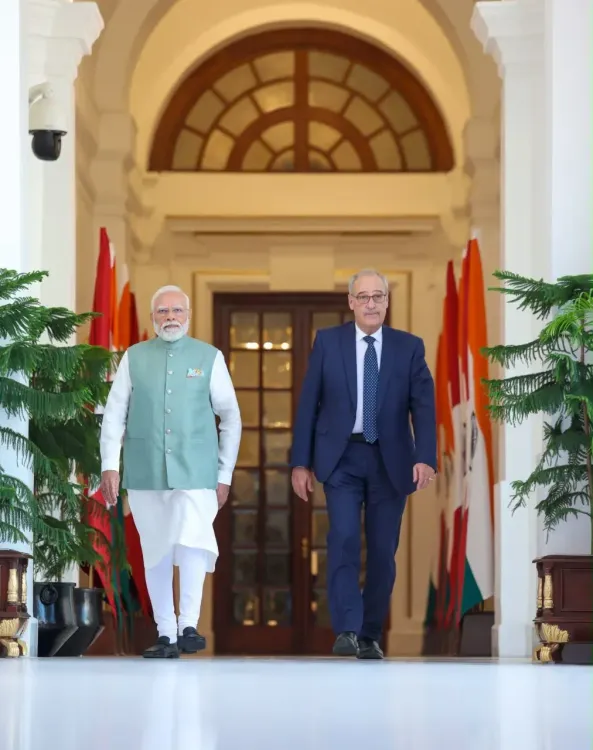
Prime Minister Narendra Modi and Swiss President Guy Parmelin held talks on 5 October 2026, covering six key domains: trade and investment under the India-EFTA agreement, defence production, nuclear energy, infrastructure, science and innovation, and student and professional mobility.
Key Takeaways
PM Modi and Swiss President Guy Parmelin met on 5 October 2026 to advance the India-Switzerland partnership.
Talks explicitly referenced the India-EFTA Trade and Economic Partnership Agreement as the springboard for deeper trade and investment ties.
Defence production and nuclear energy featured on the agenda, marking a strategic broadening of the bilateral relationship.
Infrastructure and mobility cooperation was discussed, with Switzerland's rail and tunnelling expertise relevant to India's infrastructure expansion.
Both sides explored formal pathways for students and professionals , signalling a people-to-people dimension alongside economic and strategic pillars.
Science, technology and innovation cooperation was identified as a sixth priority area, linking India's STEM depth with Switzerland's top-ranked research ecosystem.
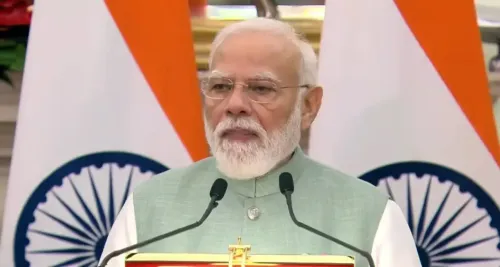
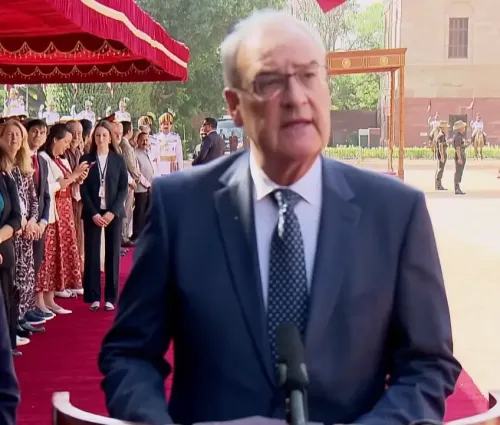
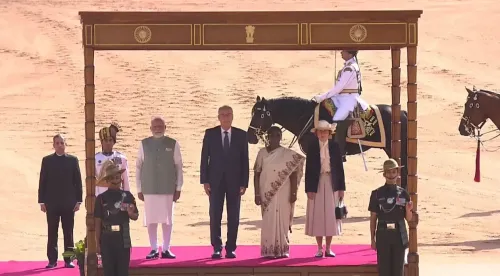
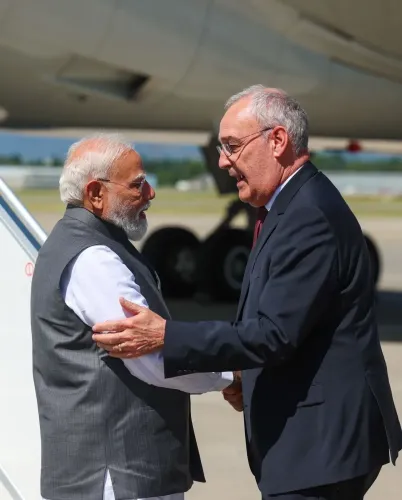
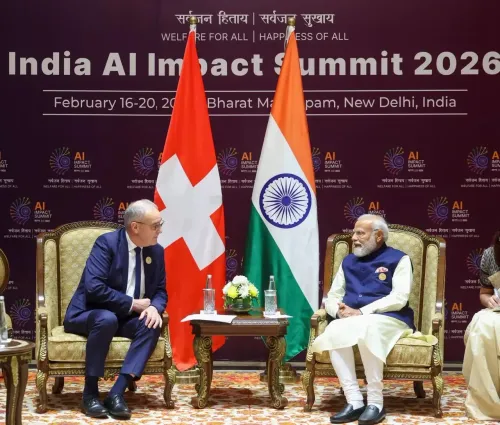
Six pillars, one conversation — and a bilateral relationship that just got a formal upgrade. Prime Minister Narendra Modi met Swiss President Guy Parmelin on Monday, 5 October 2026, holding substantive talks that ranged from defence manufacturing to nuclear energy and student mobility, signalling that the India-Switzerland partnership is being deliberately widened beyond its traditional trade-and-investment core.
The India-EFTA agreement as a launchpad
The most structurally significant thread in the discussions was trade and investment, explicitly flagged 'in the wake of the India-EFTA agreement.' The India-EFTA Trade and Economic Partnership Agreement (TEPA) — covering Switzerland, Norway, Iceland and Liechtenstein — was a landmark deal that, when it entered the implementation phase, gave Swiss companies preferential access to the Indian market and vice versa. Both leaders used Monday's meeting to explore how that framework can be translated into real investment flows and deeper commercial ties. Switzerland, home to global heavyweights in pharmaceuticals, precision engineering, and financial services, represents exactly the kind of high-value partner India is courting as it repositions itself in global supply chains.
Defence, nuclear and infrastructure — a broader strategic footprint
What makes this bilateral conversation stand out is its strategic breadth. Defence production on the agenda between India and Switzerland is notable: Switzerland's precision manufacturing base has long supplied components to global defence contractors, and India's push to indigenise and co-produce military hardware — under the 'Make in India' banner — makes Swiss industrial expertise a natural fit. Nuclear energy is an even bolder signal. Switzerland, which has historically operated a significant civil nuclear fleet, is navigating its own energy transition, while India is aggressively expanding its nuclear power capacity. Cooperation here could mean technology sharing, safety protocols, or even fuel-cycle collaboration. Infrastructure and mobility rounds out the physical economy angle, with Swiss expertise in rail, tunnelling, and urban transit particularly relevant to India's infrastructure supercycle.
Science, innovation and people-to-people bridges
The final two pillars — science, technology and innovation, and opportunities for students and professionals — reflect a longer-term bet. Switzerland ranks consistently among the world's top research ecosystems, and a structured pathway for Indian talent to access Swiss universities and research institutions (and for Swiss firms to recruit from India's deep STEM pool) could compound the relationship's value over decades. For Indian students, a formal bilateral framework for education and professional mobility could open doors well beyond the usual English-speaking destinations.
Six domains in a single bilateral meeting is not a courtesy call — it is an agenda. The Modi-Parmelin conversation on 5 October 2026 plants markers across the full width of what a modern India-Europe partnership can look like, and the world will be watching how quickly those markers become signed agreements.
Point of View
Nuclear, infrastructure, and people mobility onto a trade-and-investment base, Modi is pursuing a model of 'comprehensive partnerships' that mirrors how India has structured its deepest ties with Japan and France — broad enough to be resilient, specific enough to generate deliverables. Switzerland's neutrality and financial clout make it a distinctive European interlocutor, and nuclear cooperation in particular — if it progresses — would signal India's growing confidence in its civil nuclear standing post the India-US civil nuclear deal era. The inclusion of student and professional mobility also hints at a domestic political calculus: tangible, individual-level benefits that can be communicated to young Indian voters.
NationPress
5 Oct 2026
Frequently Asked Questions
What did PM Modi and Swiss President Guy Parmelin discuss?
They discussed six areas: trade and investment under the India-EFTA agreement, defence production, nuclear energy, infrastructure and mobility, science and technology, and opportunities for Indian students and professionals in Switzerland.
What is the India-EFTA agreement and why does it matter?
The India-EFTA Trade and Economic Partnership Agreement (TEPA) is a trade deal between India and four European nations — Switzerland, Norway, Iceland and Liechtenstein — that opens preferential market access on both sides. It was a key reference point in the Modi-Parmelin talks as the foundation for deeper investment flows.
When did PM Modi meet Swiss President Parmelin?
The meeting took place on Monday, 5 October 2026.
What is the significance of India-Switzerland nuclear energy cooperation?
Switzerland has an established civil nuclear sector and India is expanding its nuclear power capacity. Cooperation could involve technology sharing, safety expertise, or fuel-cycle collaboration, marking a strategic deepening beyond traditional trade ties.
What opportunities could the Modi-Parmelin talks create for Indian students?
Both leaders discussed formal bilateral pathways for students and professionals, which could mean structured access to Swiss universities, research institutions, and professional opportunities for Indians — and easier recruitment of Indian STEM talent by Swiss firms.