Siddaramaiah Bids Farewell as CM, Launches ₹183 Cr Works in Varuna
Synopsis
Former Karnataka CM Siddaramaiah launched ₹183.64 crore in development projects in Varuna on October 5, 2026, while reflecting on his two CM terms, the five Congress guarantees, Karnataka's historic drought, and his commitment to the constituency as its sitting MLA until 2028.
Key Takeaways
₹183.64 crore in development works launched in Varuna constituency on October 5, 2026 — ₹40 crore inaugurated, ₹143 crore given foundation stones.
Siddaramaiah served as Karnataka CM from 2013–2018 and May 23, 2023 – May 26, 2026 , totalling more than eight years.
He resigned as CM honouring a public promise to step down when Rahul Gandhi directed him to.
His government claims to have delivered 158 of 165 Congress manifesto promises in the first term and all five guarantee schemes — Shakti, Gruha Lakshmi, Gruha Jyoti, Anna Bhagya, Yuva Nidhi — within one year of the second term.
Karnataka is facing its worst drought in 126 years , with 217 of 240 taluks drought-affected; Siddaramaiah argued the guarantees served as a lifeline during the crisis.
Total development spending in Varuna across four Assembly terms has crossed ₹5,034 crore ; Siddaramaiah will remain MLA until the 2028 elections .
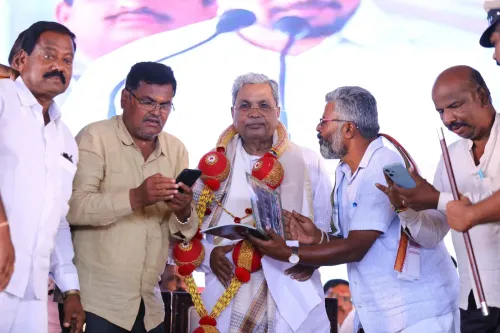
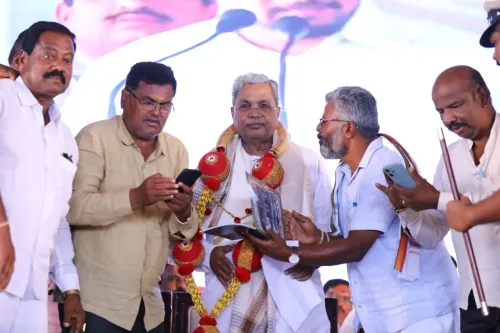
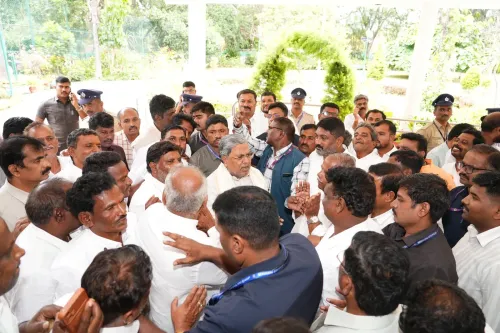
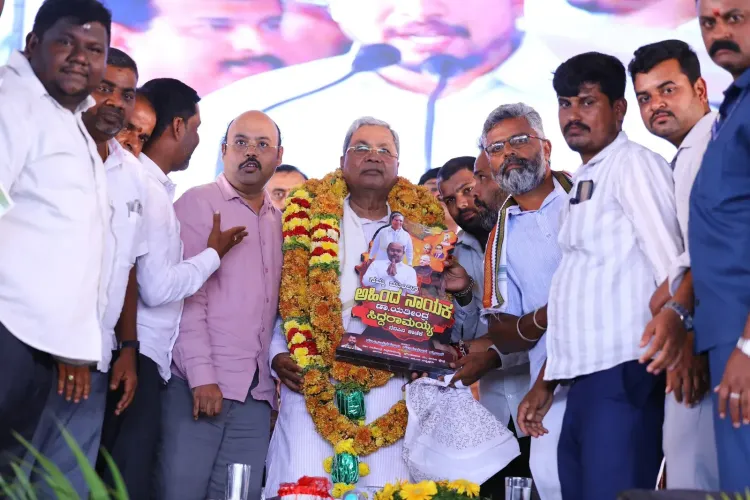
After more than eight years as Karnataka's Chief Minister across two terms, Siddaramaiah stepped before the people of his home constituency on Monday, October 5, 2026, not as the head of government but as a legislator returning to roots — launching ₹183.64 crore worth of development projects in Varuna constituency and delivering what reads as a political valediction to the voters who made him.
Speaking at a development works inauguration and foundation-laying ceremony at Dasanuru village in Varuna, Siddaramaiah drew a line under his second Chief Ministership: he had taken oath on May 23, 2023 and resigned on May 26, 2026, honouring a prior public commitment to step down whenever Congress leader Rahul Gandhi asked him to. 'I had said many times before that I would vacate the Chief Minister's post whenever Rahul Gandhi says so,' he noted. 'I kept my word.'
₹183 Crore for Varuna — What the Numbers Say
Of the total ₹183.64 crore package announced Monday, works worth more than ₹40 crore were formally inaugurated, while projects valued at approximately ₹143 crore received foundation stones. Siddaramaiah framed the event in the sweep of Varuna's entire post-delimitation history: since the constituency was carved out in 2008, development expenditure over four Assembly terms has crossed ₹5,034 crore — a figure he cited as the clearest measure of what the constituency's sustained loyalty to him has yielded in return.
A Political Biography Told in Numbers
The speech was as much retrospective as ceremonial. Siddaramaiah reminded Varuna voters that across four elections since 2008, they have elected him three times and his son Yatindra Siddaramaiah once — in 2018. He has won eight elections in all across a public life spanning more than four decades, serving as minister, Chief Minister twice, and Leader of the Opposition twice.
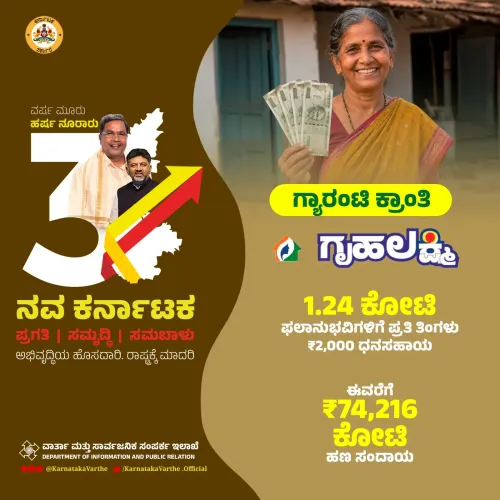
On promise-keeping — his stated governing philosophy — he told the crowd that during his first CM term from 2013 to 2018, his government delivered on 158 of the 165 promises in the Congress election manifesto, and also launched welfare schemes including Anna Bhagya (food security), Krishi Bhagya (farm water harvesting), Ksheera Bhagya (mid-day milk), and Shadi Bhagya (marriage assistance). After returning to power in 2023, he said, all five Congress guarantee schemes — Shakti (free bus travel for women), Gruha Lakshmi (cash transfer to women heads of household), Gruha Jyoti (free electricity up to 200 units), Anna Bhagya, and Yuva Nidhi (unemployment allowance for graduates) — were operationalised within a single year.
Drought Shadow Over the Guarantees' Relevance
Siddaramaiah did not shy away from the hardest context: Karnataka is in the grip of what he described as its worst drought in 126 years, with 217 of 240 taluks declared drought-affected. Against that backdrop, he argued, the guarantee schemes have functioned as a social buffer — putting cash, food, and essential support directly in the hands of poor and middle-class families at exactly the moment the agrarian economy buckled.
The Transition to D.K. Shivakumar — and What Comes Next for Varuna
Siddaramaiah acknowledged D.K. Shivakumar as the sitting Chief Minister and expressed confidence that Shivakumar would continue the welfare commitments of the Congress government. For his own part, he told constituents he will remain their MLA for approximately another year and a half — until the 2028 Assembly elections. He also asked Varuna voters to extend the same affection to his son Yatindra, now a Karnataka Legislative Council member, as they have to him.
The closing note was pointed: 'Power is not permanent, but the relationship with the people and public service are.' For a leader who has spent four decades navigating Karnataka's volatile political terrain — winning eight times, losing, rebuilding — that is less a platitude than a battle-tested axiom.
Point of View
Cementing his base and advancing his son Yatindra's profile simultaneously. His public framing of the CM resignation as a voluntary act of word-keeping — rather than a Congress high-command directive — is designed to preserve dignity and electoral capital ahead of 2028. The invocation of 217 drought-hit taluks alongside the five guarantees is a deliberate policy argument: that welfare transfers are counter-cyclical tools, not just vote-bank instruments. With D.K. Shivakumar now at the helm, the open question is whether the guarantees survive budget pressures intact — and whether Siddaramaiah's loyalty from Varuna translates to continued influence over the state Congress's policy direction.
NationPress
5 Oct 2026
Frequently Asked Questions
Why did Siddaramaiah resign as Karnataka Chief Minister in May 2026?
Siddaramaiah resigned as Karnataka Chief Minister on May 26, 2026 , honouring a public pledge he had made multiple times — that he would vacate the post whenever Congress leader Rahul Gandhi asked him to. He framed the resignation as keeping his word rather than a forced exit.
What are the five Congress guarantee schemes in Karnataka?
The five Karnataka Congress guarantee schemes are: Shakti (free bus travel for women), Gruha Lakshmi (monthly cash transfer to women heads of households), Gruha Jyoti (free electricity up to 200 units per month), Anna Bhagya (additional free foodgrain), and Yuva Nidhi (monthly unemployment allowance for graduates and diploma holders). Siddaramaiah says all five were implemented within one year of the Congress returning to power in 2023.
How severe is Karnataka's drought in 2026?
Karnataka is experiencing what Siddaramaiah described as the worst drought in 126 years . Of the state's 240 taluks , 217 have been declared drought-affected, representing a severe rainfall deficit that has stressed the agricultural economy across most of the state.
What development works were launched in Varuna constituency on October 5, 2026?
Projects worth ₹183.64 crore in total were launched in Varuna constituency at a ceremony in Dasanuru village . Works valued at over ₹40 crore were formally inaugurated, while projects worth approximately ₹143 crore received foundation stones.
Who is Yatindra Siddaramaiah?
Yatindra Siddaramaiah is the son of former Karnataka CM Siddaramaiah. He won the Varuna constituency Assembly seat in the 2018 elections and is currently serving as a Karnataka Legislative Council (Vidhan Parishad) member .