ED seizes ₹21 lakh in ₹200 crore CSR fraud probe across 4 states
Synopsis
A man who allegedly posed as a doctor for nearly three decades allegedly mobilised ₹200 crore in CSR funds from at least 40 PSUs and private firms through a network of sham charitable trusts — with public representatives' letters reportedly enough to unlock donations. The ED's multi-state raids have exposed how a mandatory corporate welfare framework can be turned into a cash-conversion machine.
Key Takeaways
The ED conducted searches at 8 locations across Maharashtra , West Bengal , Gujarat , and Delhi-NCR on 1 October 2026 . ₹21 lakh in cash and digital evidence were seized during the operation.
The probe centres on Dharmendra Kumar Chandraveer Singh , who allegedly posed as a doctor for nearly three decades without any recognised medical qualification.
At least 40 PSUs and Public Sector Banks across India reportedly channelled CSR donations to trusts operated by the accused. ₹200 crore in CSR funds were allegedly routed through shell entities, with vendor bills inflated and kickbacks paid to intermediaries.
Private-sector CSR contributions were allegedly returned in cash to donors after a commission deduction, converting accounted funds into unaccounted money.
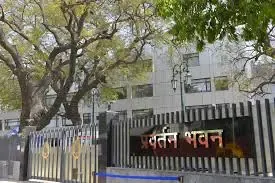
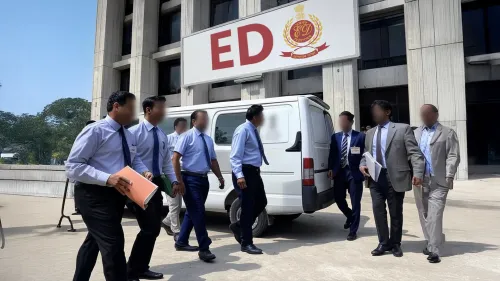
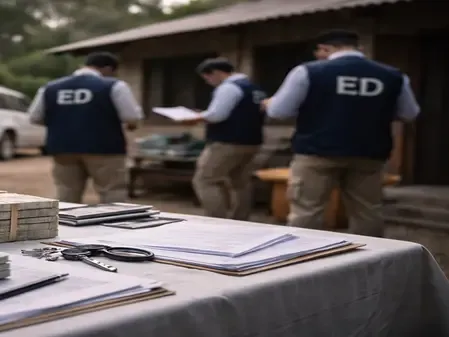
The Enforcement Directorate (ED) seized ₹21 lakh in cash along with digital evidence and incriminating documents during searches at eight locations spread across Maharashtra, West Bengal, Gujarat, and Delhi-NCR on 1 October 2026, in a money laundering investigation linked to an alleged bogus Corporate Social Responsibility (CSR) donation racket worth ₹200 crore. The searches were conducted by the ED Mumbai Zonal Office-I under the provisions of the Prevention of Money Laundering Act (PMLA), 2002.
The Accused and the Alleged Fraud
The case centres on Dharmendra Kumar Chandraveer Singh, against whom a first information report (FIR) was earlier registered at Juhu Police Station in Mumbai for offences under the Maharashtra Medical Practitioners Act, 1961, the National Medical Commission Act, 2019, and the Bharatiya Nyaya Sanhita, 2023 — including sections corresponding to forgery, cheating, and fraud under the Indian Penal Code. These are scheduled offences under the PMLA, prompting the ED to initiate its own parallel investigation.
According to the ED, Singh allegedly represented himself as a doctor and used the title 'Doctor' for nearly three decades, despite holding no recognised medical qualification or registration with any medical council, and having studied only up to Class XII. Leveraging this fraudulent credential, he reportedly established and operated a network of charitable trusts ostensibly engaged in healthcare-focused CSR activities.
How the ₹200 Crore Racket Allegedly Worked
The ED's prima facie findings reveal a multi-layered scheme. Hospitals and healthcare institutions that cited a lack of funds for purchasing high-end medical equipment were reportedly connected with public representatives of their respective areas, who then issued recommendations for CSR funding specifically channelled through the trusts operated by Singh. Public Sector Undertakings (PSUs) and public sector banks reportedly made CSR donations to these trusts primarily on the strength of such recommendations.
At least 40 PSUs and Public Sector Banks across India reportedly donated to these trusts. The ED said several projects were only partially executed or not executed in proportion to the funds received. Vendor bills were allegedly inflated, and excess funds were routed through bogus or shell entities. Kickbacks and commissions were allegedly paid to intermediaries who facilitated the CSR funding pipeline.
For private-sector CSR contributors, the modus operandi was different: funds were reportedly returned substantially in cash to the original donors after deducting a small commission — effectively converting accounted corporate expenditure into unaccounted cash. Most shell entities involved have also been flagged in multiple GST fraud investigations, according to the ED.
What Was Seized
Searches at the eight locations yielded ₹21 lakh in cash, besides a range of incriminating documents and digital devices. The ED said the material seized would advance the money laundering investigation, with further action expected as the probe deepens. The agency has not yet disclosed whether any arrests have been made in connection with the searches.
Broader Implications for CSR Governance
This case adds to a growing body of enforcement action targeting misuse of the mandatory CSR framework under the Companies Act, 2013, which requires qualifying firms to spend a portion of their profits on social welfare. Critics and governance watchdogs have long flagged that the CSR ecosystem — involving trusts, intermediaries, and project implementers — lacks robust third-party verification mechanisms. The ED's findings, if substantiated, suggest that public representatives' recommendations were sufficient for PSUs to release funds without independent project audits. The investigation is ongoing, and the full extent of the network's reach is yet to be established.
Point of View
Not just a criminal episode. The fact that letters from public representatives were reportedly sufficient to unlock PSU donations — with no independent project audit — reveals a structural accountability gap at the heart of the Companies Act CSR framework. If 40 PSUs were allegedly defrauded through the same mechanism, the failure is systemic, not incidental. Regulators and the Ministry of Corporate Affairs need to confront an uncomfortable question: whether the CSR ecosystem's reliance on intermediaries and recommendations, rather than outcome verification, has turned a social welfare mandate into a structured route for cash conversion.
NationPress
5 Oct 2026
Frequently Asked Questions
What is the ₹200 crore CSR racket that the ED is investigating?
It is an alleged money laundering scheme in which a network of charitable trusts, intermediaries, and shell entities reportedly diverted and recycled ₹200 crore in Corporate Social Responsibility donations collected from at least 40 PSUs and private companies. The ED is investigating the case under the Prevention of Money Laundering Act, 2002, following an FIR at Juhu Police Station in Mumbai against the primary accused, Dharmendra Kumar Chandraveer Singh.
Who is Dharmendra Kumar Chandraveer Singh?
Dharmendra Kumar Chandraveer Singh is the primary accused in the case, who allegedly represented himself as a doctor for nearly three decades despite having no recognised medical qualification and having studied only up to Class XII. He allegedly used this fraudulent credential to establish a network of charitable trusts that attracted CSR funding from PSUs and private corporations.
What did the ED find during its searches on 1 October 2026?
The ED seized ₹21 lakh in cash along with incriminating documents and digital devices from eight locations across Maharashtra, West Bengal, Gujarat, and Delhi-NCR. The searches prima facie revealed a network of charitable trusts, CSR agents, middlemen, and equipment suppliers involved in the diversion of CSR funds.
How were PSUs allegedly defrauded in this scheme?
According to the ED, hospitals that needed medical equipment were connected with local public representatives, who then issued letters recommending that PSUs direct their CSR funds specifically to Singh's trusts. PSUs reportedly relied on these recommendations without independent verification, allowing the trusts to collect donations even when projects were only partially executed or not carried out at all.
What happens next in the investigation?
The ED has stated that the seized cash and digital evidence will advance its money laundering probe under the PMLA. The agency has not confirmed arrests so far, and the full scope of the network remains under investigation. Further action, including possible arrests or asset attachments, is expected as the case progresses.