ED Raids 12 Premises in Chandigarh Region, Uncovers ₹145 Crore Kotak Mahindra-MC Panchkula Fraud
Synopsis
The ED raided 12 locations across Chandigarh and Panchkula, uncovering a ₹145 crore fraud where Kotak Mahindra Bank insiders and a civic official allegedly used forged documents to siphon Municipal Corporation Panchkula funds into private accounts, real estate firms, and a network of financiers — while feeding the civic body fake FDR documents.
Key Takeaways
The ED raided 12 premises across Chandigarh, Panchkula, Zirakpur, Dera Bassi, and Rajpura on April 22, 2025 under PMLA, 2002.
The fraud involves alleged embezzlement of ₹145.03 crore belonging to Municipal Corporation, Panchkula , with a forged maturity value shown as ₹158.02 crore .
Key accused include Pushpinder Singh (DVP, Kotak Mahindra Bank) , Dileep Kumar Raghav (CRM, Kotak Mahindra Bank) , and Vikas Kaushik (Ex Senior Accounts Officer, MC Panchkula) .
Laundered funds were routed through private financiers including Rajat Dahra, Swati Tomar, Kapil Kumar , and Vinod Kumar , and partially transferred to real estate firms.
MC Panchkula was deceived with forged FDR documents showing fake investments in 16 Fixed Deposits at Kotak Mahindra Bank, Sector-11, Panchkula .
The ED's probe was triggered by an FIR filed by ACB Haryana ; further arrests and asset attachments are anticipated in coming weeks.
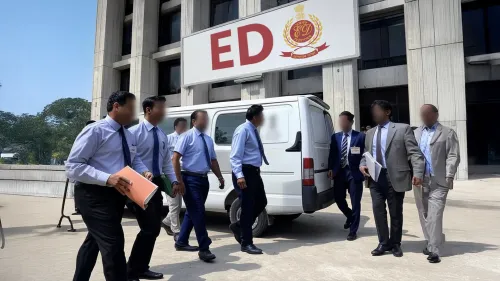
The Enforcement Directorate (ED) conducted sweeping searches across 12 premises in Chandigarh, Panchkula, Zirakpur, Dera Bassi, and Rajpura (Patiala) on April 22, 2025, seizing critical incriminating documents linked to a ₹145 crore fraud involving Kotak Mahindra Bank and the Municipal Corporation, Panchkula. The operation was carried out under the Prevention of Money Laundering Act (PMLA), 2002, by the ED's Chandigarh Zonal Office. The case exposes a sophisticated criminal conspiracy involving bank insiders, civic body officials, and private financiers working in tandem to siphon public funds.
How the ₹145 Crore Fraud Was Executed
According to the ED, Dileep Kumar Raghav, serving as Customer Relationship Manager at Kotak Mahindra Bank, and Pushpinder Singh, Deputy Vice President at Kotak Mahindra Bank, allegedly colluded with Vikas Kaushik, the Ex Senior Accounts Officer of Municipal Corporation Panchkula, to orchestrate the fraud.
The trio allegedly opened two unauthorised bank accounts in the name of Municipal Corporation, Panchkula, using forged and fabricated authorisation documents. Genuine funds belonging to the civic body were then transferred into these shadow accounts through unauthorised fund migration authorisation letters forged in the name of MC Panchkula.
Adding another layer of deception, unauthorised email IDs — distinct from the officially registered IDs of MC Panchkula — were used by bank officials to process and authenticate these fraudulent transactions, the ED stated.
Money Trail: From Civic Funds to Private Pockets
The ED's PMLA investigation traced the illegally siphoned funds flowing from the unauthorised accounts to a network of private financiers including Rajat Dahra, Swati Tomar, Kapil Kumar, and Vinod Kumar. These funds were subsequently routed back to Pushpinder Singh and his wife Preeti Thakur.
A significant portion of the laundered money was also channelled into real estate firms and private individuals, suggesting deliberate asset creation to conceal the proceeds of crime. The ED's searches specifically targeted premises linked to Pushpinder Singh, Rajat Dahra, Dileep Kumar Raghav, Vikas Kaushik, Sanat Realtors, Sunny Garg, and Kapil Kumar.
Investigators found that Municipal Corporation Panchkula was kept completely in the dark about these transactions. The civic body was instead presented with forged Fixed Deposit Receipt (FDR) documents falsely showing an investment in 16 FDs worth approximately ₹145.03 crore, with a projected maturity value of ₹158.02 crore at Kotak Mahindra Bank, Sector-11, Panchkula.
Legal Basis and FIR Background
The ED's investigation was triggered by an FIR registered by the Anti-Corruption Bureau (ACB), Panchkula, Haryana, under multiple sections of the Bharatiya Nyaya Sanhita (BNS), 2023 and the Prevention of Corruption Act, 1988. The FIR named unknown officers and officials of Kotak Mahindra Bank as accused.
The ACB complaint described the fraud as a product of a deep-rooted and well-organised criminal conspiracy aimed at embezzling public money held in the accounts of a civic institution. The ED's subsequent PMLA probe confirmed the existence of a closed criminal nexus spanning bank insiders, government officials, and private actors.
Seized Evidence and Key Developments
During the April 22 raids, ED officials seized sale-purchase agreements along with a range of documents and digital evidence directly linked to the alleged money laundering operation. These materials are expected to be critical in establishing the complete money trail and identifying additional beneficiaries.
The searches were confirmed by the ED Chandigarh Zonal Office in an official statement issued on Thursday, April 23, 2025. Investigators are now expected to record further statements under Section 50 of PMLA and may move toward asset attachment proceedings in the coming weeks.
Broader Implications: A Pattern of Civic Fund Fraud
This case is not an isolated incident. Across India, civic bodies have repeatedly been targeted through similar bank-account manipulation schemes, often enabled by insider collusion at financial institutions. The ₹145 crore Panchkula fraud underscores systemic vulnerabilities in how municipal bodies manage and monitor their treasury operations — particularly their dependence on physical authorisation letters and limited digital audit trails.
Notably, the use of forged FDR documents to mask the theft is a sophisticated tactic that allowed the fraud to go undetected within MC Panchkula's own records for an extended period. This raises serious questions about internal audit mechanisms within urban local bodies in Haryana and beyond.
With the ED now in possession of key documents and the money trail partially established, formal arrests, further raids, and attachment of properties — particularly real estate assets linked to the accused — are widely anticipated in the near term.
Point of View
But the sophistication: forged FDRs, shadow email IDs, and fake authorisation letters designed to keep the Municipal Corporation permanently in the dark. This is not a one-man crime; it is a systemic failure of oversight at both the civic body and the bank. As the ED tightens its net, the real question India must ask is how many other municipal treasuries across the country are sitting on similar time bombs — undetected, unaudited, and dangerously exposed.
NationPress
20 Sept 2026
Frequently Asked Questions
What is the Kotak Mahindra Bank-Municipal Corporation Panchkula fraud case?
The case involves an alleged ₹145 crore embezzlement of Municipal Corporation Panchkula's funds by a criminal nexus of Kotak Mahindra Bank officials and a civic body accountant. They reportedly opened unauthorised accounts using forged documents and transferred public funds, while giving MC Panchkula fake Fixed Deposit records to conceal the theft.
Who are the key accused in the ED raids on Chandigarh and Panchkula premises?
The primary accused identified by the ED include Dileep Kumar Raghav (CRM, Kotak Mahindra Bank), Pushpinder Singh (Deputy Vice President, Kotak Mahindra Bank), and Vikas Kaushik (Ex Senior Accounts Officer, MC Panchkula). Others named in the money trail include Rajat Dahra, Swati Tomar, Kapil Kumar, Vinod Kumar, and Preeti Thakur.
What did the ED seize during the April 22 raids in Chandigarh and Panchkula?
The ED seized sale-purchase agreements and various incriminating documents and digital evidence related to money laundering during raids at 12 premises. These materials are expected to help trace the complete money trail and identify further beneficiaries of the fraud.
What legal action has been taken in the Panchkula civic fraud case?
The Anti-Corruption Bureau (ACB), Haryana, registered an FIR under the Bharatiya Nyaya Sanhita 2023 and the Prevention of Corruption Act 1988. The ED subsequently launched a PMLA investigation and conducted searches on April 22, 2025, with further arrests and property attachments expected soon.
How was the ₹145 crore fraud at Municipal Corporation Panchkula concealed?
The accused allegedly provided MC Panchkula with forged Fixed Deposit Receipt (FDR) documents showing investments of approximately ₹145.03 crore in 16 FDs at Kotak Mahindra Bank, Sector-11, Panchkula. Unauthorised email IDs were also used to process fraudulent transactions, keeping the civic body's official records unaware of the actual fund movements.