PMK MLAs thank CM Vijay for social justice audit pledge
Synopsis
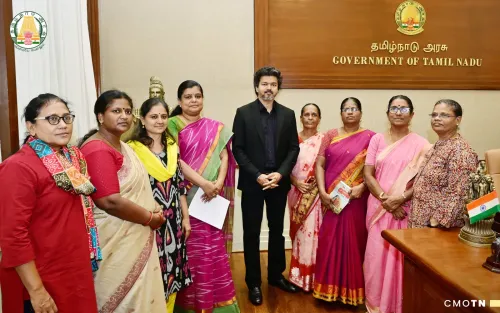
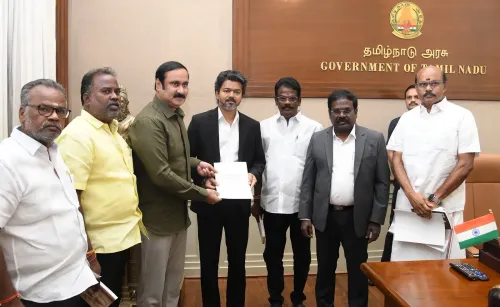
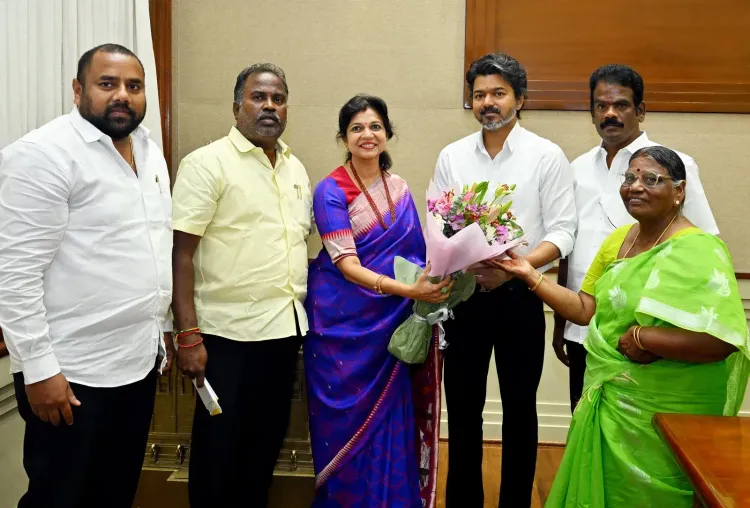
PMK's legislature party leader Dr. Sowmiya Anbumani and three MLAs called on Tamil Nadu CM C. Joseph Vijay at the Chennai Secretariat on 19 June 2026, thanking him for the government's pledge to conduct a Social Justice Audit as announced in the Governor's address to the assembly.
Key Takeaways
A PMK delegation led by legislature party leader Dr.
Sowmiya Anbumani met CM C.
Joseph Vijay at the Chennai Secretariat on 19 June 2026 .
The delegation included sitting MLAs C.
Vaithilingam , and former MLA Pe.
The PMK members formally thanked the Chief Minister for the government's commitment to conduct a Social Justice Audit , as announced in the Governor's address .
Tamil Nadu has a 69 per cent reservation regime protected by a 1994 constitutional amendment , making social justice policy a politically sensitive domain.
The PMK , founded in 1989 , primarily represents the Vanniyar community and has historically advocated for enhanced reservation shares.
Details on the audit's terms of reference, oversight panel, and timeline are yet to be announced by the government.
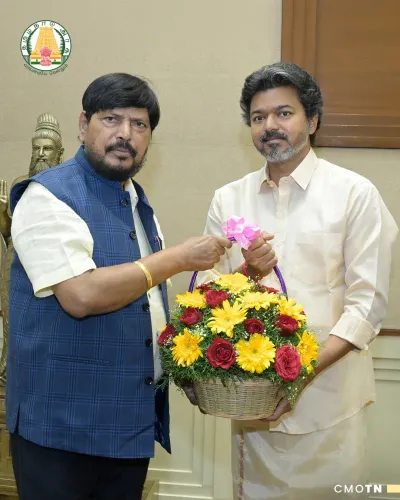
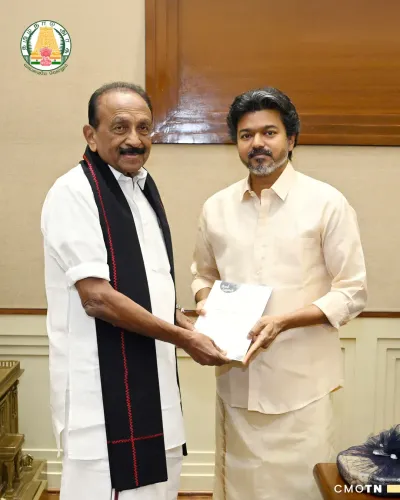
The Chief Minister's Office of Tamil Nadu announced on Friday, 19 June 2026 that a delegation from the Paattali Makkal Katchi (PMK) called on Chief Minister C. Joseph Vijay at the Secretariat in Chennai to formally thank him for the state government's commitment to conduct a Social Justice Audit, as announced in the Governor's address.
Context
The PMK delegation that met CM Vijay included the party's legislature party leader Dr. Sowmiya Anbumani, along with sitting MLAs C. Sivakumar, A. Ganeshkumar, and G. Vaithilingam. Former MLA Pe. Sakthi Kamalambal was also part of the group. The delegation conveyed gratitude for the government's stated intent to carry out a social justice audit, a commitment made public through the Governor's address to the Tamil Nadu Legislative Assembly.
The Governor's address, which traditionally outlines the ruling government's policy agenda for the session, had included a specific mention of the Social Justice Audit — a move that has drawn attention from caste-based political formations across the state.
Policy Backdrop
Tamil Nadu has a deep-rooted tradition of social justice governance, anchored in the Dravidian political movement that has shaped the state's public policy since the mid-20th century. The state's 69 per cent reservation regime — one of the highest in the country — was given constitutional protection through a 1994 amendment, shielding it from judicial review under the general 50 per cent ceiling set by the Supreme Court.
Periodic social audits and backward classes commissions have been a recurring feature of Tamil Nadu governance. Earlier governments have used such exercises to reassess the distribution of reservation benefits across communities, often in response to political pressure from caste-based parties. A formal Social Justice Audit would examine how effectively reservation and welfare schemes have reached their intended beneficiaries across backward, most backward, and Scheduled Caste communities.
Stakeholders and Impact
The PMK, founded in 1989, primarily represents the Vanniyar community — a numerically significant Most Backward Class group concentrated in northern Tamil Nadu. The party has historically used its legislative presence to push for enhanced reservation shares and targeted welfare schemes for its constituency. Its decision to formally thank the Chief Minister signals a degree of political alignment with the current government's social justice agenda.
Beyond the Vanniyar community, the proposed audit has implications for a wide cross-section of Tamil Nadu's population, including other Most Backward Classes (MBCs), Backward Classes (BCs), and Scheduled Castes who stand to benefit from a thorough review of welfare delivery mechanisms. Civil society groups and academic bodies focused on equity policy are also expected to engage with the audit process once its terms of reference are finalised.
What's Next
The immediate focus will be on the government releasing the detailed framework for the Social Justice Audit — including its terms of reference, the composition of any oversight panel, and the timeline for interim and final reports. Any linked legislative proposals or budgetary allocations in the ongoing assembly session will be closely watched by political parties and community organisations alike.
Ruling dispensations in Tamil Nadu have historically used Governor's address commitments to consolidate smaller caste-based parties into a broader support coalition. Whether the audit translates into concrete policy changes — such as revised sub-categorisation of reservation quotas or new welfare outlays — will determine its political and administrative significance in the months ahead.
Point of View
And the Governor's address announcement appears to be serving that function here. For the PMK, which has oscillated between alliance and opposition pressure tactics, this visible endorsement is a way to stake an early claim in shaping the audit's scope — particularly on questions of sub-categorisation and MBC quotas. The real test will come when the government releases the audit's terms of reference, which will reveal whether the commitment is substantive policy or political signalling.
NationPress
19 Sept 2026
Frequently Asked Questions
What is the Tamil Nadu Social Justice Audit announced in 2026?
The Tamil Nadu government announced in the Governor's address to the state legislature that it would conduct a Social Justice Audit to review how effectively reservation and welfare schemes have reached backward classes, most backward classes, and scheduled caste communities. The detailed terms of reference and timeline are yet to be released.
Why did PMK MLAs meet CM Joseph Vijay on 19 June 2026?
PMK's legislature party leader Dr. Sowmiya Anbumani and three sitting MLAs met CM C. Joseph Vijay at the Chennai Secretariat on 19 June 2026 to formally thank him for the government's commitment to conduct a Social Justice Audit, as announced in the Governor's address.
Who is Dr. Sowmiya Anbumani and what party does she represent?
Dr. Sowmiya Anbumani is the legislature party leader of the Paattali Makkal Katchi (PMK), a Tamil Nadu political party founded in 1989 that primarily represents the Vanniyar community and advocates for backward class reservation rights.
What is Tamil Nadu's reservation policy and how is it protected?
Tamil Nadu has a 69 per cent reservation regime for backward classes, most backward classes, and scheduled castes — one of the highest in India. It was given constitutional protection through a 1994 amendment, shielding it from the Supreme Court's general 50 per cent ceiling.
What will the Tamil Nadu Social Justice Audit examine?
The Social Justice Audit is expected to examine how effectively reservation benefits and welfare schemes have reached their intended beneficiaries across backward, most backward, and scheduled caste communities. The government is yet to announce the audit panel's composition and timeline.