Did the Police in J&K's Awantipora Raid a Banned Jamaat-e-Islami Leader's Residence?
Synopsis
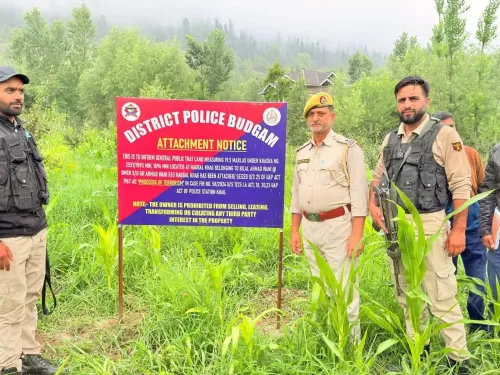
On January 1st, the police in Jammu and Kashmir's Awantipora conducted a significant raid on a residence linked to the banned Jamaat-e-Islami organization. The operation aimed to dismantle terrorism support structures, leading to the seizure of incriminating materials. This development underscores the authorities' commitment to maintaining peace.
Key Takeaways
The police conducted a raid in Awantipora targeting a member of the banned Jamaat-e-Islami.
Incriminating materials and digital devices were seized during the operation.
The raid is part of a broader initiative to dismantle terrorist support structures.
The Jamaat-e-Islami has a history of involvement in terrorist activities.
Authorities remain committed to maintaining peace and order in the region.
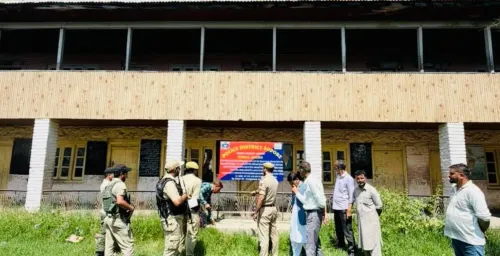
Srinagar, Jan 1 (NationPress) On Thursday, the police in Jammu and Kashmir's Awantipora executed a raid at the residence of a member from the banned Jamaat-e-Islami (JeI) organization in the Dadsara area of Anantnag district, as per official reports.
The authorities indicated that this operation was linked to an FIR filed at the Awantipora Police Station. The raid was part of the ongoing initiative to dismantle the terror ecosystem and its supporting structures. During the operation, incriminating materials and digital devices were seized, leading to the questioning of several individuals, who were subsequently bound under relevant legal statutes.
The Awantipora Police emphasized their commitment to enforcing strict legal measures against all entities involved in terrorism while maintaining peace and public order within the police district.
The JeI is recognized as a religious-political organization whose participation in terrorist activities led to its ban by the government.
A prominent JeI figure, Syed Yusuf Shah, who assumed the title of 'Syed Sallahuddin', became the supreme commander of the Hizbul Mujahideen terror group.
Operating from Muzaffarabad in Pakistan-Occupied Kashmir, he has been implicated in numerous FIRs throughout the Valley for orchestrating attacks on security personnel, pro-India politicians, local law enforcement, and civilians, labeling them as agents of the security forces.
The senior-most JeI leader, Syed Ali Shah Geelani, held the position of Chairman for the hardline faction of the All Parties Hurriyat Conference. Geelani later established his own politico-religious party known as the Tehreek-e-Hurriyat. He was the ideological figurehead for separatists in Kashmir, famous for his impassioned speeches against India, advocating for the integration of Jammu and Kashmir with Pakistan.
The JeI also managed a number of educational institutions in the Valley, which were de-recognized by authorities following the abrogation of Article 370 in 2019.
Point of View
It is crucial to recognize the ongoing efforts of law enforcement in Jammu and Kashmir to combat terrorism. The recent raid reflects a stringent approach towards dismantling networks that threaten public safety, aligning with national interests to maintain stability across the region.
NationPress
20 Sept 2026
Frequently Asked Questions
What was the reason for the police raid in Awantipora?
The raid was conducted in connection with an FIR registered at the Awantipora Police Station as part of efforts to dismantle the terror ecosystem and its support structures.
Who is Syed Yusuf Shah?
Syed Yusuf Shah is a senior leader of the Jamaat-e-Islami who became the supreme commander of the Hizbul Mujahideen, actively involved in orchestrating terrorist attacks.
What has been the impact of the Jamaat-e-Islami organization?
The Jamaat-e-Islami has been involved in terrorist violence, leading to its ban by the government, and has operated schools in the Valley which were de-recognized after the abrogation of Article 370.