Political Leaders Address Dhirendra Shastri's Kashi Comments: Emphasizing Legal Processes and Harmony

Synopsis
Political leaders respond thoughtfully to Dhirendra Shastri's controversial 'remove stain of Kashi' remarks, advocating for harmony and legal adherence. With sensitive historical implications, the discourse balances faith and judicial integrity.
Key Takeaways
Political responses emphasize harmony .
Legal processes are prioritized in discussions .
Dhirendra Shastri's remarks trigger significant debate .
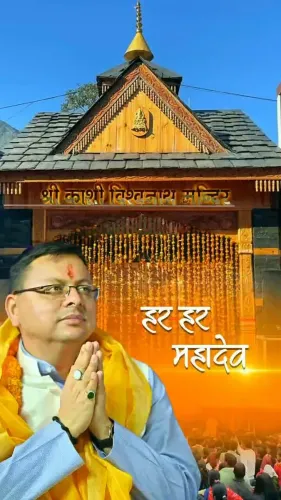
The Kashi Vishwanath Temple holds deep cultural importance .
Ongoing legal and historical debates remain sensitive .
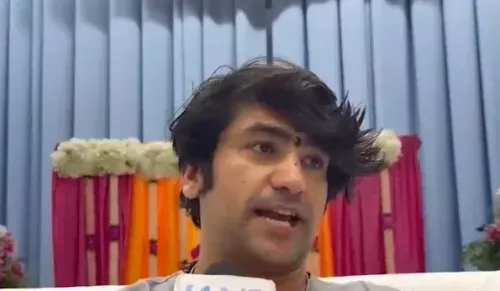
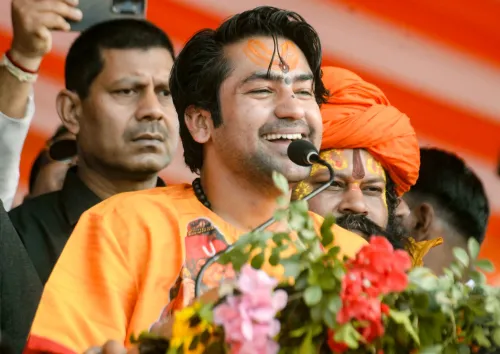
New Delhi, April 20 (NationPress) In response to the comments made by spiritual leader Dhirendra Shastri regarding the "removal of the stain" from Kashi, various political figures have provided balanced reactions that respect both religious sentiments and legal frameworks.
Shiv Sena National Spokesperson Shaina NC remarked, “We all recognize that Sanatana Dharma embodies peace and unity. It plays a crucial role in fostering cultural integrity. We also acknowledge the court's ruling on the Kashi Vishwanath issue. It is our hope that, similar to the Ayodhya case with Lord Ram, Kashi Vishwanath will also be treated with profound respect...”
Uttar Pradesh Minister of State (Independent Charge), Narendra Kumar Kashyap, added, “Such remarks resonate with the shared religious sentiments of many. A significant number of individuals across the nation believe that religious sites altered in history should be reinstated to their ancestral forms.... There is optimism that these endeavors will ultimately succeed.”
These reactions follow Shastri’s statements during a recent visit to Varanasi, where he referred to the contentious Gyanvapi Mosque issue, asserting that it was time to “remove the stain” of Kashi. He stressed that such actions are essential in maintaining the city's relevance as a pivotal hub of Sanatana Dharma.
While touring the Kashi Vishwanath Temple, Shastri reiterated his belief that the “stain of Kashi” would soon be erased, and a saffron flag would proudly wave at the location. He also highlighted his profound spiritual connection to the city, describing it as a place of immense personal and religious significance, stating it was a privilege to visit the land of his mentors.
The topic remains delicate and is intricately linked to ongoing legal and historical discussions. A survey conducted in 2024 by the Archaeological Survey of India revealed that a “large Hindu temple” existed at the site prior to the current structure's construction, adding further layers of complexity to this contentious issue.
As discussions progress, political leaders have underscored the importance of faith while simultaneously advocating for adherence to judicial procedures, despite the escalating public discourse surrounding the topic.
Point of View
This situation reflects the intricate balance between faith and legal frameworks in India. As political leaders emphasize the importance of harmony, it’s crucial to navigate these discussions with sensitivity, recognizing the diverse sentiments involved.
NationPress
19 Sept 2026
Frequently Asked Questions
What did Dhirendra Shastri say about Kashi?
Dhirendra Shastri mentioned the need to 'remove the stain' of Kashi, referring to the Gyanvapi Mosque issue and emphasizing the importance of restoring religious sites.
How have political leaders responded to Shastri's comments?
Political leaders have reacted by promoting harmony and expressing respect for legal processes, emphasizing the need to balance religious sentiments with judicial integrity.
What is the significance of the Kashi Vishwanath Temple?
The Kashi Vishwanath Temple is a major religious site for Hindus, representing the cultural and spiritual heritage of Sanatana Dharma.
What survey findings complicate the Kashi issue?
A 2024 survey by the Archaeological Survey of India indicated that there was a 'large Hindu temple' at the site before the current structure, which adds complexity to the ongoing debates.
What is the broader impact of this discussion?
The discussion highlights the sensitivity surrounding historical religious sites in India and the need to approach these topics with care while respecting diverse viewpoints.