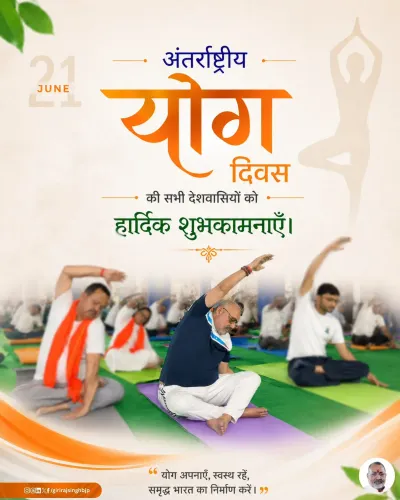
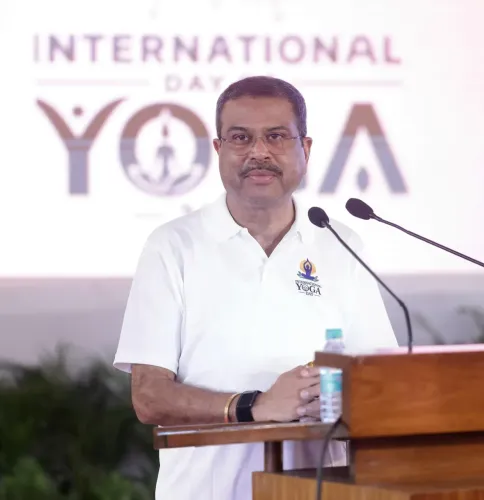
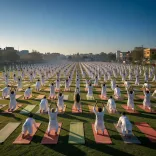
Pradhan Greets Nation on International Yoga Day 2026
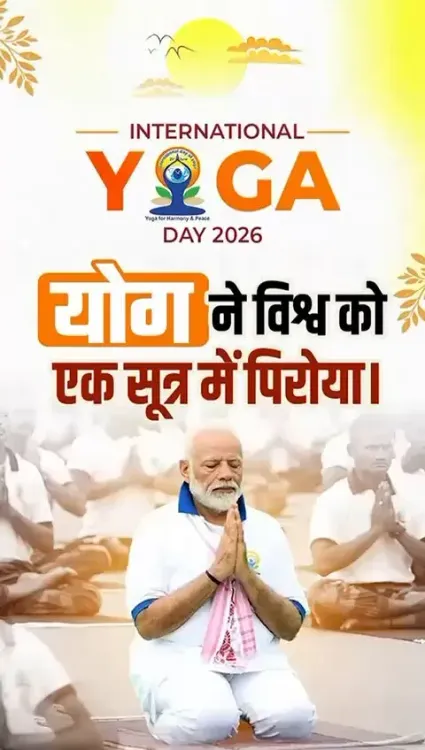
Synopsis
Union Education Minister Dharmendra Pradhan marked International Yoga Day on June 21, 2026, calling yoga an invaluable gift of India's ancient knowledge tradition and urging citizens to make it central to daily life under the theme of healthy ageing.
Key Takeaways
Union Education Minister Dharmendra Pradhan posted greetings on International Yoga Day, June 21, 2026 .
He described yoga as 'an invaluable gift of India's ancient knowledge tradition' that promotes physical health, mental calm, and life balance.
International Day of Yoga was established by the UN General Assembly via resolution 69/131 in December 2014 , following a proposal by PM Narendra Modi .
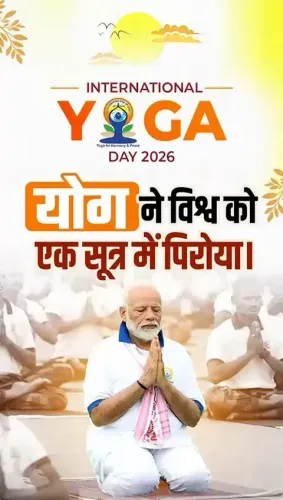
The 2026 observance carries the theme #YogaForHealthyAgeing , linking the practice to India's demographic priorities.
Yoga has been progressively integrated into India's school curricula under the National Education Policy and Ayush public health programmes.
Pradhan called on citizens to resolve to build a 'healthy, peaceful and empowered society' by adopting yoga as a daily practice.
Union Education Minister Dharmendra Pradhan on Sunday, June 21, 2026 extended greetings to the nation on International Yoga Day, calling yoga an invaluable gift of India's ancient knowledge tradition and urging citizens to make it an integral part of daily life.
Posting on X with the hashtags #YogaForHealthyAgeing and #InternationalYogaDay2026, the Minister wrote: 'योग भारत की उस प्राचीन ज्ञान परंपरा का अमूल्य उपहार है' — 'Yoga is the invaluable gift of that ancient knowledge tradition of India' — describing it as a path to a healthy body, a calm mind, and a balanced life.
Context
Every year on June 21, the world observes International Day of Yoga, a global event that traces its origins to a proposal made by Prime Minister Narendra Modi at the United Nations General Assembly in 2014. The UN adopted resolution 69/131 in December 2014, formally designating June 21 as the International Day of Yoga, with the first global observance held in 2015. Since then, India has used the occasion as a vehicle for cultural diplomacy, coordinating events across government ministries and Indian diplomatic missions worldwide.
Policy Backdrop
Pradhan's message aligns with an established government approach of weaving yoga into public health and educational frameworks. Successive administrations have incorporated yoga into school curricula, Ayush ministry programmes, and national wellness campaigns. The 2026 theme centred on healthy ageing — reflected in the hashtag #YogaForHealthyAgeing — continues a pattern of linking classical Indian practices to contemporary demographic priorities, particularly as India navigates a rapidly ageing population.
As Union Education Minister, Pradhan oversees the implementation of the National Education Policy (NEP), under which yoga has been positioned as part of holistic health and physical education for school students. His ministry's engagement with Yoga Day underscores the convergence of cultural heritage, public health, and formal education policy.
Stakeholders and Impact
The call to action in the Minister's post — 'Aayein, yoga ko apne jeevan ka abhinn hissa banakar swasth, shaant aur sashakt samaj ke nirmaan ka sankalp len' ('Let us resolve to build a healthy, peaceful and empowered society by making yoga an integral part of our lives') — is directed at the general public, with particular resonance for India's ageing population and youth in schools and colleges.
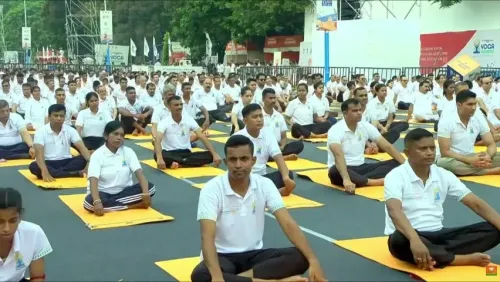
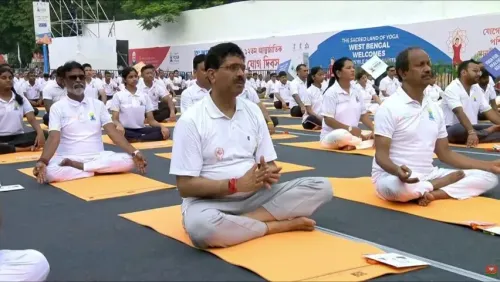
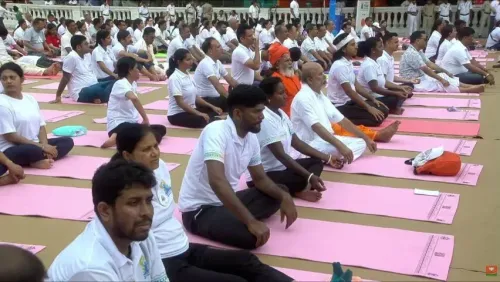
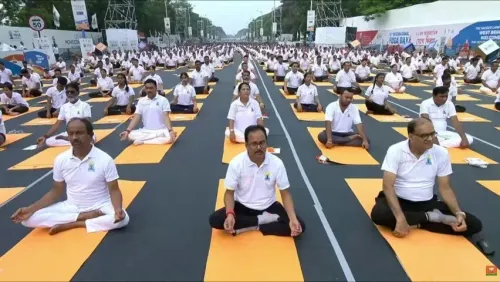
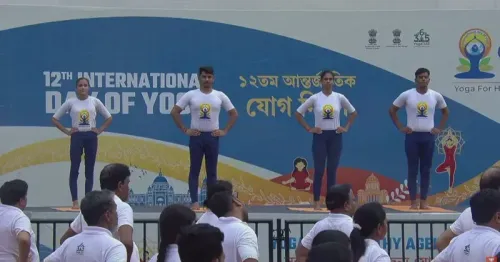
Government-coordinated Yoga Day events typically span India and extend to Indian missions abroad, drawing participation from students, defence personnel, civil servants, and community groups. The emphasis on 'positive thinking and spiritual balance' in Pradhan's message broadens the framing beyond physical fitness to mental wellness — a priority that has gained prominence in post-pandemic public health discourse.
What's Next
The scale and outcomes of 2026 Yoga Day events organised under the Education Ministry and other central ministries are expected to be documented in official reports in the coming weeks. Observers will watch for any new announcements linking yoga modules to NEP implementation timelines or expanded Ayush outreach programmes in the months ahead. India's continued championing of yoga at multilateral forums suggests the practice will remain central to the country's cultural and soft-power strategy through 2027 and beyond.
Point of View
Consistent with India's demographic challenge of a growing elderly population. For the Education Ministry specifically, Yoga Day messaging reinforces the NEP's holistic education mandate, keeping yoga visible as a curricular and wellness priority. Taken together, these signals suggest yoga will remain a cross-ministerial policy anchor, not merely an annual ceremonial observance.
NationPress
21 Jun 2026
Frequently Asked Questions
When is International Yoga Day celebrated and who started it?
International Yoga Day is celebrated every year on June 21 . It was proposed by Prime Minister Narendra Modi at the UN General Assembly in 2014 , and the UN formally established it through resolution 69/131 in December 2014, with the first observance in 2015.
What did Education Minister Dharmendra Pradhan say on Yoga Day 2026?
Pradhan called yoga 'an invaluable gift of India's ancient knowledge tradition' and urged citizens to make it an integral part of daily life, pledging to build a healthy, peaceful, and empowered society.
What is the theme of International Yoga Day 2026?
The 2026 observance is themed around healthy ageing , as reflected in the hashtag #YogaForHealthyAgeing used in official messaging.
Is yoga part of India's school curriculum?
Yes. Under the National Education Policy (NEP) , yoga has been incorporated into holistic health and physical education for school students, with the Education Ministry actively promoting its practice.
How does India use Yoga Day for diplomacy?
Since 2015, India has coordinated Yoga Day events across government ministries and Indian missions abroad, using the occasion to project traditional knowledge and cultural heritage as instruments of soft power.