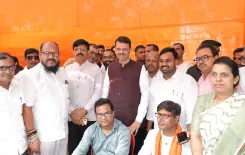
Pradhan hails Sambalpur's Kanyaratna Samaroha on Navaratri
Synopsis
Union Education Minister Dharmendra Pradhan extended Navaratri greetings to girl children born in Sambalpur and lauded the Kanyaratna Sambardhana Samaroha — a community ceremony celebrating daughters' births with a pledge to their nutrition, health, and education.
Key Takeaways
Union Education Minister Dharmendra Pradhan praised the Kanyaratna Sambardhana Samaroha in Sambalpur district , Odisha, on October 23, 2026 , during Navaratri.
The ceremony publicly honours families whose daughters are born during the Navaratri festival period, framing girl children as kanyaratna — 'jewels among daughters.' Its stated focus covers four pillars: nutrition, health, education , and a bright future for girl children.
The event aligns with the national Beti Bachao Beti Padhao scheme launched in 2015 to improve child sex ratio and girls' welfare.
Pradhan declared 'the protection and honour of our girl children is society's foremost duty,' amplifying district-level outreach to a national platform.
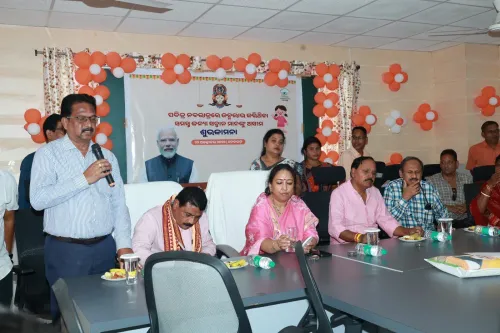
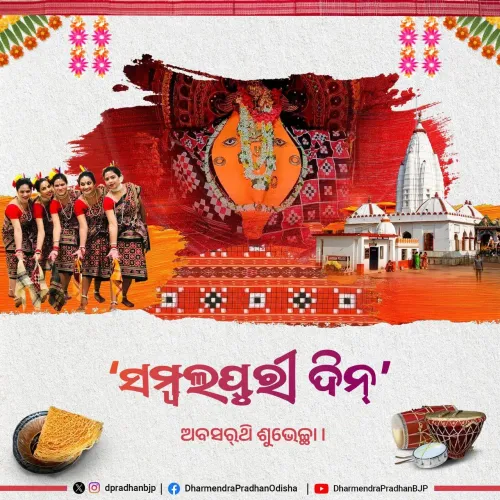
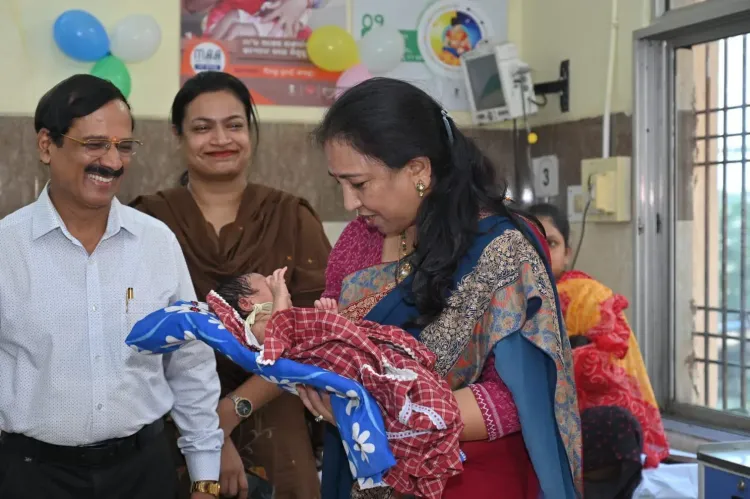
During the sacred nine nights of Navaratri, Union Education Minister Dharmendra Pradhan turned the spotlight on Sambalpur district in western Odisha — where a community ceremony is honouring every girl child born during the festival, celebrating their arrival not as a burden but as a kanyaratna ('jewel among daughters'). The minister on Friday, October 23, 2026, extended warm wishes to all girl children born in Sambalpur during Navaratri and praised the 'Kanyaratna Sambardhana Samaroha' as a meaningful stride toward building a healthier, more equitable society.
In his post, Pradhan wrote: 'Kanyaratnanka suraksha o sammana hina samajara prathama kartabya' — 'The protection and honour of our girl children is society's foremost duty.' He described the event as 'a worthy attempt to celebrate the birth of daughters with pride,' underscoring its focus on proper nutrition, good health, quality education, and a bright future for girl children.
What the Sambardhana Samaroha stands for
The Kanyaratna Sambardhana Samaroha is a local felicitation ceremony in Sambalpur that takes the auspicious occasion of Navaratri — a festival during which the feminine divine is worshipped across India — and translates that reverence into concrete community action for living girl children. Families whose daughters are born during the festival period are publicly honoured, reinforcing social messaging around the value of girl children at a moment of peak cultural attention.
The ceremony's stated pillars — nutrition, health, education, and future opportunity — mirror the architecture of India's flagship Beti Bachao Beti Padhao scheme, launched in 2015, which was designed to improve the child sex ratio and ensure girls receive schooling and basic welfare. Odisha, like many Indian states, has used culturally resonant occasions to embed this messaging in communities where skewed attitudes toward girl births have historically persisted.
Navaratri as a platform for girl-child welfare messaging
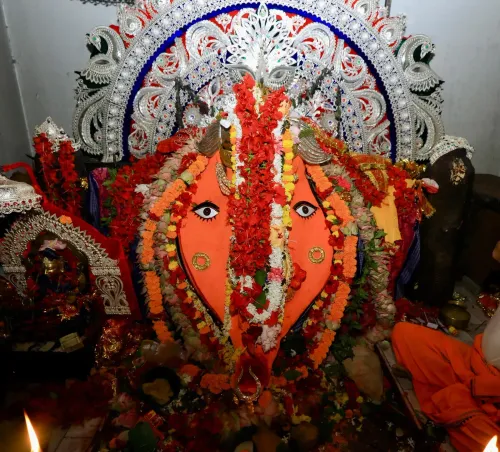
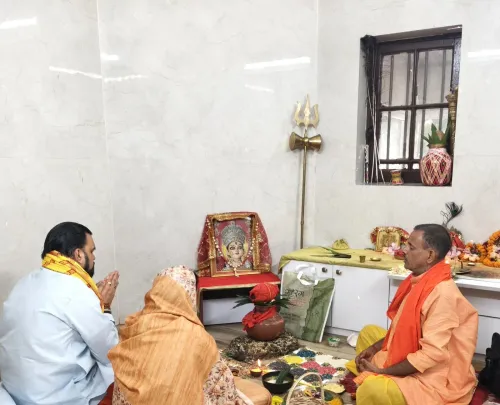
The choice of Navaratri is deliberate and carries symbolic weight. The festival, which venerates the goddess in her nine forms, has long been used by governments and civil society organisations across India to draw a direct line between divine feminine reverence and the lived rights of girl children. Odisha BJP leaders have increasingly deployed state-level events such as this to highlight both central and state programmes on nutrition, health, and schooling for girls — converting a cultural moment into a policy conversation.
Pradhan, who represents Sambalpur in the Lok Sabha and is among the BJP's most prominent Odia leaders, has consistently used his platform to spotlight welfare initiatives in western Odisha. His endorsement of the Samaroha amplifies district-level outreach to a national audience.
As Navaratri celebrations continue across Odisha, the Samaroha in Sambalpur offers a template worth watching — the question now is whether such local ceremonies translate into sustained, measurable gains in girl-child health and enrolment data across the district and beyond.
Point of View
He simultaneously performs local representation and frames BJP governance as culturally attuned. The convergence of festival religiosity with welfare messaging is a tested formula under the Beti Bachao Beti Padhao framework, but its real impact will ultimately be judged by school enrolment and sex-ratio data, not ceremony attendance. The Samaroha's longevity and institutionalisation — whether it becomes an annual fixture backed by state resources — will be the true measure of its intent.
NationPress
23 Oct 2026
Frequently Asked Questions
What is the Kanyaratna Sambardhana Samaroha in Sambalpur?
The Kanyaratna Sambardhana Samaroha is a community felicitation ceremony in Sambalpur, Odisha, that honours families of girl children born during the Navaratri festival. It focuses on celebrating daughters' births with pride and promotes their nutrition, health, education, and overall welfare.
Why did Dharmendra Pradhan post about the Kanyaratna event?
Pradhan, who represents Sambalpur in the Lok Sabha, extended Navaratri greetings to newborn girl children in the district and praised the Samaroha as a meaningful effort toward building a healthy and prosperous society, aligning it with broader national messaging on girl-child welfare.
How does the Kanyaratna Samaroha connect to the Beti Bachao Beti Padhao scheme?
The event's pillars — nutrition, health, and education for girl children — directly mirror the goals of the Beti Bachao Beti Padhao scheme launched nationally in 2015 to improve the child sex ratio and promote girls' schooling and welfare across India.
Why is Navaratri chosen for girl-child welfare events?
Navaratri, which venerates the feminine divine in nine forms, offers a culturally resonant moment to connect the religious reverence for goddess figures with the rights and welfare of living girl children — a messaging strategy used by governments and civil society across India.
Which district in Odisha is hosting the Kanyaratna Sambardhana Samaroha?
The Kanyaratna Sambardhana Samaroha is being held in Sambalpur district, located in western Odisha, during the Navaratri festival period in October 2026.