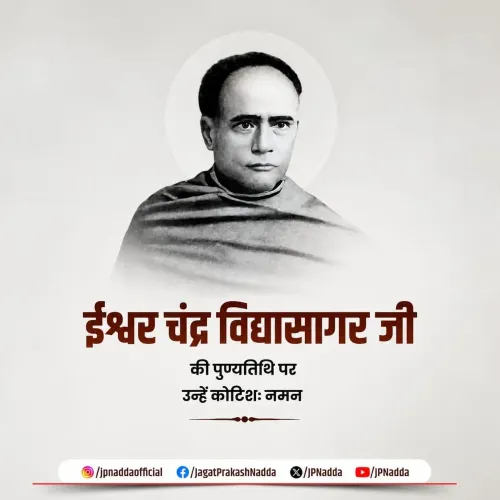
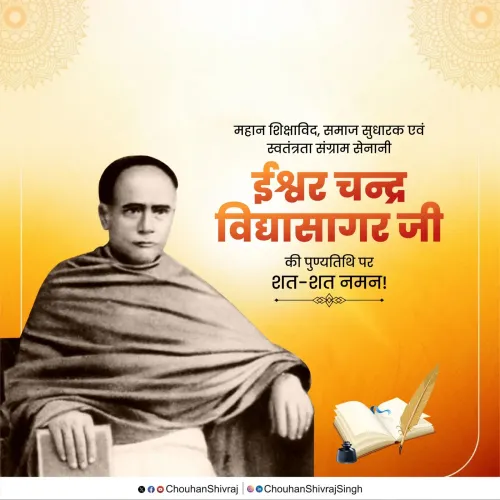
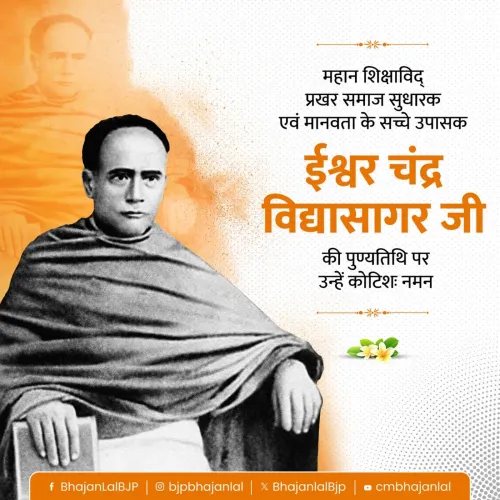
Dharmendra Pradhan pays tribute to Ishwar Chandra Vidyasagar on his birth anniversary
Synopsis
Union Education Minister Dharmendra Pradhan marked the birth anniversary of Bengali polymath and social reformer Ishwar Chandra Vidyasagar on 26 September 2026, honouring his foundational work in education, widow remarriage rights, and women's empowerment as an enduring inspiration.
Key Takeaways
Union Education Minister Dharmendra Pradhan posted a tribute to Ishwar Chandra Vidyasagar on his birth anniversary, 26 September 2026 .
Pradhan praised Vidyasagar's 'unparalleled contribution' to education, social reform, and women's empowerment.
Ishwar Chandra Vidyasagar (born 1820 ) was a central figure of the Bengal Renaissance who championed widow remarriage and girls' education.
His advocacy contributed directly to the Hindu Widows' Remarriage Act of 1856 , a landmark legislative reform.
The tribute reflects a recurring pattern of Indian ministers linking contemporary education policy to 19th-century reform icons.
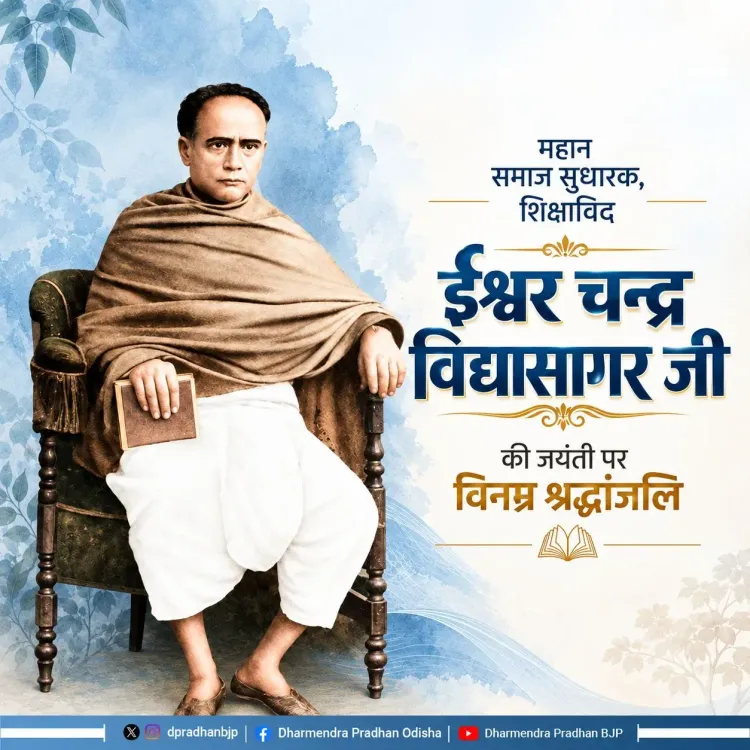
On the birth anniversary of one of India's most consequential 19th-century reformers, Union Education Minister Dharmendra Pradhan on Saturday, 26 September 2026 paid homage to Ishwar Chandra Vidyasagar, saluting his legacy in education, social reform, and women's empowerment.
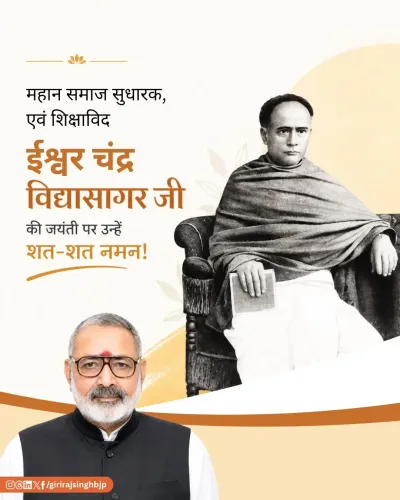
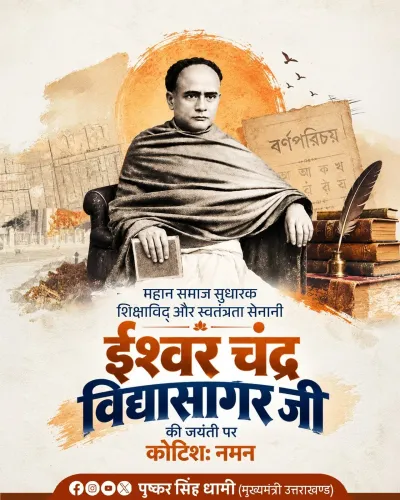
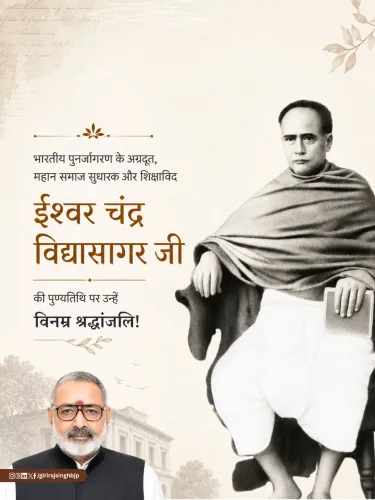
Posting in Hindi, Pradhan wrote: 'महान समाज सुधारक ईश्वर चन्द्र विद्यासागर जी की जयंती पर उन्हें सादर नमन करता हूँ' — 'On the birth anniversary of the great social reformer Ishwar Chandra Vidyasagar, I bow to him with deep respect.' He described Vidyasagar's contributions as having given society 'a new direction' and said his ideas 'continue to inspire citizens to build an empowered society.'
The reformer who rewrote the rules for women and learning
Ishwar Chandra Vidyasagar — born in 1820 in Bengal — was a towering figure of the Bengal Renaissance. A Sanskrit scholar, educator, and relentless campaigner, he did what few of his era dared: he fought the legal and social machinery that condemned Hindu widows to a life of destitution. His advocacy was central to the passage of the Hindu Widows' Remarriage Act of 1856, a landmark legal reform. He also founded and supported dozens of schools, including institutions specifically for girls, at a time when female education was actively discouraged. His legacy sits at the precise intersection of education access and social equity — two themes that remain at the heart of contemporary Indian policy.Why a minister of education is invoking him now
For Pradhan, the tribute is more than ceremonial. As the minister overseeing both school and higher education policy, invoking Vidyasagar draws a direct line from a 19th-century reformer's vision to the present government's stated priorities around girls' education and social inclusion. Indian ministers have long woven the figures of the Bengal Renaissance into the fabric of policy rhetoric, grounding modern ambitions in historical moral authority. The post carried no announcement of new schemes or commemorative events at the Ministry level — but Vidyasagar's jayanti serves as an annual reminder of how far those original battles for widows' rights and mass education have — and have not — been fully won. A reformer born two centuries ago still shapes the vocabulary of Indian public life. That, in itself, is the measure of the man.Point of View
The Education Minister signals ideological continuity with progressive 19th-century Bengal rather than purely with any modern political project. It is a soft but deliberate piece of legitimacy-building. The ritual regularity of such tributes, however, also raises a harder question: whether commemorating reformers substitutes for the structural reforms they themselves fought to achieve.
NationPress
26 Sept 2026
Frequently Asked Questions
Who was Ishwar Chandra Vidyasagar?
Ishwar Chandra Vidyasagar (1820–1891) was a Bengali polymath, Sanskrit scholar, educator, and social reformer. He was a leading figure of the Bengal Renaissance and played a crucial role in campaigning for the Hindu Widows' Remarriage Act of 1856, as well as founding and supporting numerous schools, including ones for girls.
Why is Vidyasagar's birth anniversary observed on 26 September?
Ishwar Chandra Vidyasagar was born on 26 September 1820 in Bengal, and his birth anniversary — known as Vidyasagar Jayanti — is observed annually on this date, with tributes from scholars, politicians, and cultural organisations.
What did Vidyasagar do for women's rights in India?
Vidyasagar was instrumental in the passage of the Hindu Widows' Remarriage Act of 1856, which legalised the remarriage of Hindu widows in India. He also actively promoted girls' education by founding and supporting schools for women at a time when female literacy was widely opposed.
Why did Dharmendra Pradhan pay tribute to Vidyasagar?
As Union Education Minister, Pradhan paid tribute on Vidyasagar's birth anniversary to honour his legacy in education and social reform. The tribute aligns the Ministry's stated priorities around inclusive education and women's empowerment with the historical reform tradition Vidyasagar represents.
What is the Bengal Renaissance?
The Bengal Renaissance was a cultural and social reform movement in 19th-century Bengal that produced thinkers, educators, and activists who challenged orthodoxy on issues like widow remarriage, female education, and rational enquiry. Figures like Ishwar Chandra Vidyasagar and Ram Mohan Roy were among its most prominent voices.