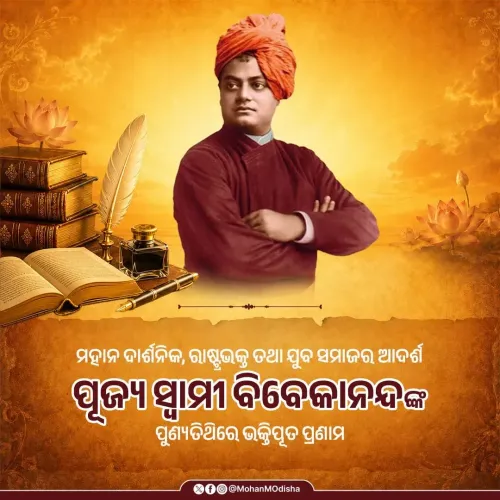
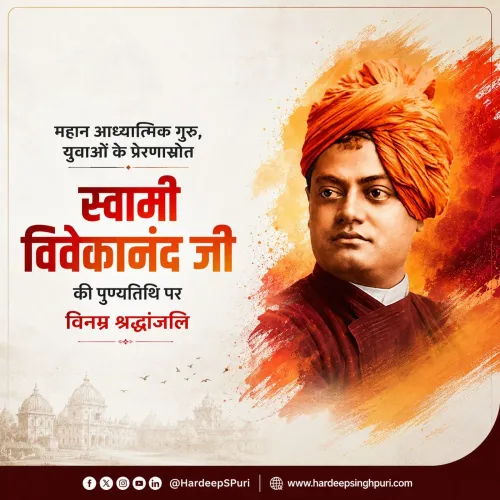
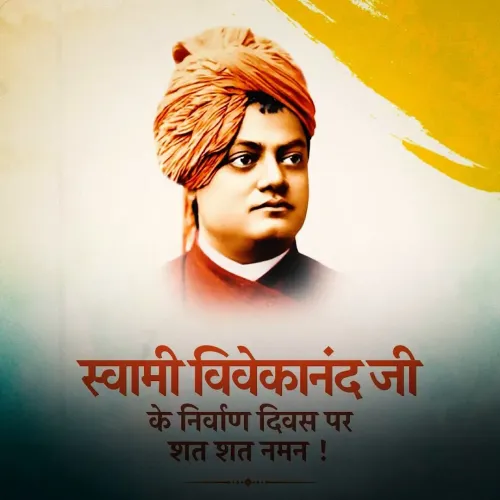
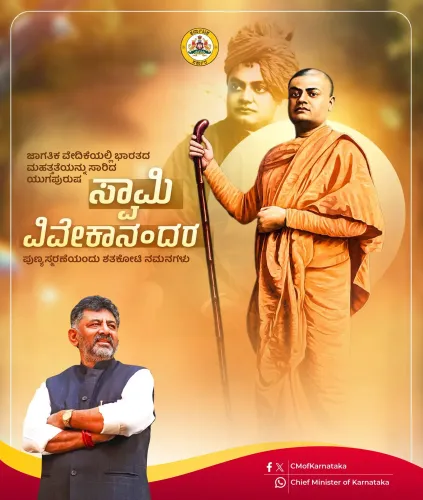
Pradhan pays tribute to Swami Vivekananda on death anniversary
Synopsis
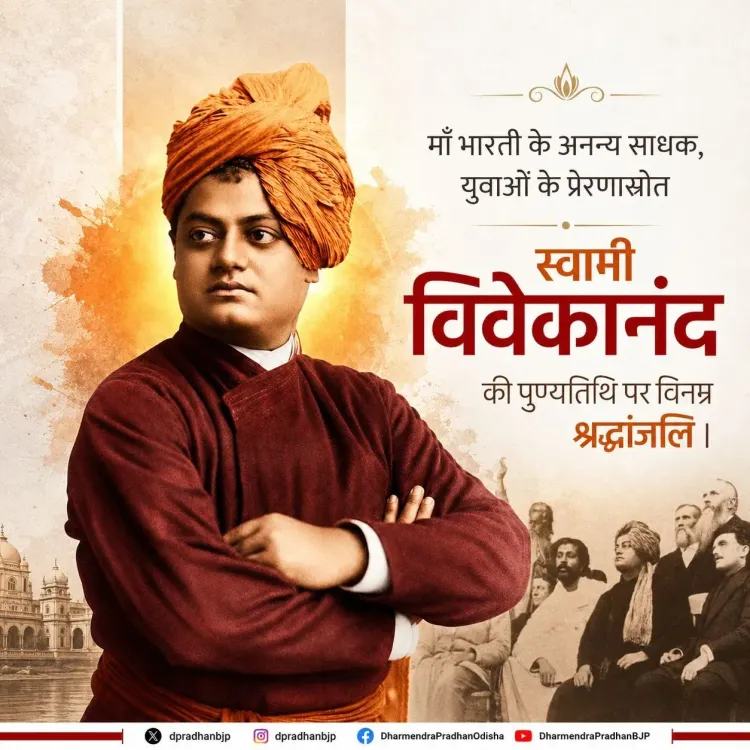
Union Education Minister Dharmendra Pradhan on 4 July 2026 paid homage to Swami Vivekananda on his death anniversary, praising the philosopher-monk's role in projecting Indian culture globally and linking his ideals of self-confidence and service to the NEP 2020 vision for youth.
Key Takeaways
Union Education Minister Dharmendra Pradhan paid tribute to Swami Vivekananda on his death anniversary, 4 July 2026 .
Pradhan credited Vivekananda with giving Indian culture and spiritual heritage 'a new identity on the world stage' through his 'powerful ideas.' Swami Vivekananda (1863–1902) famously represented India at the Parliament of the World's Religions, Chicago, 1893 .
The Government of India observes Vivekananda's birth anniversary, 12 January , as National Youth Day — a designation in place since 1984 .
The National Education Policy 2020 directs integration of Vivekananda's philosophy into school curricula and teacher training.
The tribute continues a BJP pattern of invoking pre-independence spiritual leaders to frame contemporary education and youth policy.
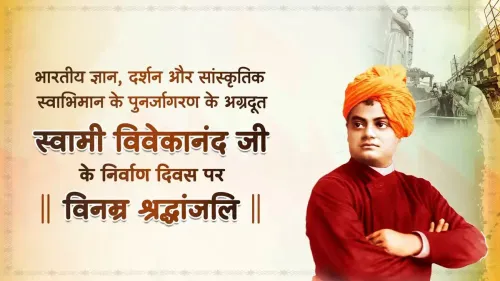
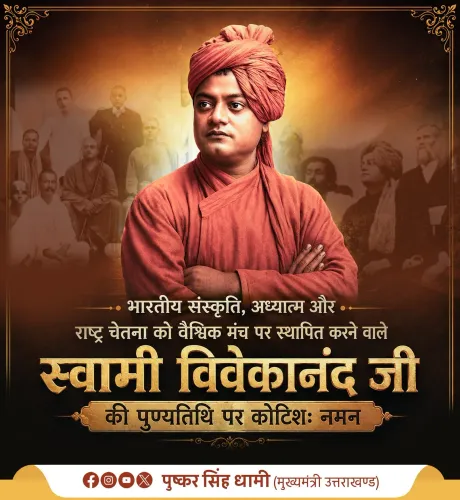
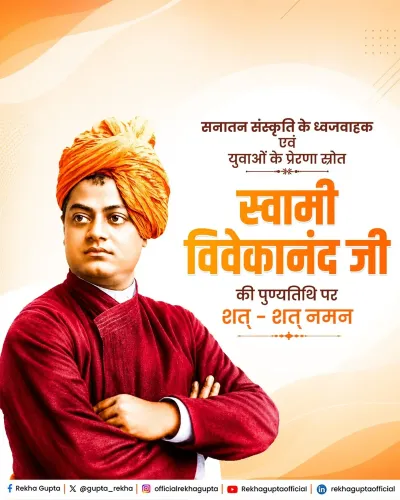
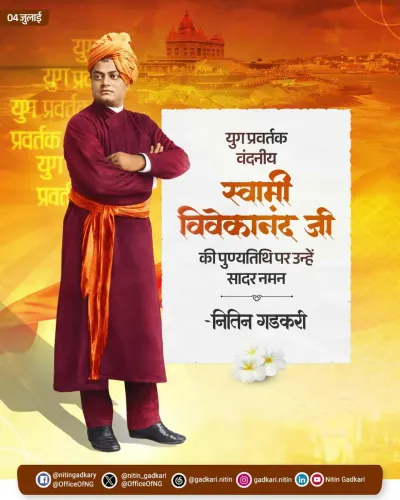
Union Education Minister Dharmendra Pradhan on Saturday, 4 July 2026, paid homage to Swami Vivekananda on the philosopher-monk's death anniversary, saluting his contribution to Indian culture and spiritual heritage on the world stage.
Posting in Hindi, Pradhan described Vivekananda as 'yuvaon ke preranasrot, mahan darshnik evam adhyatmik chintak' — 'a source of inspiration for youth, a great philosopher and spiritual thinker' — and offered 'koti-koti naman', a reverential salute, to the saint on his passing anniversary.
The minister highlighted that Vivekananda's 'powerful ideas gave Indian culture and spiritual heritage a new identity on the world stage,' and said his life continues to inspire 'self-confidence, love for the nation, and the path of service to humanity.'
Context
Swami Vivekananda (1863–1902) was a Hindu monk and philosopher who brought Vedanta and yoga to global attention when he addressed the Parliament of the World's Religions in Chicago in 1893. His emphasis on self-confidence, national awakening, and selfless service made him an enduring symbol for Indian youth.
His death anniversary falls on 4 July each year. The Government of India separately observes his birth anniversary, 12 January, as National Youth Day — a designation formalised in 1984 to channel his ideals of character-building and social service among young Indians.
Policy Backdrop
Pradhan's tribute carries institutional weight beyond ceremony. As the minister overseeing the National Education Policy (NEP) 2020, he has championed the policy's directive to integrate Indian knowledge systems, value education, and cultural heritage into school and university curricula.
The NEP 2020 explicitly encourages drawing on the thought of thinkers such as Vivekananda in teacher training and textbook development. Pradhan has repeatedly cited Vivekananda's philosophy of education as a touchstone for the policy's vision of holistic, values-driven learning.
Stakeholders and Impact
The tribute is directed most visibly at Indian youth and school students, the primary audience Vivekananda's legacy is invoked to inspire. For educators and curriculum designers, such ministerial statements reinforce the policy signal that Vivekananda's writings and philosophy are to be woven into classroom material.
Senior BJP leaders routinely mark both Vivekananda's birth and death anniversaries, a practice that aligns with the party's broader emphasis on cultural nationalism and the revival of indigenous thought in public institutions. The pattern reflects a wider effort to frame contemporary education and youth policy through the lens of pre-independence spiritual figures.
What's Next
Attention will turn to implementation reports on NEP 2020 modules that incorporate Vivekananda's writings in textbooks and teacher training programmes. National Youth Day 2027 (12 January) is expected to provide the next major platform for the government to assess and showcase progress on youth-oriented initiatives inspired by his ideals.
As NEP 2020 moves deeper into its rollout phase, how faithfully Vivekananda's philosophy of self-reliance and service is translated into measurable learning outcomes — rather than remaining a rhetorical anchor — will be the test that educators and policymakers alike will be watching.
Point of View
Service, and cultural pride remains the ideological scaffolding for the NEP 2020 project. The consistent ministerial invocation of Vivekananda on both his birth and death anniversaries is part of a deliberate effort to root a modern education overhaul in a pre-independence spiritual lineage, lending it cultural legitimacy beyond bureaucratic mandate. For the BJP, this also serves a political function — reinforcing the party's cultural-nationalist identity among youth voters. The real measure of this tribute's substance, however, will be whether Vivekananda's ideas translate into tangible curriculum reforms or remain rhetorical touchstones.
NationPress
2 Oct 2026
Frequently Asked Questions
When is Swami Vivekananda's death anniversary?
Swami Vivekananda's death anniversary falls on 4 July each year. He passed away on 4 July 1902 at the age of 39.
Why is 12 January celebrated as National Youth Day in India?
12 January is celebrated as National Youth Day because it is Swami Vivekananda's birth anniversary. The Government of India declared it National Youth Day in 1984 to inspire youth with his ideals of character-building and selfless service.
What did Swami Vivekananda say at the Parliament of World's Religions?
At the Parliament of the World's Religions in Chicago in 1893 , Swami Vivekananda introduced Vedanta and yoga to a Western audience, emphasising universal tolerance, self-confidence, and the unity of all religions.
How does NEP 2020 relate to Swami Vivekananda?
The National Education Policy 2020 directs the integration of Indian knowledge systems, value education, and cultural heritage into curricula. Vivekananda's philosophy of holistic, values-driven education is frequently cited as a guiding reference in teacher training and textbook development under the policy.
Who is Dharmendra Pradhan?
Dharmendra Pradhan is India's Union Minister of Education and a senior BJP leader. He previously served as Union Petroleum Minister and is currently overseeing the implementation of the National Education Policy 2020.