Pradhan shares PM Modi's article on Mukherjee's 125th birth anniversary
Synopsis
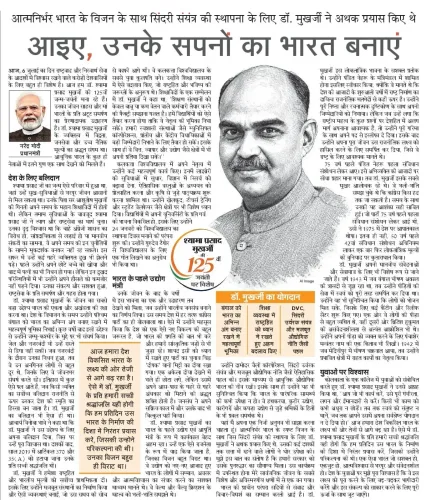
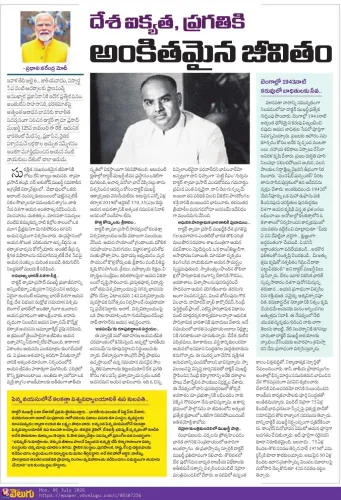
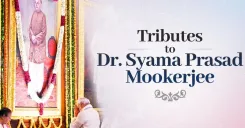
On the 125th birth anniversary of Dr. Shyama Prasad Mukherjee, Union Education Minister Dharmendra Pradhan shared a special article by PM Narendra Modi honouring the BJP's founding ideologue, calling his supreme sacrifice a defining part of India's national memory.
Key Takeaways
Dharmendra Pradhan shared PM Narendra Modi 's article on 6 July 2026 , marking the 125th birth anniversary of Dr.
Shyama Prasad Mukherjee .
Modi's article describes Mukherjee's sacrifice as one that 'rises above politics and becomes part of the nation's memory.' Mukherjee founded the Bharatiya Jana Sangh in 1951 , the direct precursor to the BJP .
He died in detention in Jammu and Kashmir in 1953 while protesting permit restrictions on Indian citizens entering the state.
The 2019 abrogation of Article 370 was presented by the BJP as the fulfilment of Mukherjee's demand for full constitutional integration of J&K .
The 125th anniversary milestone may prompt new curriculum references or archival publications linked to the Education Ministry.
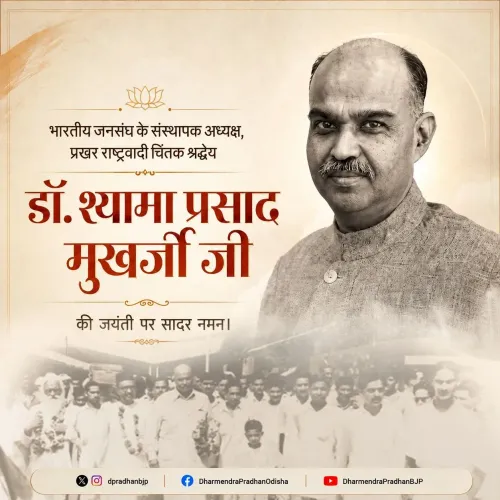
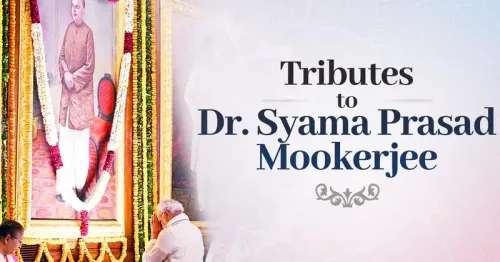
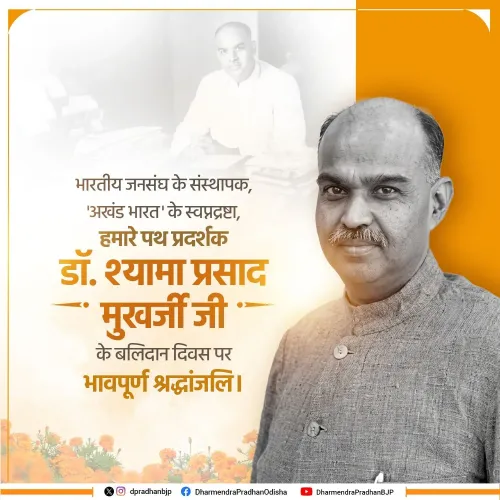
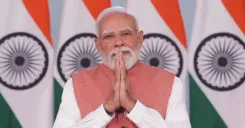
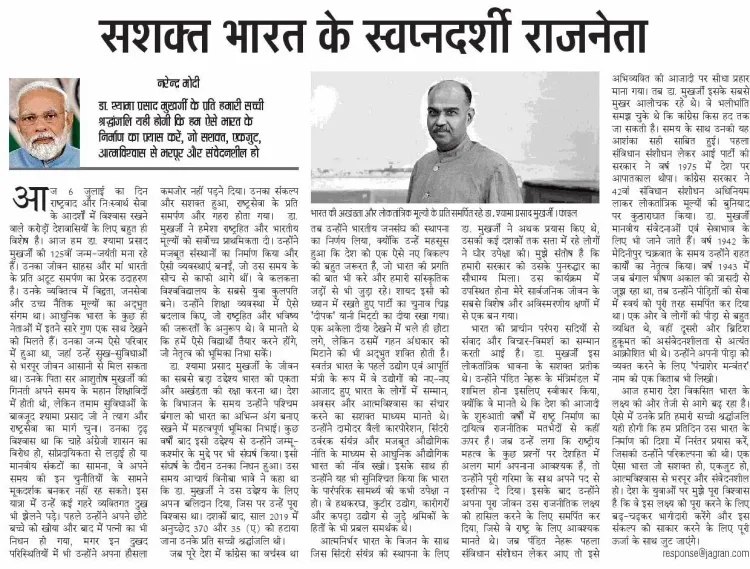
Union Education Minister Dharmendra Pradhan on Monday, 6 July 2026, shared a special article authored by Prime Minister Narendra Modi marking the 125th birth anniversary of Dr. Shyama Prasad Mukherjee, calling it an inspiring tribute to the nationalist leader's visionary ideals and unwavering dedication to the nation.
Sharing the piece on X, Pradhan quoted from Modi's article: 'इतिहास में कुछ ऐसे पल आते हैं, जब किसी व्यक्ति का सर्वोच्च बलिदान राजनीति से ऊपर उठकर देश की स्मृति का हिस्सा बन जाता है' — ('There are moments in history when a person's supreme sacrifice rises above politics and becomes part of the nation's memory'). He described the article as a 'motivating remembrance' of Mukherjee's far-sighted thinking and invaluable contribution to India.
Context
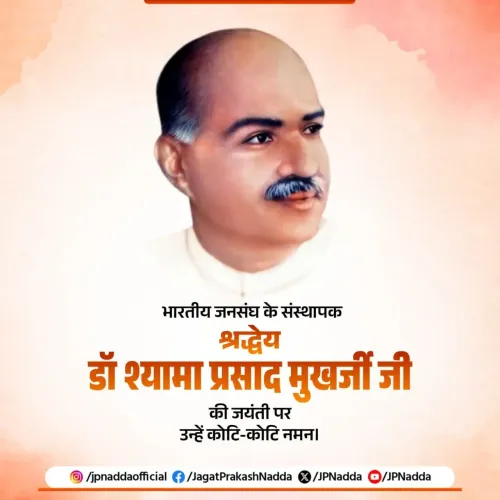
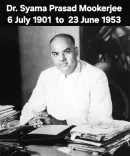
Dr. Shyama Prasad Mukherjee was born on 6 July 1901 in Calcutta (present-day Kolkata). A scholar-politician who served as a cabinet minister in independent India's first government, he resigned in 1950 over differences on minority rights and the Nehru-Liaquat Pact. In 1951, he founded the Bharatiya Jana Sangh, the organisational predecessor of the Bharatiya Janata Party (BJP).
Mukherjee died in June 1953 while under detention in Jammu and Kashmir, where he had gone to protest the requirement that Indian citizens obtain a special permit to enter the state — a provision he viewed as unconstitutional. His death in custody remains a defining moment in the BJP's political memory.
Policy Backdrop
The 2019 abrogation of Article 370, which stripped Jammu and Kashmir of its special constitutional status, was presented by the Modi government as the fulfilment of Mukherjee's central political demand: the complete integration of the state with the Indian Union. The BJP's slogan of the era — 'Ek Nishan, Ek Vidhan, Ek Pradhan' (One flag, one constitution, one prime minister) — is directly attributed to Mukherjee's campaign.
Successive BJP-led governments have systematically elevated pre-independence and early post-independence nationalist figures through birth-anniversary commemorations, official writings, and curriculum references. Sardar Vallabhbhai Patel's Statue of Unity and the annual Rashtriya Ekta Diwas on 31 October are parallel examples of this pattern.
Stakeholders and Impact
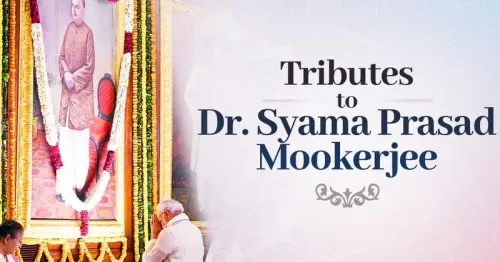
BJP workers and student wings across the country typically observe Mukherjee's birth anniversary with seminars, processions, and reading sessions. The 125th milestone carries added symbolic weight, and Prime Minister Modi's decision to pen a personal article signals the significance the ruling party attaches to this commemoration.
For the broader public, particularly students and those engaged with India's post-independence political history, such official writings serve as accessible reference points. The Ministry of Education's alignment with the commemoration also raises the possibility of curriculum or pedagogical references being introduced at state or national level.
What's Next
Observers will watch for any formal announcements of state-level events, new archival publications on Mukherjee's papers, or parliamentary motions timed to the 125th anniversary. Given the Education Ministry's involvement, references in National Curriculum Framework discussions or new academic material on Mukherjee's political thought cannot be ruled out. The anniversary also falls at a politically significant moment, with the BJP keen to reinforce its ideological lineage ahead of upcoming electoral cycles.
Point of View
The framing seeks to broaden his appeal beyond the BJP's core base. The involvement of the Education Ministry adds a policy dimension: anniversaries of this scale have historically preceded curriculum revisions or new academic material under the National Education Policy framework. This observance should be read not merely as ceremonial tribute but as a deliberate act of political identity-building with potential downstream effects on how post-independence history is taught.
NationPress
6 Jul 2026
Frequently Asked Questions
Who was Dr. Shyama Prasad Mukherjee?
Dr. Shyama Prasad Mukherjee was an Indian politician born on 6 July 1901 who founded the Bharatiya Jana Sangh in 1951, the organisational predecessor of the BJP. He died in detention in Jammu and Kashmir in 1953 while protesting permit restrictions on Indian citizens entering the state.
Why is 2026 significant for Shyama Prasad Mukherjee's anniversary?
2026 marks the 125th birth anniversary of Dr. Mukherjee, a milestone that the BJP and the central government have marked with special events and a personal article by Prime Minister Narendra Modi .
What did PM Modi write about Shyama Prasad Mukherjee?
PM Modi authored a special article shared on 6 July 2026 describing Mukherjee's sacrifice as a moment that 'rises above politics and becomes part of the nation's memory.' The full text of the article was linked in the post shared by Education Minister Dharmendra Pradhan .
What is the connection between Shyama Prasad Mukherjee and Article 370?
Mukherjee campaigned against special constitutional provisions for Jammu and Kashmir and died in detention there in 1953. The BJP government's abrogation of Article 370 in 2019 was presented as the fulfilment of his demand for the state's complete integration with India.
Why did Dharmendra Pradhan share this article?
As a senior BJP leader and Union Education Minister, Dharmendra Pradhan shared PM Modi's tribute to mark the 125th birth anniversary of Dr. Mukherjee, whom the BJP regards as its founding ideologue.