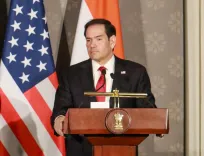
Pradhan shares Sanskrit education aphorism on X

Synopsis
Union Education Minister Dharmendra Pradhan posted a Sanskrit aphorism on 26 May 2026 declaring that true education liberates a person from bondage and ignorance, tagging it under #ShikshaSubhashitam — part of a sustained ministerial effort to link classical Indian wisdom with NEP 2020 reforms.
Key Takeaways
Dharmendra Pradhan posted a Sanskrit aphorism on 26 May 2026 under the hashtag #ShikshaSubhashitam on X.
The aphorism translates as: 'True education is that which liberates a person from bondage and ignorance.' The post is part of a recurring ministerial series linking classical Indian educational philosophy to current policy.
NEP 2020 explicitly calls for grounding education in Indian ethos, ethics, and cultural heritage — the same framework the aphorism reflects.
The Ministry of Education is developing updated National Curriculum Frameworks expected to embed this philosophical orientation in syllabi.
Stakeholders including curriculum developers, the University Grants Commission , and school educators are directly engaged with this policy direction.
Union Education Minister Dharmendra Pradhan on Tuesday, 26 May 2026, shared a Sanskrit aphorism on education through his official X account, framing the purpose of learning as liberation from bondage and ignorance — a post tagged under the series #ShikshaSubhashitam.
Context
The post reads: 'वही सच्ची शिक्षा है जो मनुष्य को बंधन और अज्ञान से मुक्त करे' — meaning, 'True education is that which liberates a person from bondage and ignorance.' The message was shared with an accompanying video and carries the hashtag #ShikshaSubhashitam, suggesting it is part of a recurring series of classical Indian educational maxims curated by the Minister's office.
The aphorism draws on a long tradition in Indian philosophical thought — from Vedantic texts to the writings of Swami Vivekananda — that defines education not as rote acquisition of facts but as the unshackling of the human intellect and spirit.
Policy Backdrop
The post is consistent with a broader ministerial effort to anchor contemporary education policy in classical Indian knowledge systems. The National Education Policy 2020 (NEP 2020), which Pradhan has championed as the primary reform mandate of the Ministry of Education, explicitly calls for rooting schooling and higher education in Indian ethos, ethics, and cultural heritage.
NEP 2020 introduced provisions for mother-tongue instruction in early grades, multidisciplinary undergraduate curricula, and the integration of value education — all of which align with the classical view that education must develop character alongside competence. The policy framework positions ancient Indian wisdom not as ornamental but as structurally relevant to modern pedagogy.
The Ministry of Education has also been working on updated National Curriculum Frameworks for both school and higher education, documents that are expected to reflect this philosophical orientation in syllabi and assessment design.
Stakeholders and Impact
The primary audience for posts in this vein spans students, teachers, curriculum developers, and policymakers engaged with the ongoing rollout of NEP 2020. For educators, such ministerial communications signal the philosophical direction the government expects curriculum reforms to take.
Cultural and academic institutions that work on integrating classical texts into mainstream education — including the University Grants Commission and bodies developing new course frameworks — are directly affected by the discourse the Minister seeks to sustain. The emphasis on liberation from ignorance also resonates with the government's push for foundational literacy and numeracy under school education programmes.
What's Next
Observers will watch for the release of updated National Curriculum Frameworks and any parliamentary deliberations on education budget allocations or formal reviews of NEP 2020 implementation progress. The sustained use of classical aphorisms in ministerial communication suggests the government intends to keep the philosophical dimension of education reform visible in public discourse well into the policy's implementation phase.
Point of View
Academics, and the broader public that the philosophical underpinning of NEP 2020 is not incidental but central. By consistently framing education as liberation rather than credentialism, the Minister reinforces a value hierarchy that privileges character formation and Indian knowledge systems over purely utilitarian outcomes. This mirrors a wider governmental pattern of foregrounding cultural heritage within public institutions, from universities to school textbooks. The sustained cadence of such posts suggests the communication strategy is as much about shaping the reform's reception as about announcing its mechanics.
NationPress
19 Sept 2026
Frequently Asked Questions
What did Dharmendra Pradhan post on X on 26 May 2026?
He shared a Sanskrit aphorism meaning 'True education is that which liberates a person from bondage and ignorance,' tagged under the series #ShikshaSubhashitam.
What is #ShikshaSubhashitam?
#ShikshaSubhashitam appears to be a recurring series of classical Indian educational maxims shared by Union Education Minister Dharmendra Pradhan on X, though the exact launch date and full scope of the series are not officially confirmed.
How does this post relate to NEP 2020?
NEP 2020 explicitly calls for rooting education in Indian ethos and ancient wisdom. Pradhan's aphorism — emphasising liberation from ignorance — directly reflects the policy's philosophical framework on value education and character development.
What is the meaning of the Sanskrit aphorism Pradhan shared?
The aphorism translates from Hindi as: 'True education is that which liberates a person from bondage and ignorance,' echoing classical Indian and Vedantic concepts of knowledge as emancipation.
What policy developments should be watched in Indian education?
Key items to track include the release of updated National Curriculum Frameworks, parliamentary debates on the education budget, and formal government reviews of NEP 2020 implementation progress.