Prakash Raj demands scrapping of SIR, calls it bid to kill democracy
Synopsis
Actor-activist Prakash Raj has escalated the SIR controversy by demanding the immediate scrapping of the Special Intensive Revision of electoral rolls, alleging it could strip over 13 crore citizens of their right to vote and calling for the Chief Election Commissioner's resignation — a sharp intervention that brings a nationally recognised face to a fast-growing civil society campaign.
Key Takeaways
Prakash Raj demanded the immediate scrapping of the Special Intensive Revision (SIR) of electoral rolls on 7 October 2026 in Thiruvananthapuram .
He alleged the SIR could deprive more than 13 crore people of their constitutional right to vote.
Raj called for the resignation of Chief Election Commissioner Gyanesh Kumar and demanded legal accountability for those implementing the process.
He warned the revision could create two classes of citizens — those with voting rights and those without.
Public tribunals and local-level resistance programmes are planned to amplify opposition to the exercise.
Multiple political parties and civil society groups have independently raised concerns about exclusion of genuine voters under the SIR.
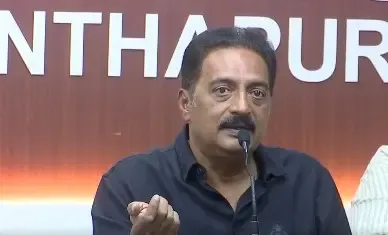
Actor-activist Prakash Raj on Wednesday, 7 October 2026, demanded the immediate scrapping of the Special Intensive Revision (SIR) of electoral rolls, alleging that the exercise poses a grave threat to citizens' voting rights and amounts to 'an attempt to kill democracy.' Speaking to the media in Thiruvananthapuram, Raj mounted a sharp attack on the Election Commission of India (ECI) and called for the resignation of Chief Election Commissioner Gyanesh Kumar.
Core Allegations Against the SIR
Raj alleged that the ongoing revision exercise could strip more than 13 crore people across the country of their constitutional right to vote. He warned that the process risked creating 'two categories of citizens — those who have voting rights and those who do not,' a prospect he described as fundamentally unconstitutional.
He also demanded legal accountability for all officials and individuals involved in implementing the SIR process, signalling that legal challenges could follow the public campaign.
What Prakash Raj Said
Drawing on India's constitutional history, Raj placed the controversy in a broader democratic context. 'Now we are realising the conspiracy and the agenda behind SIR,' he said, adding: 'When India attained freedom, it was a new country, and the Constitution was formed. If you remember, the Britishers had suggested that this was a new country with many poor and uneducated people and questioned whether everyone should be given the right to elect governments. They suggested that the right should be given to some higher-class or well-educated people. But the leaders of that time, whether Ambedkar, Nehru or others, said no. This country would give everyone the power to elect their representatives, who would represent their issues — whether they are farmers, Adivasis, Dalits or minorities...'
Raj argued that the right to vote is one of the foundational principles on which democratic India was built, and that the current exercise is actively undermining that principle.
Call to Action and Planned Resistance
The actor-activist appealed to citizens to take to the streets to protect their voting rights. He announced that resistance programmes would be organised at the local level, and that public tribunals would be convened to hear testimonies from individuals who have allegedly been affected by the revision process.
Broader Controversy Over SIR
Raj's intervention comes amid a growing national controversy over the SIR exercise. Multiple political parties and civil society groups have raised concerns about the potential exclusion of genuine voters from electoral rolls. Critics argue that the procedural requirements under the revision could disproportionately burden marginalised communities — farmers, Adivasis, Dalits, and minorities — who may lack documentation.
Notably, this is not the first time the SIR process has drawn public protests; earlier rounds of electoral roll revision have faced scrutiny over data accuracy and the administrative burden placed on ordinary voters. The ECI has not yet publicly responded to Raj's specific demands for resignation and legal accountability.
With public tribunals planned and local resistance programmes in the pipeline, the campaign against SIR is set to intensify in the coming weeks.
Point of View
Nationally credible name to what had until now been a largely civil-society and party-level opposition to the SIR. The demand for the Chief Election Commissioner's resignation is politically significant, even if unlikely to succeed, because it reframes the issue from administrative concern to constitutional crisis. What mainstream coverage may miss is the structural pattern: concerns about electoral roll revisions disproportionately burdening marginalised communities are not new, and the ECI's silence on specific exclusion data only feeds the perception gap. Whether or not the SIR is procedurally sound, the communication failure around it is itself a democratic problem.
NationPress
8 Oct 2026
Frequently Asked Questions
What is the Special Intensive Revision (SIR) of electoral rolls?
The Special Intensive Revision (SIR) is a process conducted by the Election Commission of India to update and verify electoral rolls, ensuring voter lists are accurate. Critics, including Prakash Raj, allege that the current round of SIR could wrongly exclude genuine voters — particularly from marginalised communities — and deprive over 13 crore citizens of their right to vote.
What did Prakash Raj demand at his Thiruvananthapuram press conference?
Prakash Raj demanded the immediate scrapping of the SIR exercise, the resignation of Chief Election Commissioner Gyanesh Kumar, and legal accountability for all officials involved in implementing the process. He also called on citizens to take to the streets to protect their voting rights.
How many voters could be affected by the SIR, according to Prakash Raj?
Prakash Raj alleged that the SIR could potentially strip more than 13 crore people across India of their constitutional right to vote. He warned the exercise risks creating two categories of citizens based on voting eligibility.
What action is Prakash Raj planning next?
Raj announced that local-level resistance programmes would be organised across the country. He also said public tribunals would be held to document the experiences of citizens who have allegedly been affected by the revision process.
Has the Election Commission of India responded to the criticism?
As of 7 October 2026, the Election Commission of India had not publicly responded to Prakash Raj's specific demands for the Chief Election Commissioner's resignation or legal accountability for SIR implementors. The controversy continues to grow, with political parties and civil society groups adding their voices to the opposition.