Pralhad Joshi flags off Run for Unity in Jaipur on Patel's birth anniversary
Synopsis
Union Minister Pralhad Joshi and Rajasthan CM Bhajan Lal Sharma flagged off the Run for Unity in Jaipur on 31 October 2026, marking Rashtriya Ekta Diwas — the annual celebration of Sardar Vallabhbhai Patel's birth anniversary and India's national integration.
Key Takeaways
Union Minister Pralhad Joshi flagged off the Run for Unity in Jaipur on 31 October 2026 .
Rajasthan Chief Minister Bhajan Lal Sharma co-participated in the event.
The run marks Rashtriya Ekta Diwas (National Unity Day), observed on Sardar Patel's birth anniversary.
Rashtriya Ekta Diwas was instituted by the Government of India in 2014 .
Sardar Patel is credited with integrating more than 500 princely states into India after 1947 .
Joshi highlighted the participation of youth as emblematic of national pride and unity.
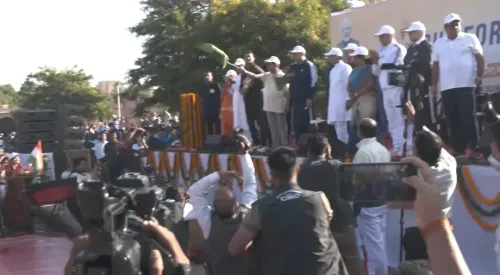
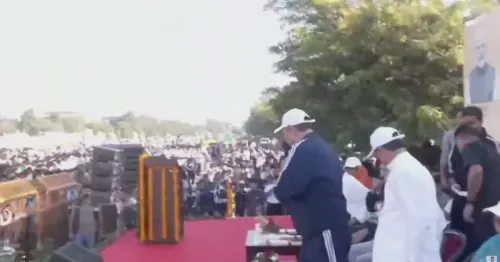
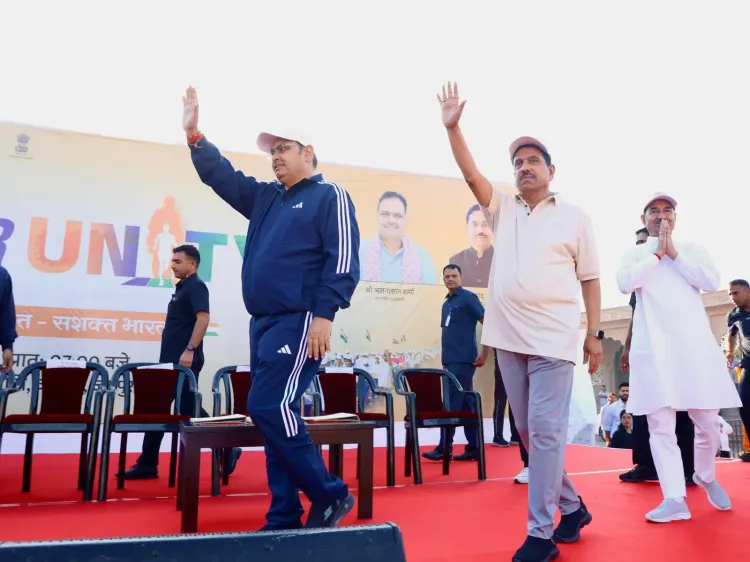
Before the city had fully woken up, Jaipur's streets filled with young runners — and Union Minister Pralhad Joshi was right there among them. On Saturday, 31 October 2026, Joshi flagged off the Run for Unity in Jaipur, joining Rajasthan Chief Minister Bhajan Lal Sharma to mark Rashtriya Ekta Diwas — National Unity Day — on what would have been Sardar Vallabhbhai Patel's birth anniversary.
Jaipur's streets echo with Patel's vision
Joshi, who also holds charge of New and Renewable Energy, described the morning as 'inspiring,' pointing to the enthusiasm of young participants who gathered at dawn to celebrate the spirit of unity, integrity, and national pride. The event drew on the legacy of Sardar Patel — India's first Deputy Prime Minister and Home Minister — who is credited with integrating more than 500 princely states into the Indian Union after Independence in 1947. That act of political consolidation remains one of the most consequential feats of statecraft in modern South Asian history.
Rashtriya Ekta Diwas and its twelve-year run
The Government of India instituted Rashtriya Ekta Diwas in 2014 specifically to honour Patel's legacy through structured public events — runs, pledges, and civic ceremonies — held simultaneously across multiple states. Twelve years on, the observance has become a fixture of the national calendar, with BJP leaders and state administrations routinely anchoring local editions of the event. Rajasthan Chief Minister Bhajan Lal Sharma's presence alongside Joshi underscored the dual central-state character of this year's Jaipur edition.
Youth energy as the headline image
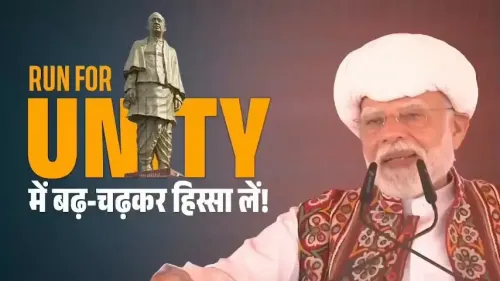
Joshi's post was accompanied by four images from the event, and his words zeroed in on the generational dimension: young citizens choosing an early-morning run as an act of patriotic expression. Whether that energy translates into sustained civic engagement is the larger question — but on the streets of Jaipur this morning, the turnout made its own statement.
Twelve editions in, the Run for Unity endures not merely as a commemorative ritual but as a recurring public test of whether Sardar Patel's idea of a seamlessly integrated India still resonates — one footstep at a time.
Point of View
Not merely a historical footnote. Twelve years after the event's founding, its political symbolism and civic purpose have become inseparable.
NationPress
31 Oct 2026
Frequently Asked Questions
What is Rashtriya Ekta Diwas and when is it observed?
Rashtriya Ekta Diwas, or National Unity Day, is observed every year on 31 October to mark the birth anniversary of Sardar Vallabhbhai Patel. The Government of India instituted it in 2014 to promote national integration through public events such as runs and pledges.
Who flagged off the Run for Unity in Jaipur in 2026?
Union Minister Pralhad Joshi flagged off the Run for Unity in Jaipur on 31 October 2026 , alongside Rajasthan Chief Minister Bhajan Lal Sharma .
Why is 31 October celebrated as National Unity Day in India?
31 October is the birth anniversary of Sardar Vallabhbhai Patel , India's first Deputy Prime Minister, who integrated more than 500 princely states into the Indian Union after 1947. National Unity Day honours that legacy of national integration.
What is the Run for Unity?
The Run for Unity is an annual public run held on Rashtriya Ekta Diwas (31 October) across multiple Indian states to commemorate Sardar Patel's birth anniversary and promote themes of unity, integrity, and national pride.
Who is Bhajan Lal Sharma?
Bhajan Lal Sharma is the Chief Minister of Rajasthan , representing the BJP.