Pralhad Joshi: PM Modi inaugurates Viveka Smaraka in Mysuru
Synopsis
PM Modi inaugurated the Swami Vivekananda Cultural Youth Centre – Viveka Smaraka in Mysuru, declaring Vivekananda's vision of equality and education the bedrock of nation-building, and linking mother-tongue instruction to equal opportunity — a theme that runs directly through NEP 2020.
Key Takeaways
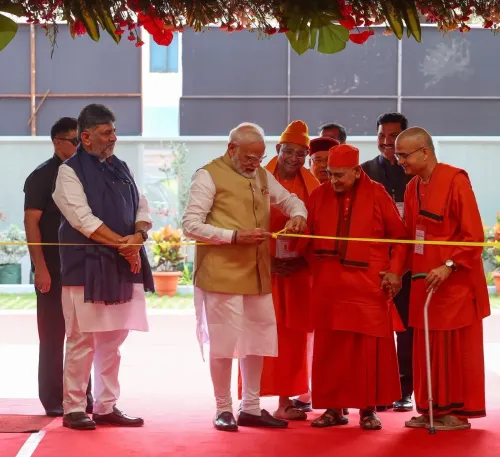
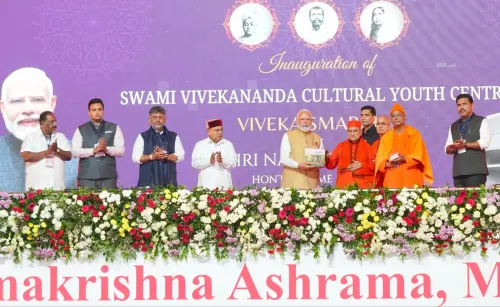
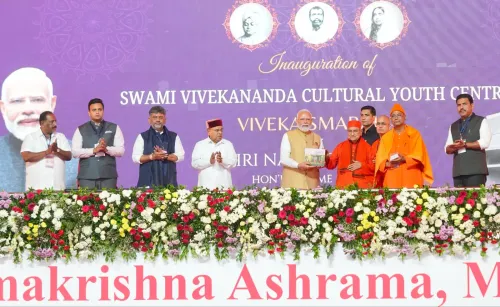
PM Narendra Modi inaugurated the Swami Vivekananda Cultural Youth Centre – Viveka Smaraka in Mysuru .
Modi cited Swami Vivekananda's vision of equality and education as the foundation of nation-building.
He argued that education in Indian languages removes language barriers and ensures equal opportunity for all students.
The inauguration aligns with the National Education Policy 2020 , which recommends mother-tongue instruction in early grades.
Union Minister Pralhad Joshi , a senior BJP leader from Karnataka, shared the event, underlining its political and cultural significance in the state.
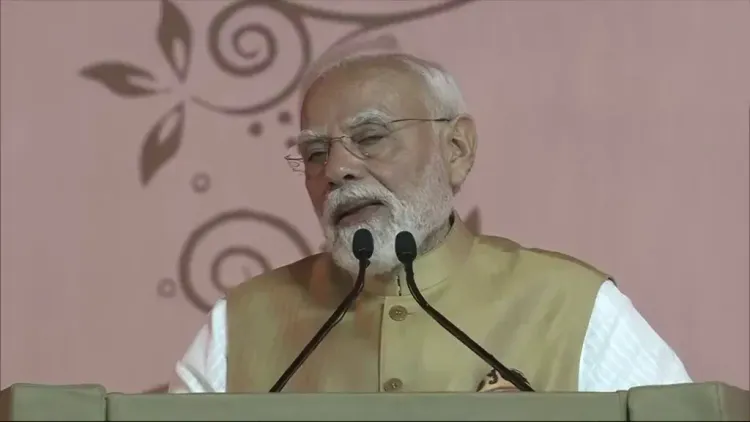
Mysuru got a new cultural landmark on Saturday — and the message delivered at its inauguration cut straight to the heart of one of India's oldest educational debates. Union Consumer Affairs Minister Pralhad Joshi shared that Prime Minister Narendra Modi inaugurated the Swami Vivekananda Cultural Youth Centre – Viveka Smaraka in Mysuru, using the occasion to anchor a pointed argument: that teaching in Indian languages is not a concession to tradition, but the most direct route to equal opportunity.
What PM Modi said at the Viveka Smaraka inauguration
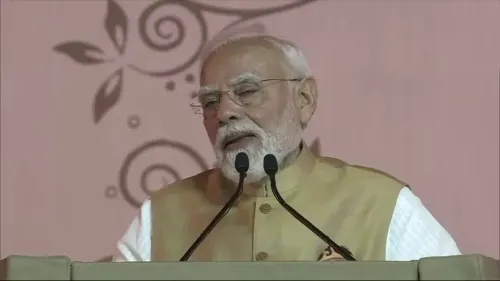
At the ceremony, PM Modi invoked Swami Vivekananda's twin pillars of equality and education as the philosophical foundation of nation-building — a framing the BJP has consistently deployed at cultural inaugurations tied to national heritage figures. He said that making education accessible in Indian languages is 'helping ensure equal opportunities for all, free from the barriers of language.' The argument is simple and sharp: if a child must first master a foreign tongue before accessing knowledge, the language itself becomes a gate — and not everyone has the key.
Vivekananda's vision meets NEP 2020's mother-tongue push
The philosophical line drawn at the inauguration has a live policy counterpart. The National Education Policy 2020 recommended mother-tongue instruction in early grades precisely to dismantle the language barrier that has historically disadvantaged rural and regional-language students. Central government events have repeatedly linked Vivekananda's legacy to this contemporary education agenda — Saturday's inauguration in Mysuru fits squarely in that pattern.
Mysuru, a city with deep roots in cultural institution-building, provides an apt stage. The new centre is designed to serve youth through cultural and educational programming inspired by Vivekananda's teachings — a 19th-century monk whose ideas on equality and accessible learning have become a recurring touchstone in official policy narratives.
Karnataka's cultural politics and the Vivekananda brand
For Joshi, a senior BJP leader from Karnataka, amplifying this event carries both cultural and political resonance in a state where the party is in opposition. Framing education access through the lens of a revered Indian spiritual figure — rather than purely through policy language — broadens the appeal well beyond any partisan base. The Vivekananda brand travels across ideological lines in ways that few political slogans can.
Watch for whether additional Vivekananda-themed centres are announced at the state level, and how Karnataka's government responds to the mother-tongue provisions of NEP 2020 in its own school curriculum rollout — because the real test of Saturday's rhetoric will land in classrooms, not at inaugurations.
Point of View
A figure who commands reverence across India's ideological spectrum. By having a Union Minister amplify a state-level cultural inauguration, the party signals that Karnataka remains a priority theatre even from opposition. The framing of language-accessible education as 'equal opportunity' is shrewd: it converts a pedagogical debate into a social-justice argument, pre-empting critics who might otherwise frame regional-language instruction as parochial. The real policy test, however, is whether NEP's mother-tongue provisions translate into funded classroom infrastructure — or remain rhetorical fixtures at ribbon-cutting ceremonies.
NationPress
2 Aug 2026
Frequently Asked Questions
What is the Swami Vivekananda Cultural Youth Centre – Viveka Smaraka in Mysuru?
It is a newly inaugurated cultural and youth centre in Mysuru, Karnataka, dedicated to promoting values and activities inspired by Swami Vivekananda's teachings on equality and education.
What did PM Modi say at the Viveka Smaraka inauguration?
PM Modi said that Swami Vivekananda's vision of equality and education is the foundation of nation-building, and that making education accessible in Indian languages helps ensure equal opportunities for all by removing language barriers.
How does the Viveka Smaraka inauguration connect to NEP 2020?
The National Education Policy 2020 recommends mother-tongue instruction in early grades to reduce language barriers — the same argument PM Modi made at the Mysuru inauguration, linking Vivekananda's philosophy to current education policy.
Why did Pralhad Joshi post about the Mysuru inauguration?
As a senior BJP leader from Karnataka, Union Minister Pralhad Joshi shared the event to highlight PM Modi's participation in a significant cultural inauguration in his home state.
What is the significance of Mysuru as the location for this centre?
Mysuru is a Karnataka city with a strong tradition of cultural institution-building and regularly hosts national-level commemorative and cultural events, making it a fitting location for a Vivekananda-themed youth centre.