Why are Protests Taking Place Outside the Bangladesh High Commission in Delhi?
Synopsis
In a shocking turn of events, protests erupted outside the Bangladesh High Commission in Delhi following the brutal lynching of Hindu youth, Dipu Chandra Das. This incident has sparked outrage among minority communities and raised questions regarding safety and justice in the region.
Key Takeaways
Protests were held outside the Bangladesh High Commission in Delhi.
Dipu Chandra Das was lynched on December 18 in Bangladesh.
The incident has raised concerns about the safety of minorities.
Vishwa Hindu Parishad and Bajrang Dal led the demonstrations.
Authorities in Bangladesh have arrested individuals connected to the crime.
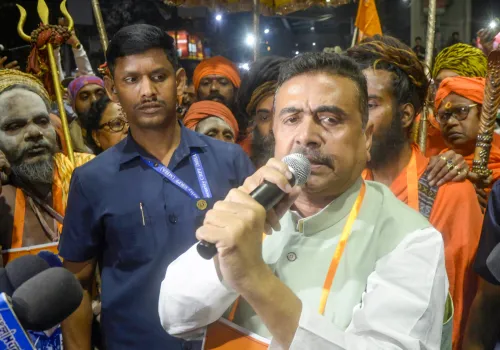
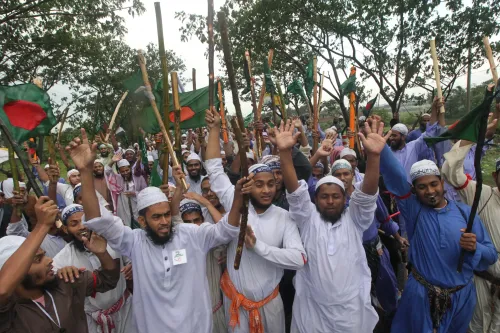
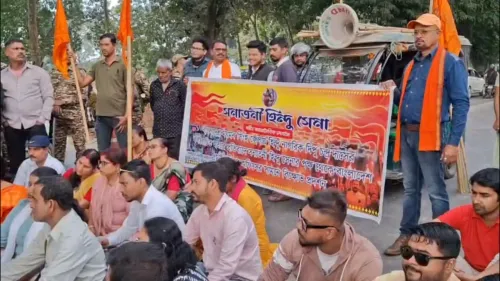
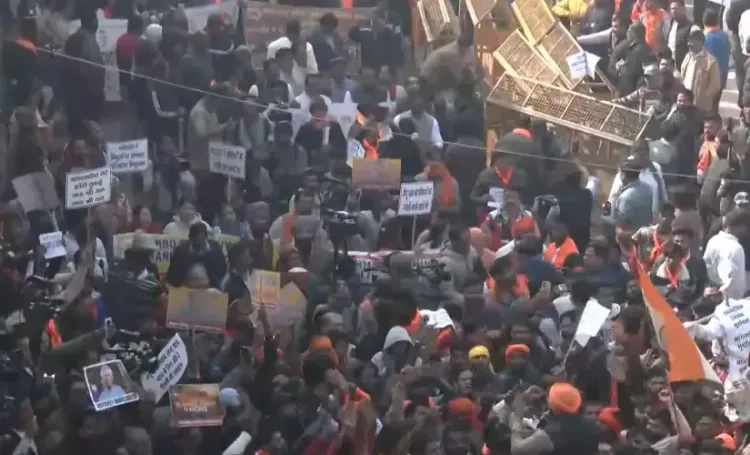
New Delhi, Dec 23 (NationPress) A significant crowd gathered outside the Bangladesh High Commission in New Delhi on Tuesday to voice their anger over the horrific killing of a Hindu youth, Dipu Chandra Das, by a radical Islamist mob in the Mymensingh district of Bangladesh.
Dipu Chandra Das, a garment factory worker, was brutally lynched in the Baluka area of Mymensingh following allegations of blasphemy made by a Muslim co-worker.
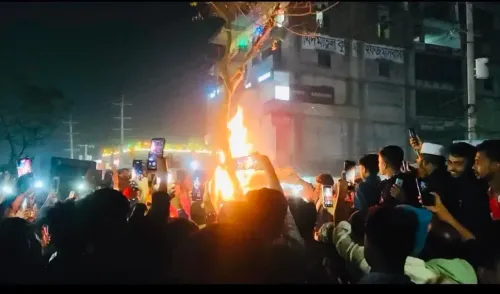
The mob assaulted Das on the night of December 18, resulting in his death, after which they hung his body from a tree and set it ablaze due to claims of him insulting Islam.
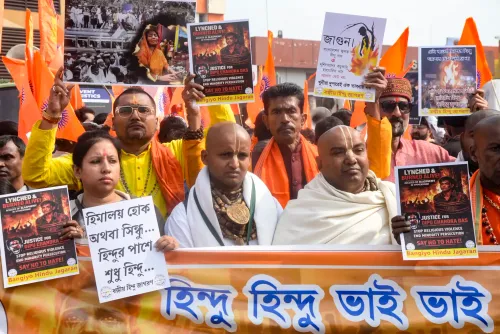
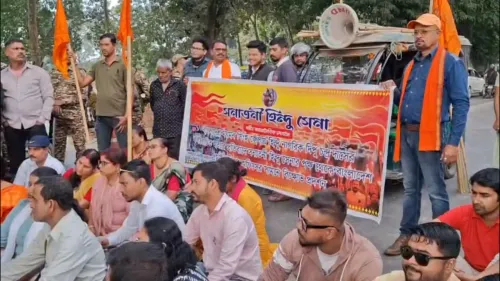
In reaction to this incident, the Vishwa Hindu Parishad (VHP) and Bajrang Dal organized protests outside the Bangladeshi mission, denouncing what they termed as the increasing violence against minority communities in the neighboring South Asian country.
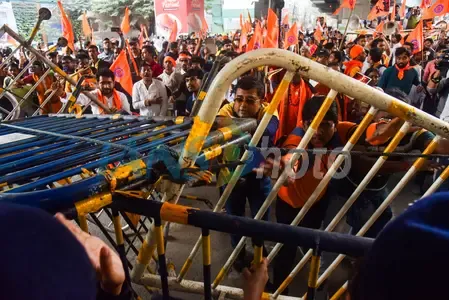
Delhi Police had established stringent security measures around the High Commission in anticipation of the protests.
Despite extensive security, some protesters managed to breach police barriers and attempted to approach the diplomatic facility, overcoming at least two layers of barricades amid a charged atmosphere.
Many demonstrators carried banners and placards, chanting slogans demanding justice for Dipu Das.
Some protesters also burned effigies of Bangladesh's interim chief, Muhammad Yunus, and others tied shoes around his photographs as a form of protest.
Security agencies remained vigilant ahead of the demonstration and implemented thorough measures to avert any disturbances.
The area surrounding the High Commission was secured with multiple layers of barricading, with personnel from police and paramilitary forces deployed to manage and control the crowd.
Meanwhile, authorities in Bangladesh have detained at least 12 individuals in connection with the lynching and murder of Dipu Chandra Das, as outrage over the incident continues to escalate both within the nation and across the border.
Point of View
I emphasize the importance of reporting on incidents that threaten the safety of minority communities. The violent killing of Dipu Chandra Das is alarming and reflects a broader issue of intolerance that needs to be addressed. We stand united in advocating for justice and the protection of all individuals, regardless of their faith.
NationPress
19 Sept 2026
Frequently Asked Questions
What led to the protests outside the Bangladesh High Commission?
Protests were sparked by the brutal killing of Hindu youth, Dipu Chandra Das, by a radical Islamist mob in Bangladesh, following allegations of blasphemy.
What actions have authorities taken in response to the lynching?
Bangladeshi authorities have arrested at least 12 individuals connected to the lynching and murder of Dipu Chandra Das.
What measures were taken by Delhi Police during the protests?
Delhi Police implemented strict security arrangements around the High Commission, including multiple layers of barricades to control the crowd.
What were the protests demanding?
Protesters were demanding justice for Dipu Chandra Das and condemning the ongoing violence against minority communities in Bangladesh.
How has the international community reacted to this incident?
The incident has generated significant outrage both within Bangladesh and across its borders, highlighting concerns over minority rights and safety.