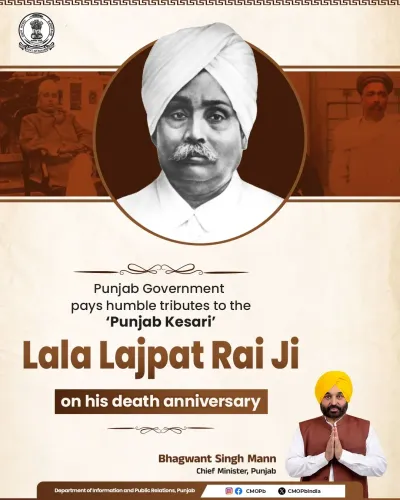
Punjab CM Bhagwant Mann pays tribute to Lala Lajpat Rai on death anniversary
Synopsis
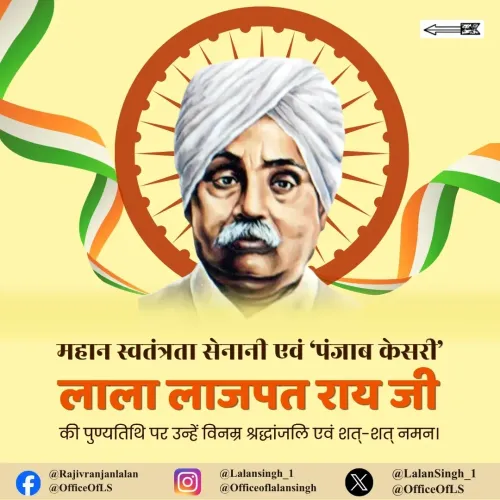
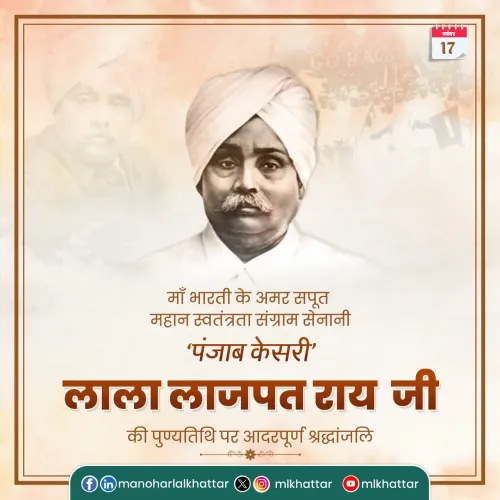
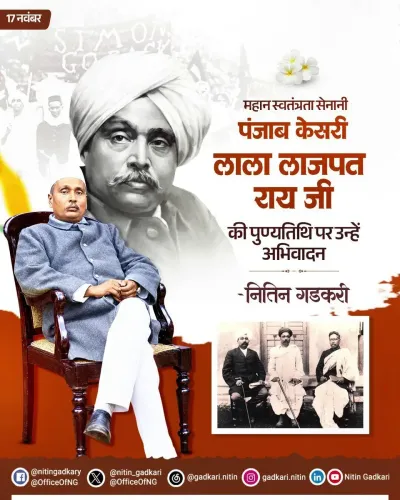
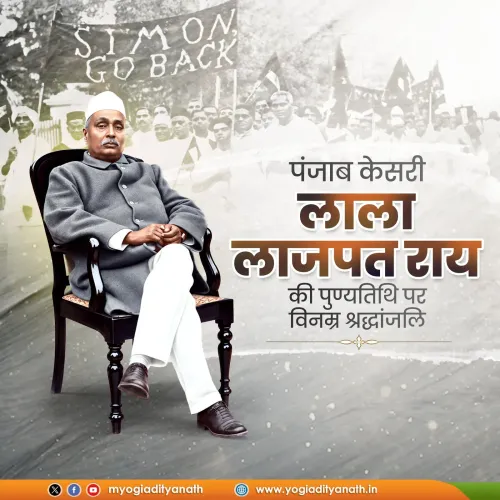
The Punjab Government under Chief Minister Bhagwant Singh Mann paid solemn tribute to freedom fighter Lala Lajpat Rai on his death anniversary, 17 November, remembering the 'Punjab Kesari' who died in 1928 following a British lathi charge during the Simon Commission protests.
Key Takeaways
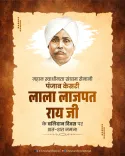
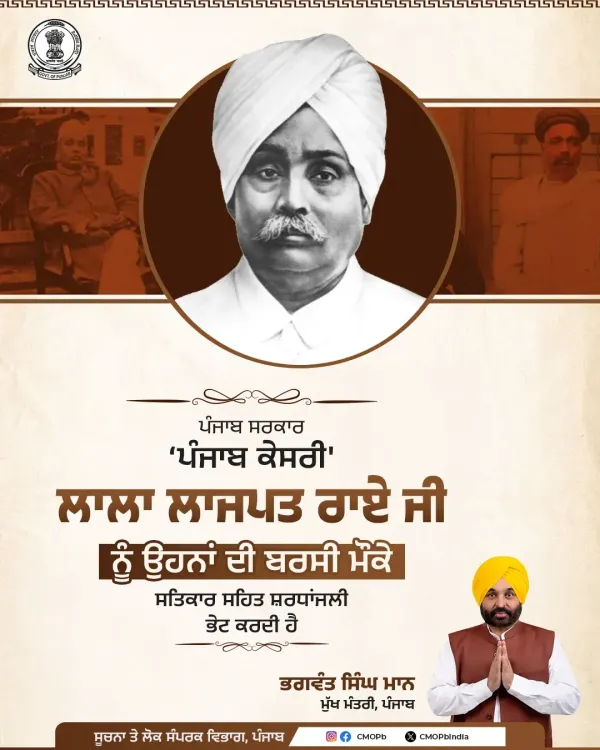
The Chief Minister's Office of Punjab posted a tribute to Lala Lajpat Rai on his barsi , 17 November 2026 .
Lala Lajpat Rai , known as Punjab Kesari , was a leading figure of India's independence movement and part of the 'Lal-Bal-Pal' radical bloc.
Rai died on 17 November 1928 , aged 63 , from injuries sustained during a British lathi charge in Lahore on 30 October 1928 .
The lathi charge occurred during protests against the Simon Commission , an all-British body appointed to review constitutional reforms.
Rai's death directly inspired Bhagat Singh and his associates to pursue retributive action, shaping a pivotal chapter of Punjab's freedom struggle.
CM Bhagwant Mann 's government extended the tribute in Punjabi, reaffirming Rai's centrality to Punjab's civic and historical identity.
On the death anniversary of one of India's most fearless freedom fighters, the Punjab Government led by Chief Minister Bhagwant Singh Mann paused to honour the man who stared down an empire — Lala Lajpat Rai, revered across the subcontinent as Punjab Kesari (the Lion of Punjab).
Posting on 17 November 2026, the Chief Minister's Office of Punjab extended what it called respectful homage — ਸਤਿਕਾਰ ਸਹਿਤ ਸ਼ਰਧਾਂਜਲੀ (tribute with reverence) — to Rai on the occasion of his barsi, the annual day of remembrance marking his passing.
Who was Lala Lajpat Rai — and why Punjab still carries his name
Lala Lajpat Rai was born on 28 January 1865 in Dhudike, in what is today Punjab. A lawyer, orator, and tireless agitator, he emerged as one of the most recognisable faces of the Indian independence movement in the late nineteenth and early twentieth centuries. Alongside Bal Gangadhar Tilak and Bipin Chandra Pal, he formed the celebrated 'Lal-Bal-Pal' triumvirate — the radical wing of the Indian National Congress that demanded complete self-rule, not gradual reform. His title Punjab Kesari — Lion of Punjab — was no mere honorific. Rai led mass agitations, was deported by British authorities for his activism, and founded institutions including the Punjab National Bank and the Servants of the People Society, a social-reform body that outlasted the Raj.The lathi charge that changed history
Rai's death anniversary on 17 November carries particular weight. On 30 October 1928, he led a silent march in Lahore against the all-British Simon Commission, which had been appointed to review constitutional reforms without a single Indian member. British police Superintendent James Scott ordered a lathi charge on the marchers. Rai was struck directly on the chest. He died eighteen days later, on 17 November 1928, aged 63. His final public words — 'Every blow struck on me is a nail in the coffin of the British Empire' — became one of the defining utterances of the freedom struggle. The rage his death ignited directly inspired Bhagat Singh, Sukhdev, and Rajguru to avenge him — a chain of events that would convulse colonial Punjab and echo across the entire independence movement.Punjab's annual act of remembrance
For Punjab, this is not a distant historical footnote. Lala Lajpat Rai is embedded in the state's civic identity — from university names to public squares to currency notes. The annual tribute by the sitting government reaffirms that lineage. The Bhagwant Mann administration's post on X, addressed to citizens in Punjabi, signals continuity with that tradition of public remembrance, keeping his sacrifice visible for a generation that knows independence only as inheritance. Nearly a century on, Punjab's Lion still commands the room.Point of View
Posting the homage in Punjabi rather than Hindi or English is a deliberate act of regional cultural assertion. Rai's legacy also sits at an interesting intersection: claimed enthusiastically across the ideological spectrum, from social reformers to Hindu nationalists to Punjabi regionalists. The tribute reminds citizens that the state's foundational identity is inseparable from resistance — a subtext that retains quiet political currency in Punjab to this day.
NationPress
17 Nov 2026
Frequently Asked Questions
When did Lala Lajpat Rai die and why?
Lala Lajpat Rai died on 17 November 1928 in Lahore, eighteen days after suffering severe injuries from a British police lathi charge during a protest march against the Simon Commission on 30 October 1928 .
Why is Lala Lajpat Rai called Punjab Kesari?
He is called Punjab Kesari — Lion of Punjab — because of his fearless leadership of the independence movement in the Punjab region, his fiery oratory, and his refusal to bow to British authority despite repeated deportations and repression.
What was the Simon Commission that Lala Lajpat Rai opposed?
The Simon Commission was a 1927 British-appointed body tasked with reviewing India's constitutional framework. Its all-European membership, with no Indian representatives, sparked widespread protests across India, including the Lahore march led by Lala Lajpat Rai.
What institutions did Lala Lajpat Rai found?
Lala Lajpat Rai was a co-founder of the Punjab National Bank and established the Servants of the People Society , a social-reform organisation that continued to function long after independence.
How did Lala Lajpat Rai's death influence Bhagat Singh?
Lala Lajpat Rai's death outraged a generation of young revolutionaries in Punjab. Bhagat Singh , Sukhdev , and Rajguru directly cited avenging his killing as the motivation for their subsequent actions, making his martyrdom a turning point in the militant strand of India's freedom movement.