Punjab CM Mann: 3,148 sports grounds, 6,000 village gyms underway
Synopsis
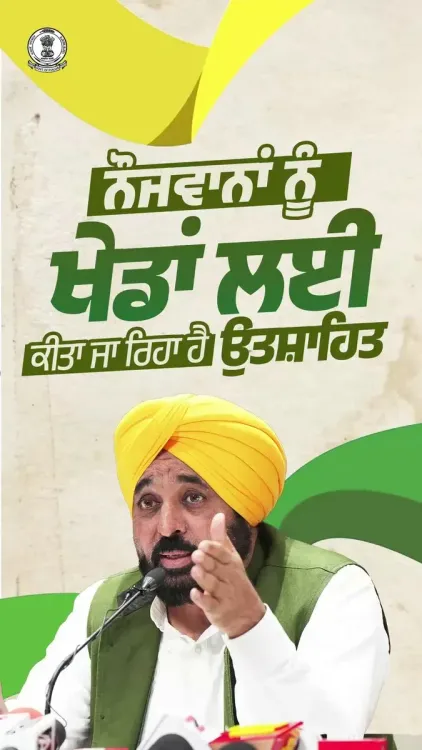
Chief Minister Bhagwant Mann announced on 20 August 2026 that Punjab is developing 3,148 village sports grounds and 6,000 gyms, while also investing in sports medicine — a grassroots push to build athletic infrastructure across the state's rural belt.
Key Takeaways
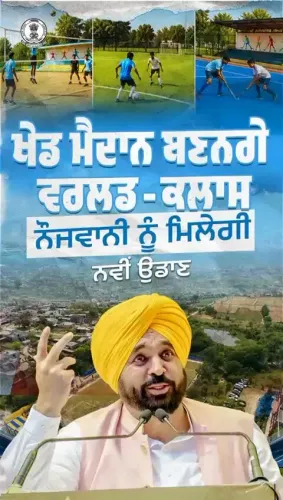
Punjab CM Bhagwant Mann announced development of 3,148 sports grounds in villages across the state.
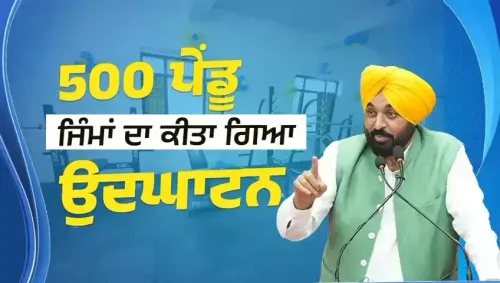
The government is simultaneously setting up 6,000 gyms in rural areas, nearly double the sports grounds count.
The initiative also includes a dedicated push in sports medicine , extending specialised support beyond elite athletes.
Rural youth and village communities are the primary beneficiaries of the programme.
The announcement was made on 20 August 2026 by the Chief Minister's Office of Punjab via media briefing.
Completion rates, maintenance budgets, and sports medicine delivery mechanisms remain to be detailed publicly.
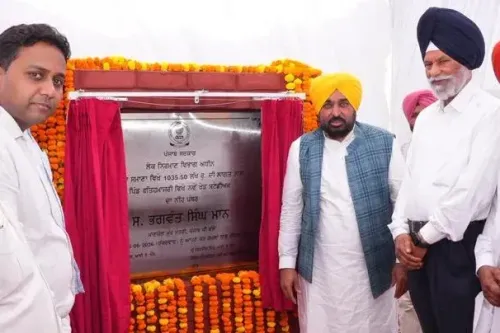
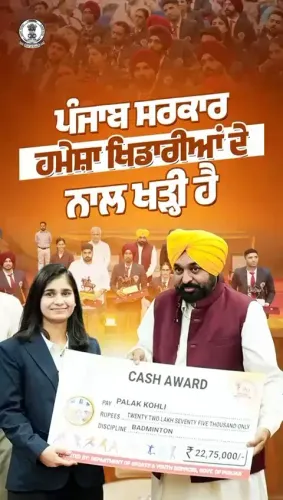
A state government betting on rural muscle — Chief Minister Bhagwant Mann of Punjab told media on Thursday, 20 August 2026 that his government is simultaneously developing 3,148 sports grounds and 6,000 gyms across the state's villages, while also investing in the specialised field of sports medicine.
Sharing the update with journalists, Mann said the Punjab Government is undertaking 'special work' (ਵਿਸ਼ੇਸ਼ ਕੰਮ) in sports medicine alongside the physical infrastructure push — a combination that signals ambitions beyond simply laying turf and installing equipment.Villages as the new training ground
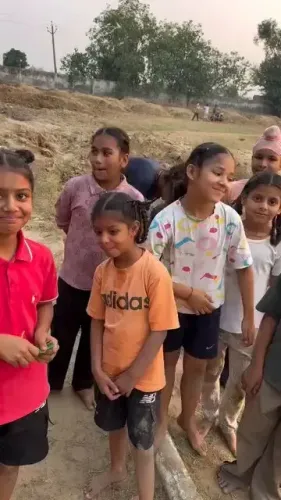
Punjab has a deep sporting DNA — hockey legends, wrestling champions, and Olympic medallists have emerged from its rural belt for generations. Yet for every celebrated athlete, thousands of young people in villages have trained without proper grounds, equipment, or medical support. The Mann government's stated scale — 3,148 playing fields paired with 6,000 gyms — is designed to close that gap at the grassroots level.
The dual focus on built infrastructure and sports medicine is notable. Sports medicine — covering injury prevention, physiotherapy, and performance science — has historically been available only to elite or state-level athletes in India. Extending even a basic version of that support to the village tier would mark a meaningful shift in how Punjab approaches talent development.
What the numbers mean on the ground
Punjab has roughly 12,000 to 13,000 revenue villages. A target of 3,148 sports grounds means the programme, if completed, would cover approximately one in four villages with a dedicated playing field — a significant footprint for a single state administration. The 6,000 gym figure, nearly double the sports grounds count, suggests the government is prioritising fitness access even in settlements too small for a full sports ground.
State governments across India have periodically announced rural sports infrastructure drives, but completion rates and maintenance funding have often lagged behind headline numbers. The figures announced by CM Mann are, for now, targets in active development — the real test will come when construction timelines, usage data, and budget allocations for coaching staff and upkeep are made public.
Sports medicine: the quieter ambition
The mention of sports medicine alongside bricks-and-mortar infrastructure is the detail worth watching. Punjab has been a feeder state for national and international sports rosters, and a recurring complaint from coaches and athletes has been the absence of professional medical and rehabilitation support outside of major academies. Embedding sports medicine capacity at the village or district level — even through mobile units or trained local health workers — could give Punjab a structural edge in athlete development over the long term.
Rural youth and village communities stand to be the most direct beneficiaries. For a state that has also been navigating concerns around youth unemployment and substance abuse, accessible sports infrastructure carries weight beyond athletics alone.
Punjab is building the infrastructure. Whether the gyms fill, the grounds are maintained, and the sports medicine promise translates into real clinical capacity on the ground — that is the accountability test still ahead.
Point of View
Indian state governments have scored political points on headline numbers while under-delivering on maintenance and staffing; Punjab's real credibility test will be in the follow-through. The sports medicine angle is the more ambitious and less-scrutinised element: if it materialises beyond a press release, it could genuinely differentiate Punjab's athlete-development model from other states. For the AAP government, which has staked its brand on visible delivery, these numbers are also a political asset heading into future electoral cycles.
NationPress
20 Aug 2026
Frequently Asked Questions
How many sports grounds is the Punjab government building in villages?
The Punjab government, under Chief Minister Bhagwant Mann, announced development of 3,148 sports grounds across the state's villages.
How many gyms is the Punjab government setting up in rural areas?
The Punjab government announced plans to develop 6,000 gyms in villages, nearly double the number of sports grounds being built.
What is Punjab doing for sports medicine?
Alongside physical infrastructure, CM Bhagwant Mann stated that the Punjab government is undertaking 'special work' in the field of sports medicine , though specific details of the programme have not yet been made public.
Who announced Punjab's village sports ground and gym initiative?
Chief Minister Bhagwant Mann shared the details with media on 20 August 2026 , with the announcement posted by the official Chief Minister's Office of Punjab account.
Which villages in Punjab will get sports grounds and gyms?
The announcement covers villages across Punjab broadly; specific village-level lists or district-wise breakdowns have not been released alongside the announcement.