CM Bhajanlal Slams Congress Over Vande Mataram Row

Synopsis
Rajasthan CM Bhajan Lal Sharma, amplifying Union Home Minister Amit Shah, accused the Congress Working Committee of reviving its 1937 appeasement politics by limiting Vande Mataram to two stanzas — calling it an insult to Bankim Chandra Chattopadhyay and India's freedom fighters.
Key Takeaways
Rajasthan CM Bhajan Lal Sharma shared a statement by Union Home Minister Amit Shah on 20 August 2026 attacking Congress over its Vande Mataram protocol.
The Congress Working Committee reportedly decided to sing only two stanzas of Vande Mataram at a party event — an allegation Congress has not yet addressed.
In 1937 , the Congress formally adopted only the first two stanzas of Vande Mataram following objections from the Muslim League, a decision the BJP has long cited as proof of appeasement politics.
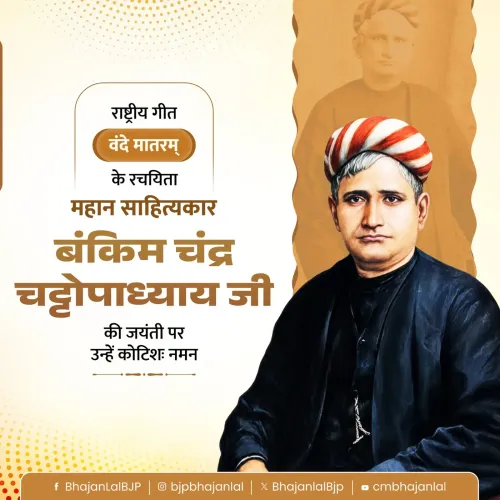
Bankim Chandra Chattopadhyay , the 19th-century Bengali poet who composed Vande Mataram, is invoked in the statement as a figure whose legacy is being dishonoured.
The BJP frames the controversy as a matter of honouring freedom fighters who used Vande Mataram as a rallying cry during the independence movement.
No official response or clarification from Congress on its Vande Mataram singing protocol has been issued as of publication.
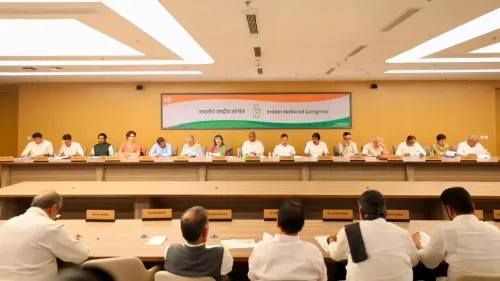
A national hymn, a century-old controversy, and a fresh political flashpoint — Rajasthan Chief Minister Bhajan Lal Sharma on Thursday, 20 August 2026, launched a sharp attack on the Congress party, accusing it of insulting Vande Mataram by limiting its recitation to just two stanzas at a Congress Working Committee event.
Quoting Union Home and Cooperation Minister Amit Shah, CM Sharma wrote: 'The Congress Working Committee's decision to sing only two stanzas of Vande Mataram once again exposes its politics of appeasement. In 1937 too, Congress had compromised with the original spirit of the song — and today the same mindset is visible.'
The 1937 Precedent That Still Burns
The reference to 1937 is deliberate and loaded. That year, the Indian National Congress, facing objections from the Muslim League over certain stanzas of Vande Mataram, formally resolved to adopt only the first two stanzas for official party use. The decision has remained a fault line in Indian political memory ever since.
Bankim Chandra Chattopadhyay, the 19th-century Bengali novelist and poet who composed Vande Mataram, is revered across India as the author of what many consider the nation's most stirring patriotic verse. The song served as a rallying cry for freedom fighters long before Independence. CM Sharma called the Congress move 'an insult to Bankim Chandra Chattopadhyay and his immortal composition.'
Freedom Fighters Invoked, Public Warned
The statement escalated beyond party rivalry into an appeal to historical memory. 'Those freedom fighters who sacrificed everything for the motherland while chanting Vande Mataram — it is the duty of all of us to honour their sacrifice and martyrdom,' the post read. The framing positions the Congress decision not as a procedural matter but as a betrayal of those who died for independence.
The closing line carried an unmistakable warning: 'The people of the country are watching everything and will not accept the insult of Vande Mataram at any cost.' This is a well-worn but still potent rhetorical device — placing the electorate as the ultimate judge of a rival party's cultural choices.
BJP's Long-Running Cultural Offensive
The BJP has consistently framed Congress's relationship with national symbols as one of strategic dilution to court minority votes. This latest salvo fits squarely into that pattern — using a cultural trigger to reinforce the narrative that Congress is structurally incapable of an unambiguous nationalism. Congress has not yet issued a formal response to the specific allegation about the Working Committee's protocol.
Whether this episode hardens into a sustained campaign or fades as a single news cycle will depend on how — and whether — Congress chooses to respond. Silence, historically, has never served the party well on questions of national symbols.
Point of View
But the invocation of the 1937 precedent alongside a current Congress Working Committee decision gives this iteration unusual historical depth. By routing the attack through Amit Shah's voice and amplifying it at the state level, the party signals a coordinated messaging strategy rather than a spontaneous reaction. For Congress, the dilemma is structural: responding risks amplifying the controversy, while silence is routinely read as confirmation. The episode underscores how cultural nationalism continues to set the terms of political contestation in India, forcing the opposition into a defensive crouch on questions of patriotic symbolism.
NationPress
20 Aug 2026
Frequently Asked Questions
Why is Vande Mataram controversial in India?
Vande Mataram has been contested since the colonial era because certain stanzas invoke the goddess Durga, which the Muslim League in 1937 objected to on religious grounds. Congress subsequently adopted only the first two stanzas for official use, a decision the BJP has long criticised as appeasement.
What did the Congress Working Committee decide about Vande Mataram?
According to the BJP, the Congress Working Committee recently decided to sing only two stanzas of Vande Mataram at party events. Congress has not officially confirmed or denied this specific claim.
Who wrote Vande Mataram?
Vande Mataram was composed by Bankim Chandra Chattopadhyay, a celebrated 19th-century Bengali novelist and poet. It first appeared in his 1882 novel 'Anandamath' and later became a rallying song for India's freedom movement.
What happened with Vande Mataram in 1937?
In 1937, the Indian National Congress formally resolved to use only the first two stanzas of Vande Mataram for official purposes, following objections from the Muslim League over the song's later stanzas, which contain references to Hindu goddesses.
What did Bhajan Lal Sharma say about Vande Mataram?
Rajasthan Chief Minister Bhajan Lal Sharma shared Union Home Minister Amit Shah's statement calling the Congress decision an act of appeasement and an insult to Bankim Chandra Chattopadhyay, warning that the public will not accept any dishonour to the national song.