CM Mann's Punjab govt highlights zero electricity bills relief
Synopsis
The Chief Minister's Office of Punjab says the Bhagwant Mann government's zero electricity bill initiative is delivering significant financial relief to residents, enabling families to redirect savings toward education, healthcare, and household needs.
Key Takeaways
The Chief Minister's Office of Punjab posted on 6 June 2026 highlighting the zero electricity bill welfare measure.
Chief Minister Bhagwant Mann leads the AAP government that promised up to 300 units of free monthly power in its 2022 election manifesto.
The government says families are using electricity savings for children's education, healthcare, and domestic expenses.
Punjab's scheme mirrors the free-power model AAP first implemented in Delhi .
Fiscal sustainability of the subsidy and future budget allocations remain a key area to watch.
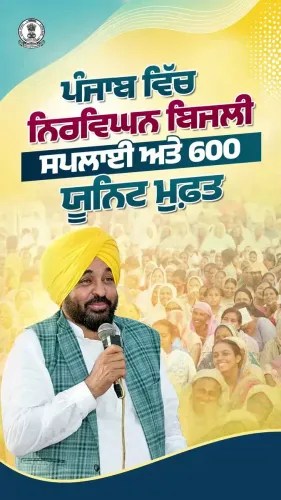
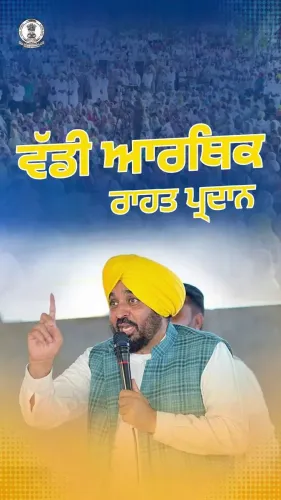
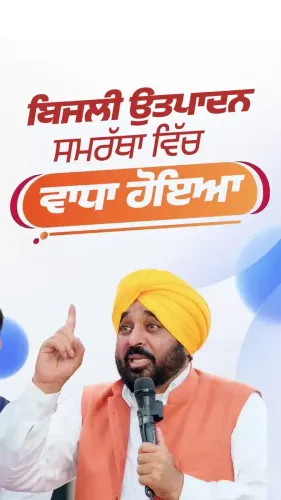
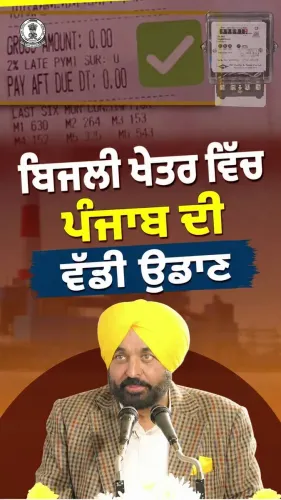
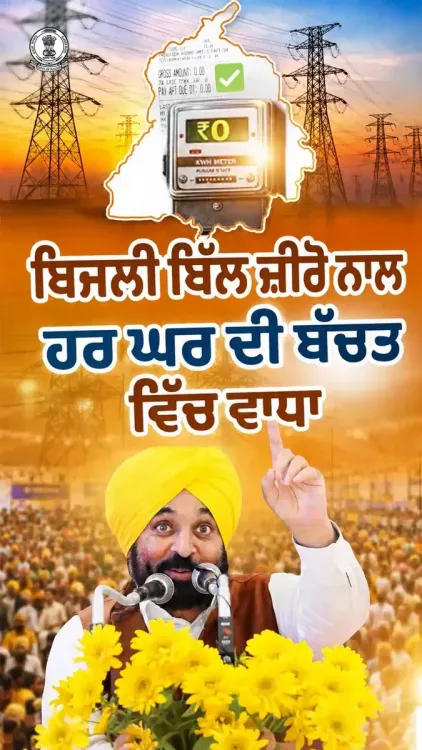
The Chief Minister's Office of Punjab on Saturday, 6 June 2026, highlighted the financial relief being delivered to state residents through the Bhagwant Mann-led government's welfare initiative of zero electricity bills, stating that families are redirecting savings toward household needs, children's education, and healthcare.
The post, shared in Punjabi, states: 'ਬਿਜਲੀ ਬਿੱਲ ਜ਼ੀਰੋ ਹੋਣ ਨਾਲ ਸੂਬੇ ਦੇ ਨਾਗਰਿਕਾਂ ਨੂੰ ਵੱਡੀ ਆਰਥਿਕ ਰਾਹਤ ਮਿਲ ਰਹੀ ਹੈ' ('With electricity bills becoming zero, the state's citizens are receiving significant financial relief'). The office added that the savings are enabling families to use a larger share of their income for domestic requirements, children's education, healthcare, and other expenditures.
Context
The Aam Aadmi Party (AAP) came to power in Punjab after the 2022 state assembly elections, with a manifesto that prominently promised free domestic electricity up to 300 units per month for households. Chief Minister Bhagwant Mann has since positioned the scheme as a cornerstone of the government's public welfare agenda. The announcement aligns with a broader pattern of the party highlighting the economic impact of its flagship welfare promises on ordinary families.Policy Backdrop
Punjab's domestic electricity subsidy follows a model that AAP first introduced in Delhi, where free power units for households became one of the party's most-cited governance achievements. Across India, several state governments have rolled out similar domestic electricity subsidy or free-unit schemes, typically financed through state budget allocations or cross-subsidies levied on industrial and commercial consumers. The fiscal sustainability of such schemes has been a recurring point of debate in state budget discussions, with analysts watching annual power-subsidy line items closely.Stakeholders and Impact
The primary beneficiaries are Punjab's domestic electricity consumers, particularly lower- and middle-income households for whom power bills represent a meaningful portion of monthly expenditure. The government's stated argument is that zeroing out electricity costs frees up disposable income that can flow into education, health, and consumption — multiplying the welfare effect beyond the direct subsidy. Industrial and commercial consumers in the state, who typically bear higher tariffs, remain an indirect stakeholder in the scheme's long-term financial architecture.What's Next
Attention will now turn to Punjab's upcoming state budget cycle and whether allocations for the power subsidy are maintained, expanded, or revised. Any change in the free-unit threshold or eligibility criteria would directly affect millions of households currently benefiting from zero bills. The government's continued communication of welfare outcomes suggests the scheme will remain central to AAP's political messaging in the state ahead of future electoral cycles.Point of View
Reinforcing AAP's core governance brand — free utilities as tangible household relief — well ahead of any electoral cycle. By framing zero electricity bills as a multiplier for education and health spending, the government is attempting to broaden the perceived impact of a single scheme. This mirrors the party's playbook in Delhi, where repeated messaging on free power helped consolidate its urban lower-middle-class base. The real test, however, lies in whether Punjab's state finances can sustain the subsidy without crowding out capital expenditure.
NationPress
21 Oct 2026
Frequently Asked Questions
What is Punjab's zero electricity bill scheme?
Under the Bhagwant Mann -led AAP government's welfare programme, eligible domestic households in Punjab receive up to 300 units of free electricity per month, effectively bringing their power bill to zero.
Who benefits from Punjab's free electricity scheme?
Domestic consumers in Punjab who consume within the free-unit threshold are the primary beneficiaries, with lower- and middle-income households seeing the most significant relief relative to their income.
How is Punjab funding its electricity subsidy?
The subsidy is financed through the Punjab state budget, and, as with similar schemes in other states, is partly supported by higher tariffs on industrial and commercial consumers.
Did AAP promise free electricity in Punjab before the 2022 elections?
Yes. The Aam Aadmi Party 's 2022 Punjab election manifesto included a promise of up to 300 units of free monthly power for households, which was implemented after the party won the state assembly elections.
Which other states have free or subsidised electricity schemes?
Several Indian states have introduced domestic electricity subsidy or free-unit schemes. AAP 's Delhi government was among the early adopters of this model, which Punjab 's current administration has followed.