CM Mann Sets New Benchmark for Punjab's Power Sector
Synopsis
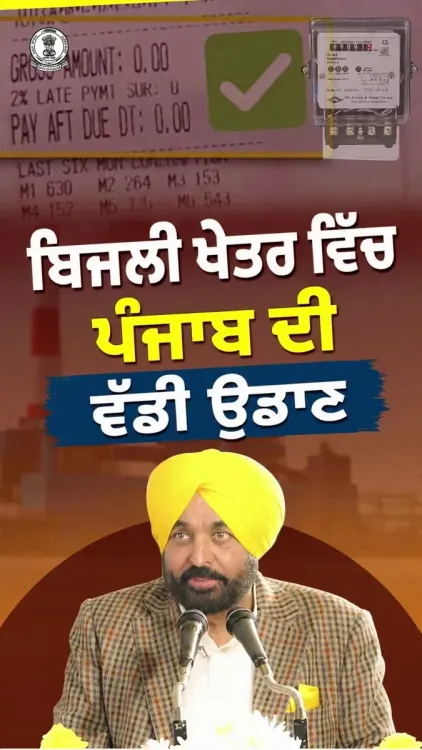
The Chief Minister's Office of Punjab credited CM Bhagwant Mann on June 8, 2026, with taking 'historic steps' on power: 300 units of free electricity for households, daytime agricultural supply, and infrastructure strengthening — framing the moves as a new benchmark for the state's progress.
Key Takeaways
The Chief Minister's Office of Punjab posted on June 8, 2026 , highlighting three power-sector measures under CM Bhagwant Mann .
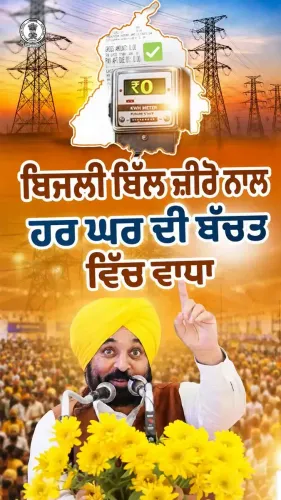
The 300-unit free electricity scheme provides zero-cost domestic power to lakhs of Punjab households per billing cycle.
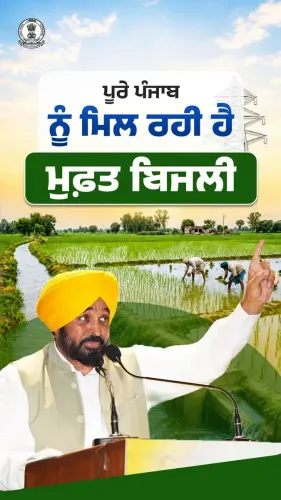
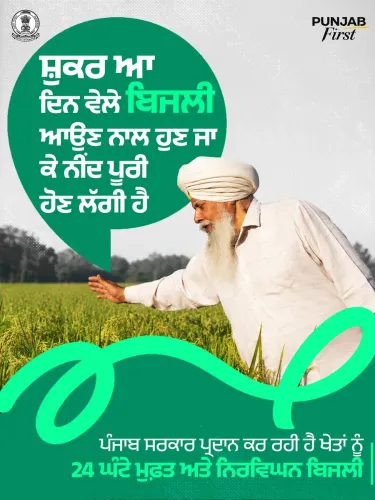
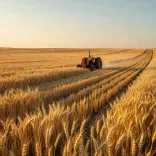
Daytime power supply for farmers addresses a long-standing grievance over erratic, nocturnal agricultural electricity schedules.
The government has also pledged to strengthen power distribution infrastructure to improve reliability and reduce losses.
The AAP administration has positioned these measures as part of a broader welfare-first governance model also practised in Delhi .
State budget allocations and new energy agreements will be key indicators of the scheme's long-term fiscal sustainability.
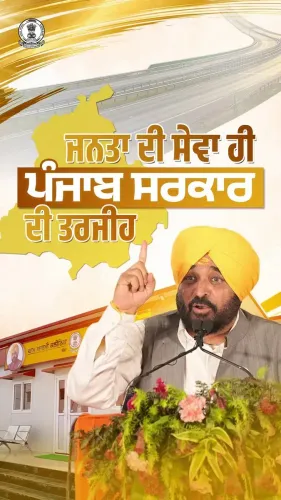
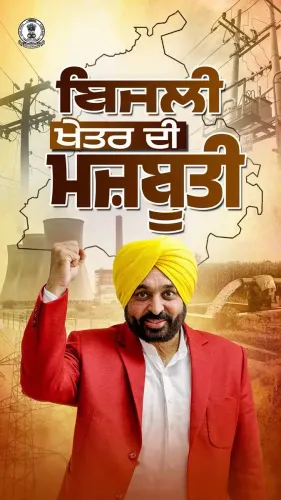
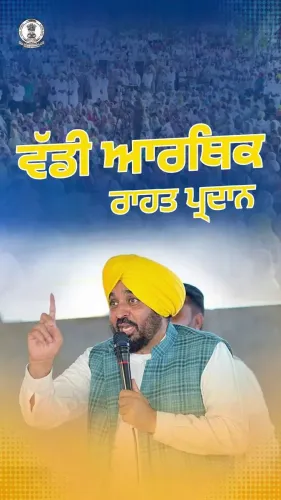
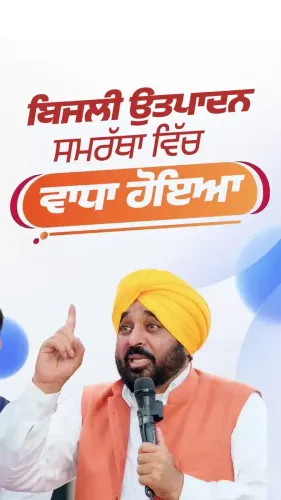
The Chief Minister's Office of Punjab, in a post on Monday, June 8, 2026, credited Chief Minister Bhagwant Mann with taking what it called 'historic steps' to provide relief to millions of families through free electricity, improve daytime power supply for farmers, and strengthen the state's power infrastructure.
The official post, written in Punjabi, stated: '300 ਯੂਨਿਟ ਮੁਫ਼ਤ ਬਿਜਲੀ ਨਾਲ ਲੱਖਾਂ ਪਰਿਵਾਰਾਂ ਨੂੰ ਰਾਹਤ' — 'relief to lakhs of families through 300 units of free electricity' — alongside daytime agricultural power supply and infrastructure reinforcement as defining markers of Punjab's progress under Mann's leadership.
Context
The 300-unit free electricity scheme has been a flagship welfare commitment of the Aam Aadmi Party (AAP) government in Punjab since it came to power in March 2022. Under the programme, domestic consumers consuming up to 300 units per billing cycle receive their electricity at no cost, directly reducing household expenditure for a large section of the state's population. The CMO's post frames these measures collectively as a 'new example of Punjab's progress' (ਪੰਜਾਬ ਦੀ ਤਰੱਕੀ ਦੀ ਨਵੀਂ ਮਿਸਾਲ).Policy Backdrop
Punjab has a long history of electricity subsidies, particularly for its large agricultural sector, where power demand for irrigation is substantial. The AAP government's approach has been to formalise and expand these subsidies while simultaneously pledging to upgrade the distribution infrastructure that delivers power. Daytime supply to farmers — as opposed to the erratic, often nocturnal schedules that have historically frustrated Punjab's agricultural community — has been a stated priority of the Mann administration. Similar free-power models have been pursued by AAP in Delhi, positioning the party's governance record on energy welfare as a template replicated across states it governs.Stakeholders and Impact
The twin beneficiaries highlighted in the post are households and farmers. For domestic consumers, the zero-cost electricity slab provides direct monthly savings, particularly for lower- and middle-income families. For the farming community, reliable daytime power supply is critical to irrigation scheduling, crop yields, and reducing dependence on diesel-run alternatives. Infrastructure strengthening — the third pillar cited — is aimed at reducing transmission losses and improving supply reliability across both urban and rural Punjab. Taken together, these measures touch a significant share of the state's roughly 3 crore population.What's Next
Attention will now turn to Punjab's state budget allocations for power subsidies in the current fiscal year, the pace of distribution infrastructure upgrades, and whether the government announces new power purchase agreements or renewable energy capacity additions to sustainably back the free-power commitment. The CMO's framing of these steps as 'historic' signals that the administration intends to keep energy welfare at the centre of its political messaging ahead of future electoral cycles.Point of View
A domain where the party has consistently sought to differentiate itself from rivals. By bundling household relief, agricultural supply improvement, and infrastructure investment into a single 'historic steps' framing, the Mann administration is reinforcing a governance brand built on tangible, household-level benefits. This approach mirrors AAP's Delhi playbook and suggests the party views power subsidies as a durable political asset rather than a short-term promise. The durability of that asset, however, will depend on how Punjab manages the fiscal pressure of sustaining large-scale electricity subsidies over successive budget cycles.
NationPress
23 Oct 2026
Frequently Asked Questions
What is the Punjab 300 units free electricity scheme?
Under this scheme, domestic electricity consumers in Punjab who use up to 300 units in a billing cycle receive that power at no cost, providing direct financial relief to lakhs of households across the state.
Who introduced free electricity in Punjab?
The Aam Aadmi Party government led by Chief Minister Bhagwant Mann introduced the 300-unit free electricity scheme after coming to power in Punjab in March 2022, fulfilling a key election promise.
Do Punjab farmers get daytime electricity supply?
The Mann government has made daytime power supply to farmers a stated priority, aiming to replace the erratic and often nocturnal agricultural electricity schedules that have historically affected irrigation and farming operations.
How does Punjab fund its free electricity scheme?
The scheme is funded through state budget allocations for power subsidies. The long-term fiscal sustainability depends on budget provisions, distribution efficiency improvements, and potential new power purchase or renewable energy agreements.
What infrastructure upgrades are planned for Punjab's power sector?
The Chief Minister's Office has cited strengthening of the power distribution infrastructure as a key pillar alongside the free-electricity and daytime-supply initiatives, with the goal of reducing transmission losses and improving supply reliability statewide.