Has Punjab Extended the Deadline for the One-Time Due Settlement for Traders?

Synopsis
In a significant move for the trading community, the Punjab government has extended the deadline for the One-Time Settlement Scheme until March 31, 2026, providing a vital chance for businesses to resolve outstanding dues without stress. This decision aims to alleviate compliance burdens and promote a pro-business environment.
Key Takeaways
Extended Deadline: The deadline for the OTS Scheme is now March 31, 2026.
Support for Taxpayers: Aimed at relieving financial burdens for genuine businesses.
Significant Waivers: Up to 100% waiver on interest and penalties available.
Encouraging Compliance: Focused on reducing legacy litigation and improving state revenue.
Pro-Business Approach: A commitment to fostering a supportive environment for traders.
Chandigarh, Jan 1 (NationPress) In a significant relief measure for the trading sector and industry, the government of Punjab has opted to prolong the deadline for the Punjab One-Time Settlement (OTS) Scheme aimed at recovering outstanding dues for the year 2025 until March 31, 2026.
The formal approval for this extension was granted by State Finance Minister Harpal Cheema, following requests made by various stakeholders, including the GST Practitioners Association (GSTPA) Punjab.
The decision is a direct reaction to the participation levels observed so far, with the department noting a total of 6,348 applications received to date. The state government recognized that numerous taxpayers experienced a substantial compliance burden during the concluding months of 2025, which featured overlapping deadlines for several tax submissions.
Additionally, practical issues such as pending VAT assessment orders have complicated the ability of many eligible businesses to accurately assess their liabilities before the original deadline in December.
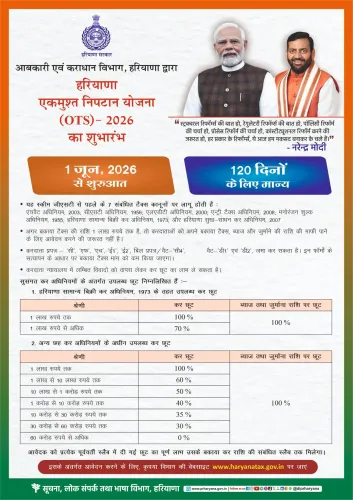
The OTS Scheme - 2025, which was first introduced on October 1, is regarded as one of the state’s most taxpayer-friendly programs. Its primary objective is to alleviate legacy litigation and unlock revenue for the state by providing significant relief.
Taxpayers can benefit from waivers of up to 100 percent on interest and penalties, as well as considerable reductions on the principal tax owed, depending on the specific amount due.
Minister Cheema emphasized that this extension presents a valuable opportunity for genuine taxpayers to resolve long-standing disputes related to pre-GST Acts, including VAT and central sales tax, with less procedural hassle.
He further stated, “Our administration is dedicated to fostering a pro-business atmosphere. By extending this deadline to March 31, 2026, we guarantee that no legitimate taxpayer is left behind due to administrative or timing challenges.”
He urged all eligible businesses and rice millers to take advantage of this final chance to settle their dues and start the new fiscal year afresh.
“Following the new deadline of March 31, the department will commence stringent recovery actions against defaulters who do not opt for this settlement,” concluded Minister Cheema.
Frequently Asked Questions
What is the Punjab One-Time Settlement Scheme?
The Punjab One-Time Settlement Scheme is an initiative aimed at helping taxpayers clear outstanding dues while providing significant waivers on interest, penalties, and principal amounts.
What is the new deadline for the OTS Scheme?
The new deadline for the Punjab One-Time Settlement Scheme has been extended to March 31, 2026.
Who approved the extension of the OTS Scheme?
The extension was formally approved by State Finance Minister Harpal Cheema.
How many applications have been received for the OTS Scheme so far?
The department has recorded a total of 6,348 applications for the OTS Scheme to date.
What benefits does the OTS Scheme offer?
The scheme offers up to a 100% waiver on interest and penalties, along with significant reductions on the principal tax amount.