Punjab GoM meets BKU-Ekta Ugrahan, pledges time-bound resolution of farmers' demands
Synopsis
Punjab's GoM and BKU-Ekta Ugrahan struck a rare conciliatory note in Chandigarh, agreeing to a one-to-two-month window to resolve key farmer demands — including FIR withdrawals and ₹750 crore in crop damage payouts. Whether the government delivers on these timelines will define its relationship with one of Punjab's most powerful farmer unions ahead of the next agitation season.
Key Takeaways
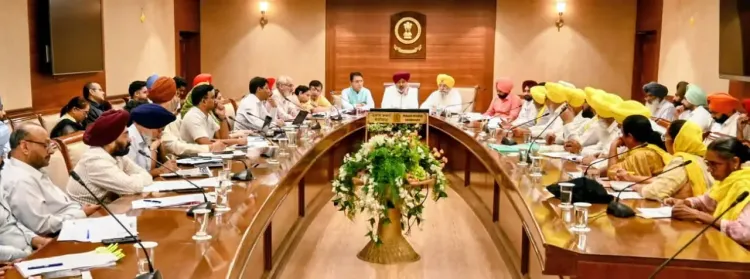
Punjab's GoM — comprising Ministers Harpal Singh Cheema , Aman Arora , and Gurmeet Singh Khudian — met BKU-Ekta Ugrahan in Chandigarh on 13 October 2026 .
Both sides agreed to resolve accepted demands within one to two months .
Approximately 13 to 16 FIRs against farmers remain in courts; the government has outlined a stage-wise legal framework for their withdrawal.
The state has earmarked ₹750 crore for crop damage compensation, with disbursal already underway.
Concerns of tenant farmers and long-term cultivators without formal ownership rights were also raised in the talks.
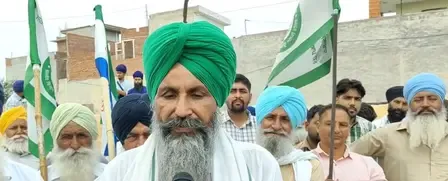
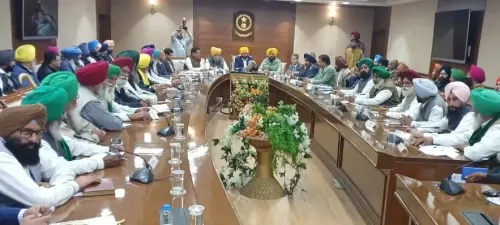
The Punjab government's Group of Ministers (GoM) on Tuesday, 13 October 2026, held extensive talks with the Bharatiya Kisan Union-Ekta Ugrahan (BKU-Ekta Ugrahan), led by Joginder Singh Ugrahan, in Chandigarh, agreeing to resolve the union's pending demands within a mutually fixed timeframe of one to two months. The meeting, convened at the direction of Chief Minister Bhagwant Singh Mann, marks the latest attempt by the Aam Aadmi Party (AAP)-led state government to address long-standing grievances of Punjab's farming community.
Key Developments from the Talks
The GoM deputed by Chief Minister Mann comprised Cabinet Ministers Harpal Singh Cheema (Finance), Aman Arora, and Gurmeet Singh Khudian. They were joined by Additional Chief Secretary, Agriculture and Farmers' Welfare, Anurag Verma, and senior officers from multiple departments. Discussions were based on a formal memorandum submitted by the union, covering a range of economic and legal demands.
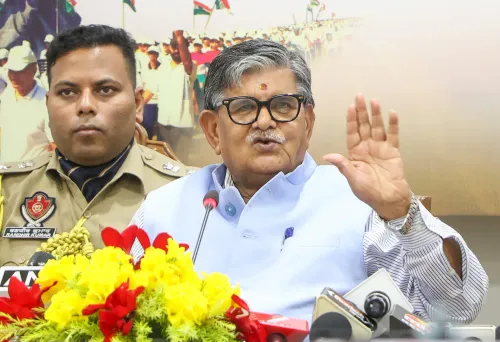
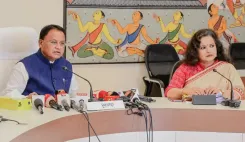
Finance Minister Cheema, addressing reporters after the meeting, described the atmosphere as 'highly cordial' and said a 'strong consensus' had emerged on several critical issues. 'During the exhaustive discussions on the union's demands, mutually agreeable timeframes of one to two months were established to ensure the systematic and timely resolution of the accepted local issues,' he said.
FIRs Against Farmers: A Stage-Wise Legal Framework
One of the more contentious demands concerned pending First Information Reports (FIRs) registered against farmers during past agitations. Finance Minister Cheema acknowledged that a 'significant number' of these cases had already been cancelled by the state. For the approximately 13 to 16 cases currently pending in various courts, the government said it had devised a 'strategic, stage-wise legal framework' to facilitate their prompt withdrawal. This issue has been a flashpoint between farmers' unions and successive Punjab governments, with activists arguing that pending FIRs have a chilling effect on protest rights.
Crop Damage Compensation and Tenant Farmers
On the demand for a dedicated budget allocation to cover crop damage losses, Finance Minister Cheema informed farmer representatives that the state had already earmarked ₹750 crore for compensation and that the disbursal process for affected farmers was underway. The meeting also addressed the specific concerns of tenant farmers, with discussions reportedly focused on ensuring compensation reaches cultivators who lease rather than own their land.
Additionally, the GoM took what Cheema described as a 'highly sympathetic view' on the issue of cultivators who have been tilling land for several decades without formal ownership rights — a complex agrarian challenge with both legal and political dimensions in Punjab.
Context and What Comes Next
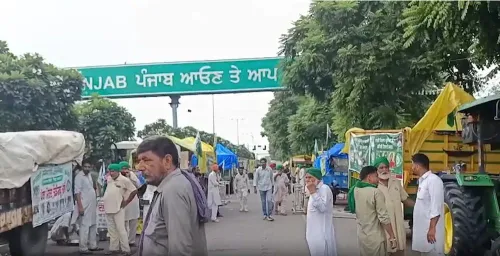
This comes amid a broader pattern of farmer agitations that have periodically disrupted Punjab's political landscape, most notably during the 2020-21 farm laws protest and subsequent movements at the national level. BKU-Ekta Ugrahan is one of the state's most prominent and mobilisation-capable farmer unions, and its engagement with the AAP government signals a preference for negotiation over street protest — at least for now.
Notably, the agreed timeframe of one to two months means outcomes will be expected by mid-November to mid-December 2026. Farmer representatives are likely to hold the government to these timelines, and any perceived delay could reignite pressure. The government's follow-through on FIR withdrawals and the ₹750 crore crop compensation disbursement will be the clearest early tests of its commitment.
Frequently Asked Questions
What was decided at the Punjab government-BKU Ekta Ugrahan meeting on 13 October 2026?
Both sides agreed to resolve the union's accepted demands within a mutually fixed timeframe of one to two months. Key issues addressed included withdrawal of FIRs against farmers, crop damage compensation, and the rights of tenant farmers and long-term cultivators.
How much has the Punjab government set aside for crop damage compensation?
The Punjab government has earmarked ₹750 crore for crop damage compensation, according to Finance Minister Harpal Singh Cheema. The disbursal process for affected farmers is reportedly already underway.
What is the status of FIRs registered against farmers during past agitations?
A significant number of FIRs have already been cancelled by the state. Approximately 13 to 16 cases remain pending in various courts, and the government says it has devised a stage-wise legal framework to facilitate their prompt withdrawal.
Who represented the Punjab government at the meeting?
The Group of Ministers comprised Cabinet Ministers Harpal Singh Cheema, Aman Arora, and Gurmeet Singh Khudian, deputed by Chief Minister Bhagwant Singh Mann. Additional Chief Secretary (Agriculture) Anurag Verma and senior officers from multiple departments were also present.
What is BKU-Ekta Ugrahan and why does its engagement with the government matter?
BKU-Ekta Ugrahan, led by Joginder Singh Ugrahan, is one of Punjab's most prominent and mobilisation-capable farmer unions. Its decision to engage in structured dialogue with the AAP government signals a preference for negotiation over street protest, at least within the agreed timeframe.