Nijjar case: Indian envoy asks Canada 'Where is the evidence?' after 3 years
Synopsis
Nearly three years after Trudeau's bombshell allegation, India's top diplomat in Canada is publicly demanding proof — and says none has come. High Commissioner Dinesh Patnaik's 'Show us the evidence' challenge, combined with his Operation Hardball citation and rebuttal of the CSIS report, signals that New Delhi is done waiting and is now putting the evidentiary burden squarely back on Ottawa.
Key Takeaways
India's High Commissioner Dinesh Patnaik challenged Canada on 9 October to produce evidence of Indian government involvement in the Hardeep Singh Nijjar killing.
The allegation was first made by then Prime Minister Justin Trudeau in September 2023 ; India has consistently rejected it as absurd.
Patnaik cited Operation Hardball , a US-led probe, which he said identified the Bishnoi gang with no Indian government link found by either US or Canadian authorities.
CSIS listed India as a key foreign interference source in its 2025 report; Patnaik rejected the designation and said the same report names Khalistan extremists as the biggest threat to both nations.
Four individuals are currently on trial in Surrey over Nijjar's killing; Patnaik declined to comment on the case, citing court proceedings.
Patnaik called the diplomatic rupture 'a blip,' arguing the two countries have no fundamental geopolitical differences.
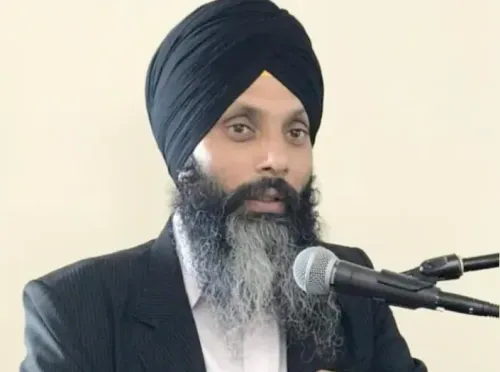
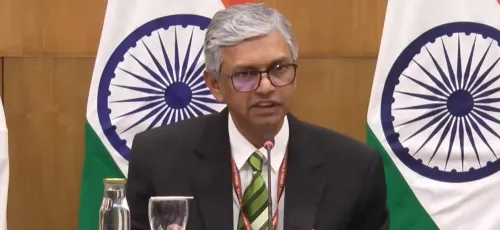
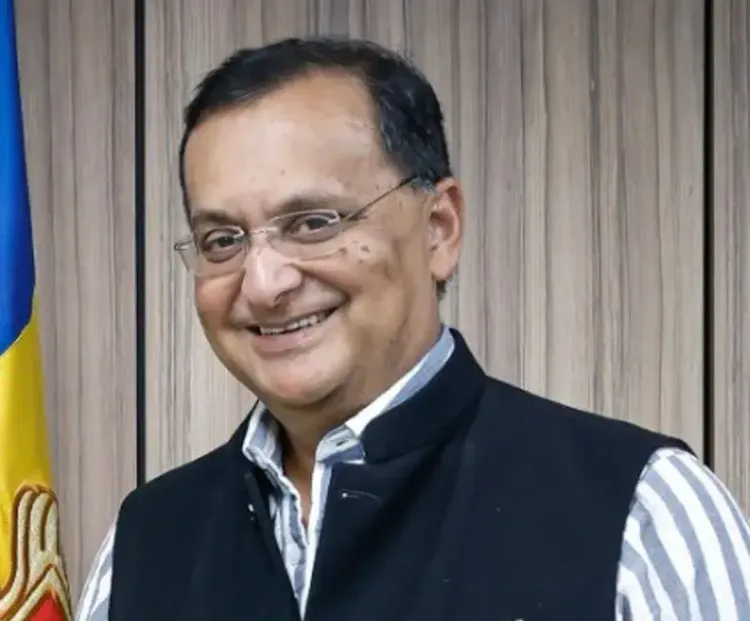
India's High Commissioner to Canada, Dinesh Patnaik, has publicly challenged the Canadian government to produce concrete evidence of Indian state involvement in the killing of Sikh separatist Hardeep Singh Nijjar, asserting that nearly three years after the allegation was first made, no such proof has been forthcoming. The remarks, made in an interview with CPAC's Open Question hosted by Marc-Andre Cossette and posted on 9 October, mark one of the sharpest direct challenges yet from New Delhi's diplomatic representative in Ottawa.
The Core Challenge: 'Show Us the Evidence'
'It's been almost three years since Prime Minister Trudeau spoke in parliament. Where is the evidence?' Patnaik said during the interview. He went further, stating India's willingness to act on any credible proof: 'If you have evidence which implicates anybody in India on this issue, we are willing to take action. We are ready to take action. Show us the evidence.'
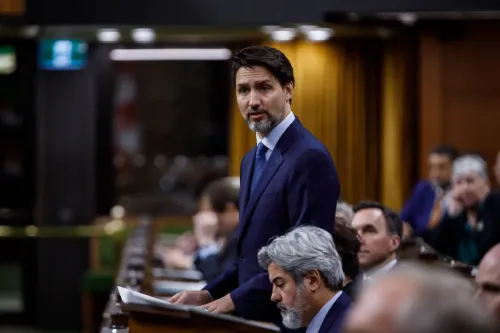
The dispute dates to September 2023, when then Prime Minister Justin Trudeau told Canada's Parliament that Canadian agencies were pursuing credible allegations of a potential link between Indian government agents and Nijjar's killing. New Delhi rejected the charge as absurd at the time, and that position has not shifted.
The Surrey Trial and Operation Hardball
Patnaik declined to comment on the ongoing trial of four individuals in Surrey, citing sub-judice constraints. 'There are four individuals who are being tried and so it's now in the court. So I'm not going to comment on it,' he said, while adding: 'If the case brings out any evidence that there are people in India involved in it, we will take action against them.'
The High Commissioner also referenced Operation Hardball, a US-led investigation that he said resulted in arrests in both the United States and Canada roughly two months earlier. According to Patnaik, the operation identified the Bishnoi gang as the relevant criminal network — and, critically, he said both American and Canadian authorities found no Indian government involvement. 'Any suggestion that a government is involved with criminal gangs is just preposterous,' he said.
India's Rebuttal on CSIS Report and Khalistan
On Canada's domestic spy agency, the Canadian Security Intelligence Service (CSIS), which listed India among the primary sources of foreign interference in its 2025 public report, Patnaik was categorical: 'We are very clear. We do not do such things.' He noted that the same report identified Canada-based Khalistan extremists as the biggest threat to both countries, and expressed hope that India would be removed from the list in next year's edition.
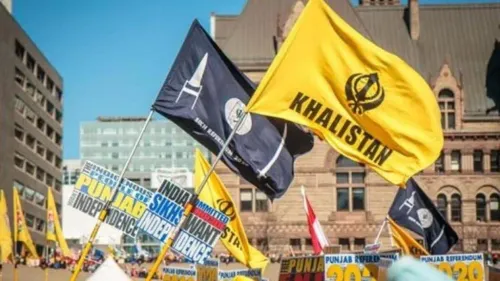
'Khalistan is not an issue in India. It's in Canada,' Patnaik said, pointing out that a pro-Khalistan party that once held seats in Punjab now holds none. He also pushed back against what he characterised as a conflation of the broader Sikh community with a fringe extremist element, citing 45,000 fans attending a Diljit Dosanjh concert in Toronto alongside just 15 protesters outside as an illustration of the community's actual sentiments.
Carney Remarks and the Diplomatic 'Blip'
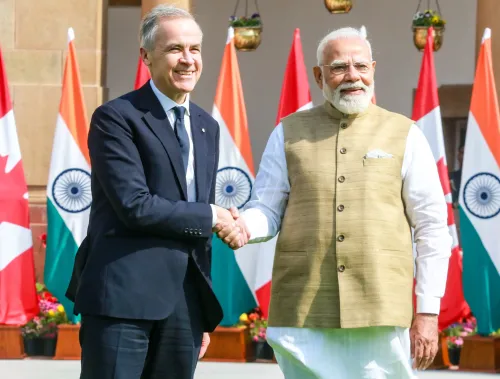
Patnaik also disputed how Prime Minister Mark Carney's comments to The New York Times — reportedly suggesting he could not guarantee India would not commit crimes in Canada — were characterised. According to the High Commissioner, Carney's actual words were: 'I cannot guarantee no crime will be committed in Canada' — a materially different framing, he argued.
Despite the prolonged diplomatic friction, Patnaik described the overall relationship as fundamentally sound, calling the rupture 'a blip.' 'We do not have any geopolitical problems between us. And yet all it took was one politician for whatever reason to spoil it,' he said, without naming the politician. He acknowledged that the Canadian government had taken 'a lot of action' over the past year to dismantle extortion, drug smuggling, and human trafficking networks linked to extremist groups.
What Comes Next
The Surrey trial of the four accused remains the most immediate legal flashpoint in the case, and its proceedings could either bolster or undercut the competing narratives. With India maintaining its demand for evidence and Canada's CSIS report still listing New Delhi as a foreign interference concern, the bilateral relationship faces continued strain — even as both sides publicly insist the foundations remain intact.
Point of View
Not just a soundbite — by demanding evidence after nearly three years, India is betting that Ottawa's silence on specifics is its own rebuttal. The Operation Hardball citation is particularly pointed: if a US-led investigation found no Indian state hand, it sharply narrows the evidentiary space Canada would need to occupy. Yet the CSIS 2025 listing of India remains a live diplomatic wound, and the Surrey trial's outcome could still produce testimony that complicates New Delhi's categorical denials. The real question is whether Canada's next move is a legal one in court or a political one in parliament — and whether a post-Trudeau government under Carney has the appetite for either.
NationPress
13 Oct 2026
Frequently Asked Questions
What did India's High Commissioner to Canada say about the Nijjar case?
High Commissioner Dinesh Patnaik challenged Canada to produce evidence of Indian government involvement in the killing of Hardeep Singh Nijjar, saying nearly three years have passed since the allegation was first made and no proof has emerged. He stated India is willing to take action if credible evidence is presented.
Who is Hardeep Singh Nijjar and why does his killing matter?
Hardeep Singh Nijjar was a Sikh separatist leader killed in Canada. In September 2023, then Prime Minister Justin Trudeau alleged in parliament that Canadian agencies were pursuing credible allegations of a potential link between Indian government agents and the killing, triggering a major India-Canada diplomatic crisis.
What is Operation Hardball and why did Patnaik cite it?
Operation Hardball is a US-led investigation that reportedly made arrests in the United States and Canada. Patnaik cited it as evidence that the Bishnoi gang — not the Indian government — was the relevant criminal network, noting that both American and Canadian authorities found no Indian state involvement.
Why did Canada's CSIS list India in its 2025 foreign interference report?
Canada's spy agency CSIS listed India as one of the main sources of foreign interference in its 2025 public report. Patnaik rejected the designation, asserting 'We do not do such things,' and noted that the same report identifies Khalistan extremists as the biggest threat to both countries.
What is the current status of the legal case related to Nijjar's killing?
Four individuals are currently on trial in Surrey, Canada, in connection with the killing. Patnaik declined to comment on the case, citing sub-judice constraints, but said India would act if the trial produced evidence of Indian nationals being involved.